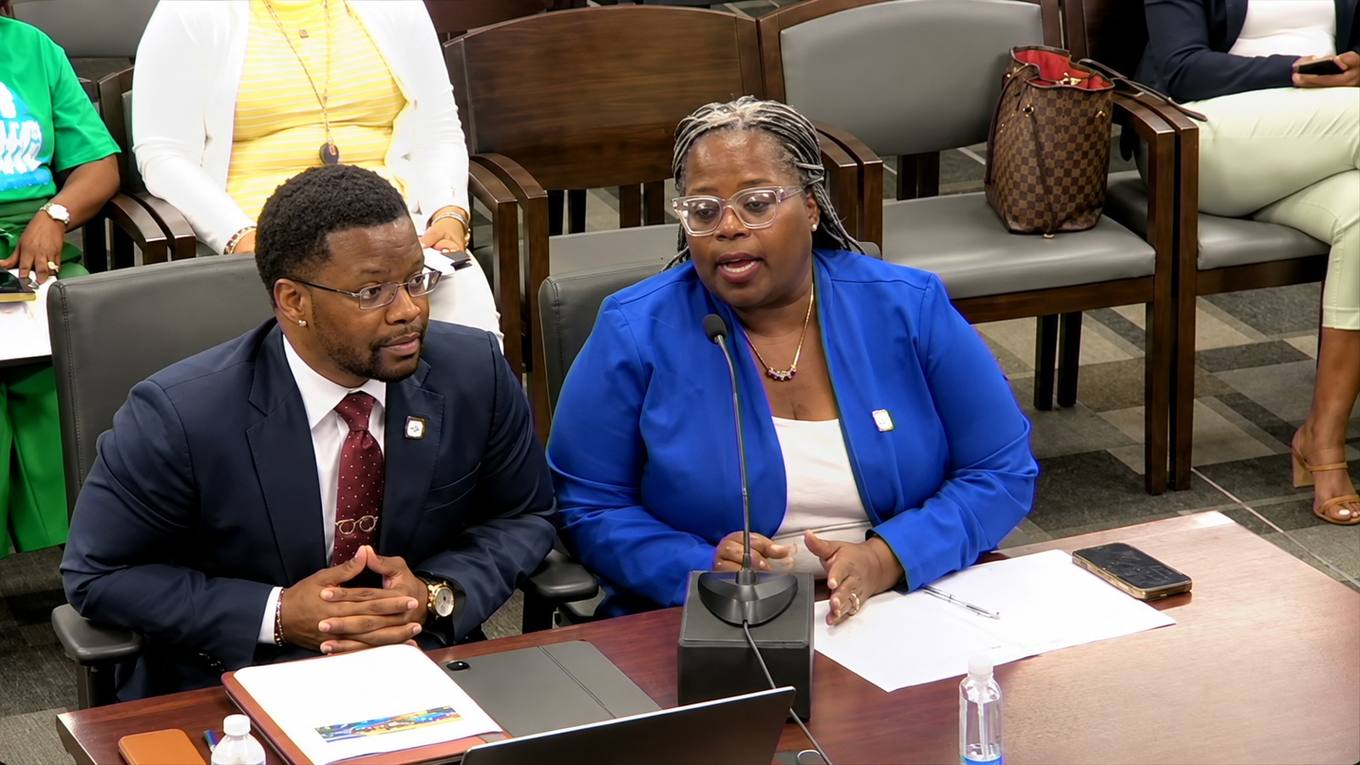
MEMPHIS, September 1, 2026 - Two officials from the Division of Housing and Community Development told the Memphis City Council's Housing and Community Development Committee that the formula deciding how much federal housing money Memphis receives is set by Congress, driven by housing stock built before 1940, and largely outside the city's control.
The item was requested by Councilwoman Rhonda Logan, who was absent, and was presented as an update on the Annual Action Plan for PY26 and FY27.
How the formula works
The presenters described two statutory formulas. Formula A weighs poverty more heavily. Formula B weighs pre-1940 housing stock more heavily. Congress calculates a city under both and assigns whichever produces the higher allocation, then adjusts every jurisdiction's budget based on what was approved nationally.
Memphis falls under Formula A because of its poverty rate. The presenters said that is the formula that gives Memphis the most money, and that the city is not disadvantaged by the choice.
The pre-1940 housing weighting is where the gap opens. Memphis has about 24,000 units of pre-1940 housing. Detroit has about 127,000. Cities named as benefiting from Formula B included Cleveland, St. Louis and Detroit, described as places that existed before Memphis with housing stock driven by the industrial era.
The presenters said the statute dates to the 1970s and is based on 1960s data.
Councilman Dr. Jeff Warren put the obvious question. He asked how accurate a 1970s law using 1960s data and pre-1940 housing can be against the real housing need of cities today, and whether it is politically impossible to move. The presenters said national coalitions are looking at it and have been talking about it, that changing it requires political will, lobbyists and advocacy at the federal level, and that it is on the division's radar.
The numbers
The community development block grant allocation for Memphis was $6.8 million in 2021 and $6.07 million in 2026, a decline of a little over $800,000. The presenters cautioned against attributing the decline to population, saying that is correlation and not causation, and that the biggest driver is the reduction in the total amount allocated nationally.
They said the national pool was $3.9 billion in 2010 and was reduced by almost a billion dollars between 2015 and 2017, which lowers every jurisdiction's share, not just Memphis. The city's population was described as remaining around 650,000.
On a per resident basis, the presenters said Memphis receives about $10.66, up from about $9.21 previously, and that Memphis tops the list of Formula A cities on that measure because of its poverty level, while Formula B cities receive more.
For the current year they gave a breakdown by entitlement: roughly a 0.5 percent increase for the community development block grant, an almost 1.6 percent decrease in home dollars, a 1.41 percent decrease in the emergency solutions grant that funds homeless prevention, and almost a 7 percent increase in the housing opportunities program, with the note that Tipton County was added to that program's jurisdiction.
Councilman Warren summarized it as the city getting money that does not even replace inflation.
The 10,000 homes question
The committee vice chairwoman turned to the mayor's 10,000 homes goal and made the sharper point of the morning. She said affordable housing is where community stabilization starts, that she had expressed during budget that the city's budget does not reflect a plan on par with producing 10,000 homes, and that all the innovation in the world will not move without investment. She asked where the division is on convening a financial strategy, whether that means a bond issuance or a proposed increase, and whether the division has financial consultants and developers helping build it.
The Chief Operating Officer said the strategy is underway, that a consultant has been brought on, and that the administration could probably be ready for an update within 30 days.
Councilwoman Pearl Eva Walker and Chairwoman Jana Swearengen-Washington both raised tiny homes as an option worth exploring, with the Chairwoman saying houses described as affordable at $200,000 and $300,000 are not affordable and the city will have to think outside the box.
What happens next
The committee set both the housing financial strategy and the federal advocacy question down for a 30-day update. No date was fixed.
*Your city. Your money. Your receipts.*