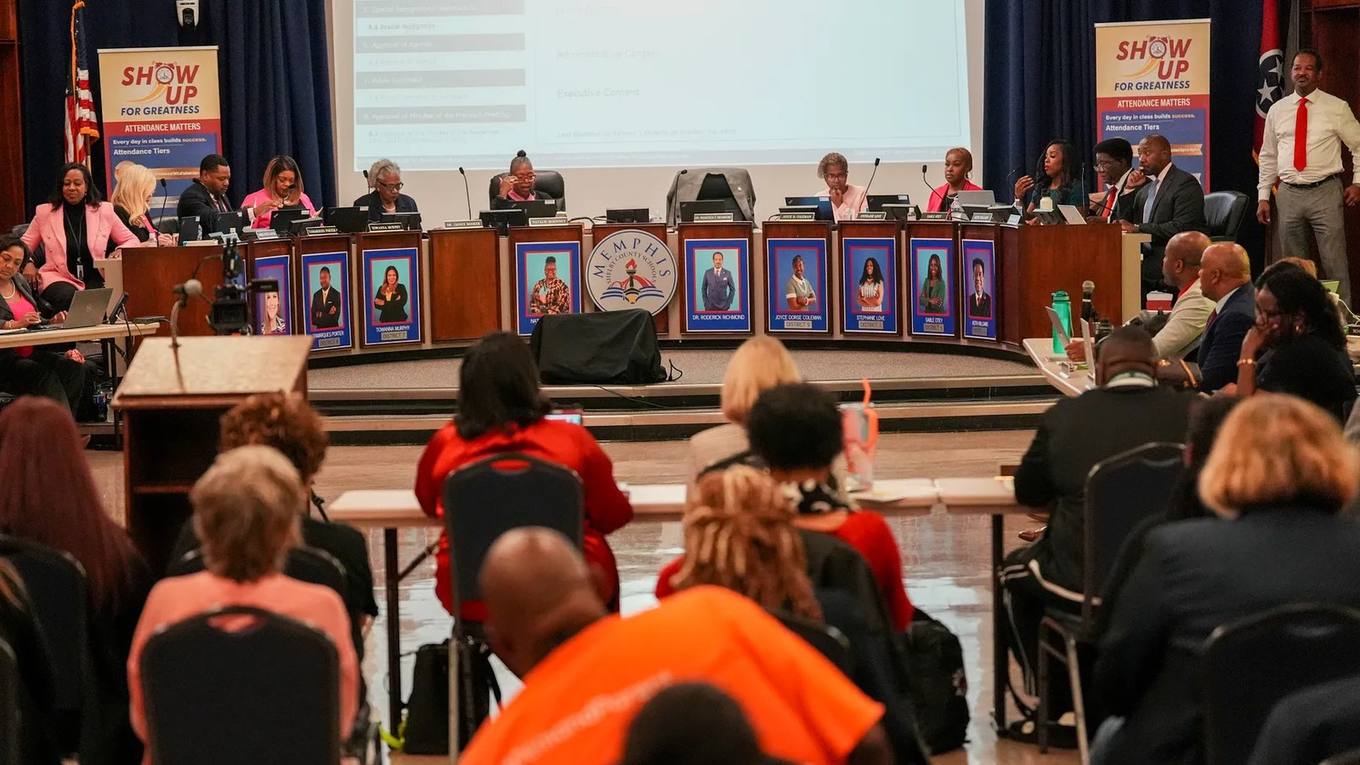
MEMPHIS, Tenn. - The state-ordered forensic audit of Memphis-Shelby County Schools found that board members may have violated Tennessee's open meetings law between 2021 and 2024.
Auditors identified multiple email exchanges among board members and the district's legal counsel that they concluded may have influenced district decisions, including discussions of superintendent searches and contract negotiations.
The audit states that while the nature and extent of deliberation varied across the instances, the observed patterns reflect "a risk that Board business was discussed, advanced, or shaped outside the public meeting process".
This is a management finding. It is not a criminal charge, not a civil complaint, and not a determination by any court or enforcement body. No board member has been found to have violated the law, and the audit's own language is conditional throughout.
What Tennessee's open meetings law requires
The Tennessee Open Meetings Act, at Tenn. Code Ann. 8-44-101 and following, requires that the deliberations of a governing body be open to the public. Its stated purpose is that the formation of public policy and decisions is public business and shall not be conducted in secret.
The law reaches deliberation toward a decision, not merely the vote itself. That is the point on which an email chain becomes legally relevant: a body that arrives at consensus privately and ratifies it publicly has, under the Act's logic, moved the deliberation out of public view even if every formal vote was properly noticed.
Whether the exchanges the auditors identified crossed that line is precisely what the audit does not determine. It says there is a risk that they did.
Why this finding is different from the money findings
Most of the audit's attention, and nearly all of its press coverage, has gone to the $54 million in spending identified as potential fraud, waste or abuse, of which more than $48 million traces to a single custodial contract.
This finding is not about money, and it may be the more durable one.
A procurement problem is fixed by changing a procurement process. A deliberation problem is about whether the public can see how decisions get made at all, which determines whether any of the other findings would have been visible to a resident watching a board meeting. The period covered, 2021 to 2024, spans three district leaders and includes superintendent searches, which are among the most consequential decisions a school board makes.
There is a fair response, and it is worth stating. School board members receive and exchange email constantly, much of it with counsel and much of it privileged or administrative. Auditors reviewing years of correspondence after the fact, without the context in which each message was sent, are well positioned to see patterns and poorly positioned to distinguish deliberation from logistics. The audit's conditional language reflects that limit rather than hiding it.
Why It Matters for Memphis
The remedy for an open meetings problem is not primarily punishment. It is disclosure and process.
A district can adopt a board communications policy, route counsel advice through the record, and train members on where the line sits. None of that requires a court to rule first, and all of it is within the board's own authority.
The reason to press on it now is timing. The district is under a corrective action plan obligation, its budget has not been approved by the county, and a state oversight board with authority over its contracts and personnel is enjoined but not dissolved. If board deliberation was previously happening partly outside public view, then the period in which governance is most contested is exactly the period in which the public most needs to see it happening in the open.
Accountability Watch
Who is accountable: The Memphis-Shelby County Schools board, whose members' correspondence the audit examined. District legal counsel, identified in the audit as a participant in the exchanges. The Tennessee Comptroller's office, which commissioned and released the audit.
What is pending: Any board policy change on member communications, and whether the corrective action plan addresses the finding.
Timeline: Conduct examined covers 2021 through 2024. Audit performed by CliftonLarsonAllen beginning August 2025. Final report completed June 30 and released July 8, 2026. Corrective action plan due late August 2026.
Status as of August 3, 2026: Unaddressed publicly. The 901 Report has identified no district response specific to the open meetings finding and no policy change published in response to it. This remains a management finding, not a charge.
How to verify: The full audit is published at comptroller.tn.gov and the open meetings finding appears in the governance volume. The Tennessee Open Meetings Act is at Tenn. Code Ann. 8-44-101 and following. Board policies are published at scsk12.org. The Tennessee Office of Open Records Counsel issues advisory opinions on the Act and its guidance is public.