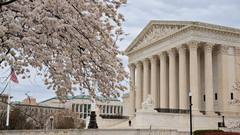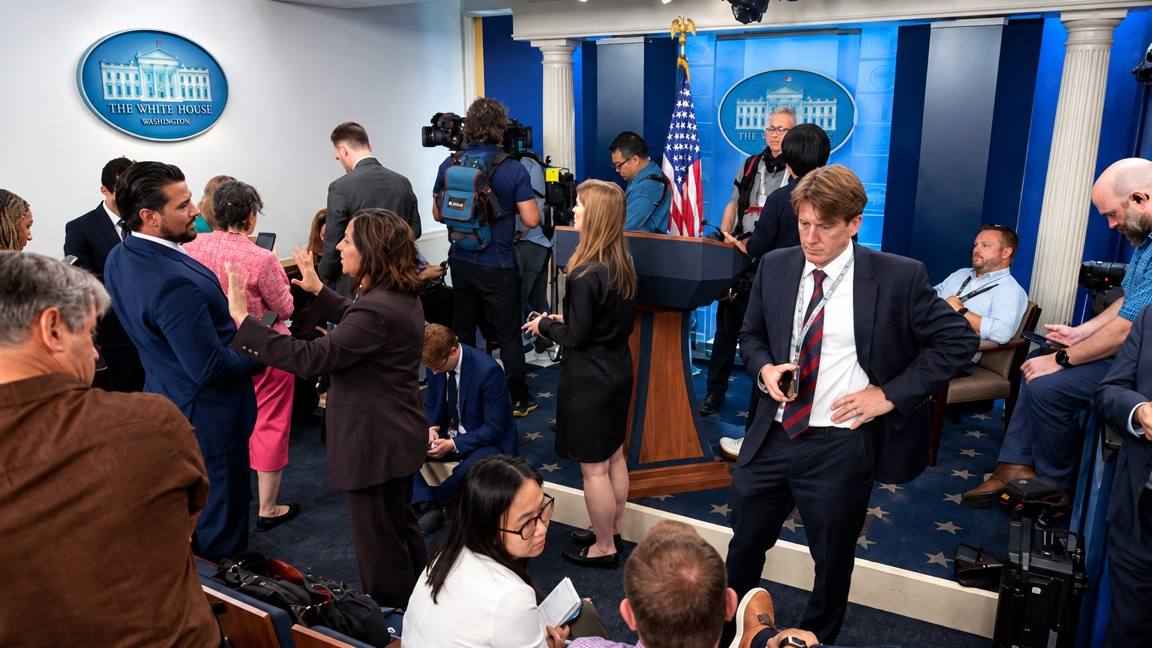
MEMPHIS, Tenn. - CNN, MS NOW and Politico jointly sued the Trump administration on Monday, September 21 in the U.S. District Court for the District of Columbia over the revocation of their White House press credentials, three days after President Trump announced on Friday, September 18 that he was barring the three outlets over reporting he deemed "fake news," PBS NewsHour and Bloomberg reported. The case was assigned to U.S. District Judge Timothy Kelly, per PBS.
On Saturday, September 19, CNN's Betsy Klein and MS NOW's Akayla Gardner were turned away from the White House complex and their badges were deactivated, and Politico's Cheyenne Haslett was denied entry and had her badge confiscated, per the PBS report.
"This morning, we notified the government that we are filing a lawsuit today to protect our First Amendment rights," the outlets said in a joint statement, which said the suit would "defend the principle that the government does not decide what the press reports or publishes." The statement added: "Without notice or process, the White House revoked our journalists' credentials because it objected to our reporting."
The White House had no immediate comment early Monday, September 21, per PBS. Separately, major television networks halted video coverage of Trump events in protest of the ban, the Washington Post reported September 21.
The suit's constitutional claim centers on the First Amendment, and the outlets also argue the credentials were pulled without notice or a chance to respond. The outlets characterize the revocations as the government punishing reporting it dislikes; the administration has characterized the outlets' reporting as false. The court will decide the claim, and this post reports the allegation as an allegation.
Why It Matters for Memphis
No Memphis hook is required for this post, and none is forced here. The mechanism worth naming is generic: press credentials are the public's mechanical access to the executive branch, and every newsroom that covers federal actions touching any city, including this one, works through them. Whatever rule of law emerges from this case governs that access for everyone.
The Oversight Question
If an administration can deactivate a newsroom's credentials over coverage it calls fake, what stops the same mechanism from reaching any outlet whose reporting a future administration dislikes?
Update, October 11, 2026: In the early hours of Thursday, September 24, U.S. District Judge Timothy Kelly granted a temporary restraining order directing the White House to "immediately return, reinstate, and restore" the three outlets' access, finding they were likely to show their passes were revoked "without due process," PBS NewsHour reported. Reporters from all three outlets were still turned away that morning, Courthouse News Service reported, and the White House reinstated their badges later on September 24, per PBS. The order did not address CNN's removal from the White House video pool.
The order was set to expire Thursday, October 8. That day, Judge Kelly extended it through Tuesday, October 13 while he weighs the outlets' motion for a preliminary injunction, and said a ruling would come by then at the latest, TheWrap and JURIST reported. Government attorneys defended the ban on national security grounds and said the outlets had a chance to contest it; the outlets called that process a sham and the ban retaliation for their coverage, per TheWrap. As of October 11, no preliminary injunction ruling had been reported, and the outlets keep their credentials under the extended order.
Your city. Your money. Your receipts.