Correction, October 11, 2026: An earlier version of this post's headline said Shelby County was about to pass the rewrite of its small business ordinance. The full Shelby County Commission adopted the ordinance on third reading on August 24, 2026, by nine votes, the two-thirds minimum it required, with no amendment offered, according to the meeting record reported in this post. The $5 million construction ceiling is unchanged. The headline has been updated.
MEMPHIS, August 19, 2026 - The dollar ceiling that decides which construction firms qualify as small businesses in Shelby County procurement has not moved since 2007, the county's Equal Opportunity Compliance administrator told commissioners, and the ordinance on its third reading leaves it at $5 million.
The ordinance amends section 2-224 of the county's Locally Owned Small Business ordinance to apply a 25 percent participation goal for construction and construction-related services based on market availability, and to keep the sheltered market threshold below $50,000. It advanced from Committee 14, Equal Opportunity, on three aye votes.
What the rewrite changes and what it does not
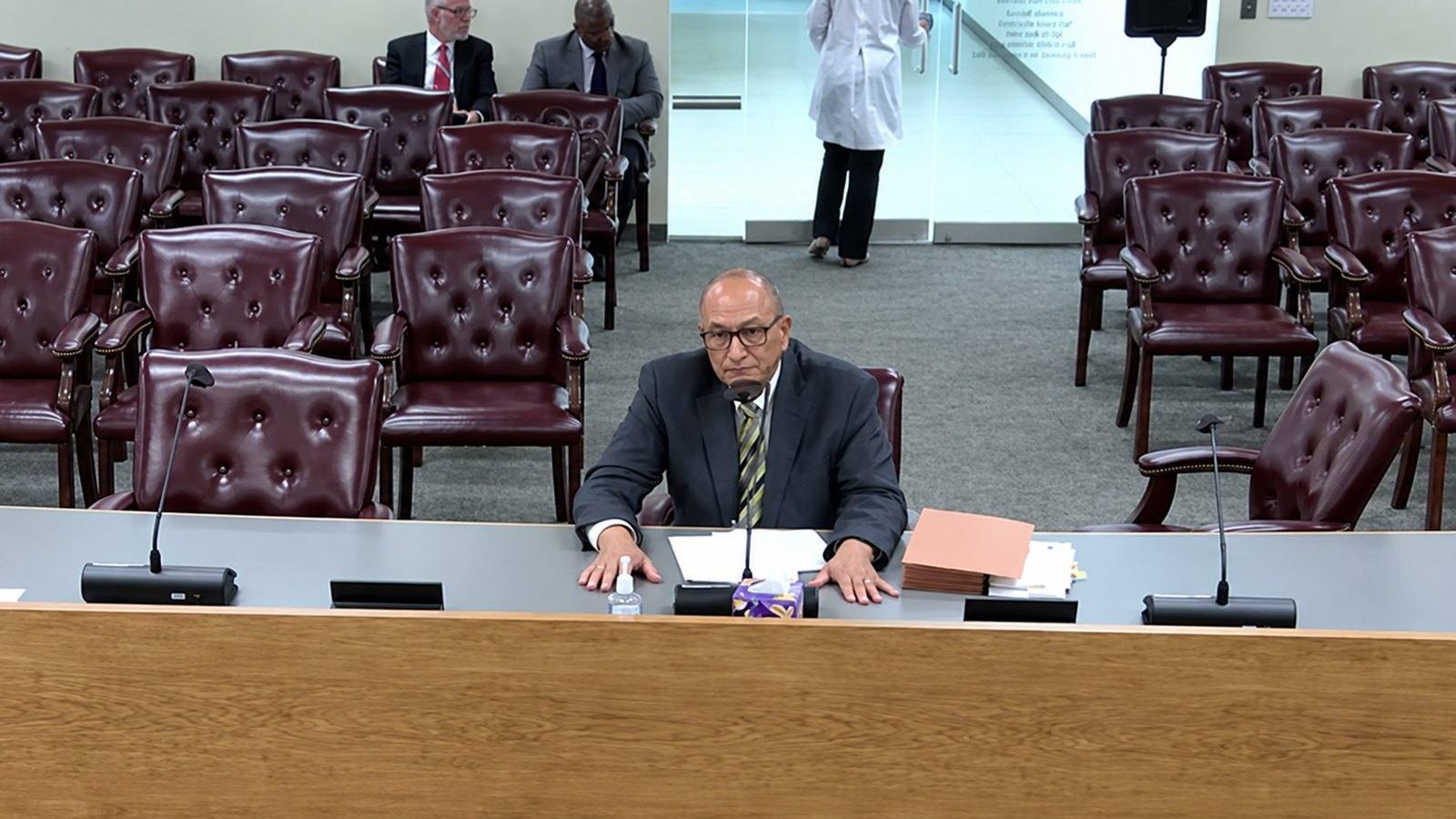
The administrator told the committee that purchasing and his office had reached agreement at the second reading and that nothing had changed since. He described the limits as coming from data submitted by the consultant Griffin and Strong, with the decision on whether to stay at the recommended level or move up or down vested in the Commission.
Under that decision, one category rose from $1 million to $2.5 million. Construction stayed at $5 million. Information technology and security guards stayed at $15 million.
He said the consultant's finding was that of the construction firms eligible to be labeled Locally Owned Small Businesses, which he put at close to 383, most fall below the $5 million level, and that the limits have never been raised beyond where they were set in 2007 because the Commission's intent at the time was a true small business program. He added that inflation alone would have pushed the limit higher on rational grounds.
The comparison nobody disputed
Vice Chairman David C. Bradford, Jr. said Associated Builders and Contractors had reached out with concerns about the threshold numbers, and asked the administrator to contact that group and others before the full Commission meeting. He said firms in that range are effectively small businesses by any outside measure but cannot qualify when they come to work for Shelby County.
He also asked what the City of Memphis does, noting the same consultant provided a study for the city and that both governments draw from the same pool of firms.
The administrator said the city has historically used Small Business Administration standards, which are far higher than the county's, and that the SBA considers a small construction firm to be one at roughly $12 million to $13 million. He said there is a reasonable argument for raising the county's ceiling and a reasonable argument for leaving it, and that the risk of raising it is competition inside the program: a $10 million or $7.5 million firm bidding against a $2 million firm when the program was designed for small firms to compete only against each other.
The disagreement inside the committee
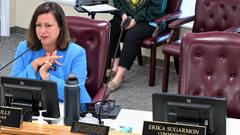
Commissioner Britney Thornton asked which part of the ordinance the outside firms object to. Vice Chairman Bradford said none of the organizations have a problem with the 25 percent participation goal, and several support it. The objection is to who can qualify for it.
Commissioner Thornton said she favors keeping the cap smaller, citing what she has raised repeatedly about local firms not making it through solicitations to a successful proposal, and said the county needs to hold space for local capacity to rise into a competitive bracket.
Asked how many additional firms would fall between $5 million and $7.5 million, the administrator said he would be speculating, that he would have to research it, and that it is not a lot. He agreed to bring the figure to the full Commission.
The procedural trap
Commissioner Thornton asked the parliamentarian what happens if the ordinance is amended on third reading.
The parliamentarian said an amendment on third reading would require an additional reading unless the Commission suspends the rules.
Chairwoman Shante K. Avant, who chairs the committee, put a sharper version on the record after the vote. If an amendment on third reading delays adoption, the ordinance will have to start over at first reading, because the process would cross into the new Commission term. She said she wanted that on the record so people could be prepared.
The vote
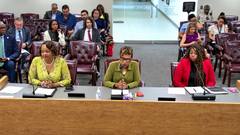
Aye votes came from Commissioner Thornton, Vice Chairman Bradford and Chairwoman Shante K. Avant. Three aye votes sent the ordinance forward with a favorable recommendation.
What happens next
The full Commission adopted the ordinance on Monday, August 24, 2026, on nine aye votes. The parliamentarian told the body the item required a two-thirds majority, a minimum of nine votes, so it passed at exactly the threshold.
No amendment was offered. Vice Chair David C. Bradford, Jr. told the body he would not move one because he thought the ordinance was good to pass that night, and said he thought raising the participation goal to 25 percent was a good idea.
He also put a figure on the record that the committee had not heard. He said the Equal Opportunity Compliance administrator had sent commissioners an email confirming the construction threshold has not changed since 2007, and that construction costs have increased about 81 percent over that period. He said the county may be a little below the standard, that the administrator intends to study the question further with the outside consultant, and that the body should move forward and consider additional study in the future.
The count of firms falling between $5 million and $7.5 million, which the administrator agreed on August 19 to bring to the full Commission, was not presented.
Your city. Your money. Your receipts.