At an August 4 committee meeting the city's police chief said the violent crime intervention fund is reimbursable, that the state will not change that, and that some subrecipients had to drop out because they could not put the money up front. The same grant expires in June 2027. A council member put the cost of simply budgeting the three partner organizations at roughly $500,000 each per year.
MEMPHIS, August 4, 2026 - The three community organizations that do street-level violence intervention work for the City of Memphis are paid through a state grant that requires them to spend their own money first and seek reimbursement afterward, and some organizations awarded that money were unable to participate because they could not front it.
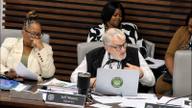
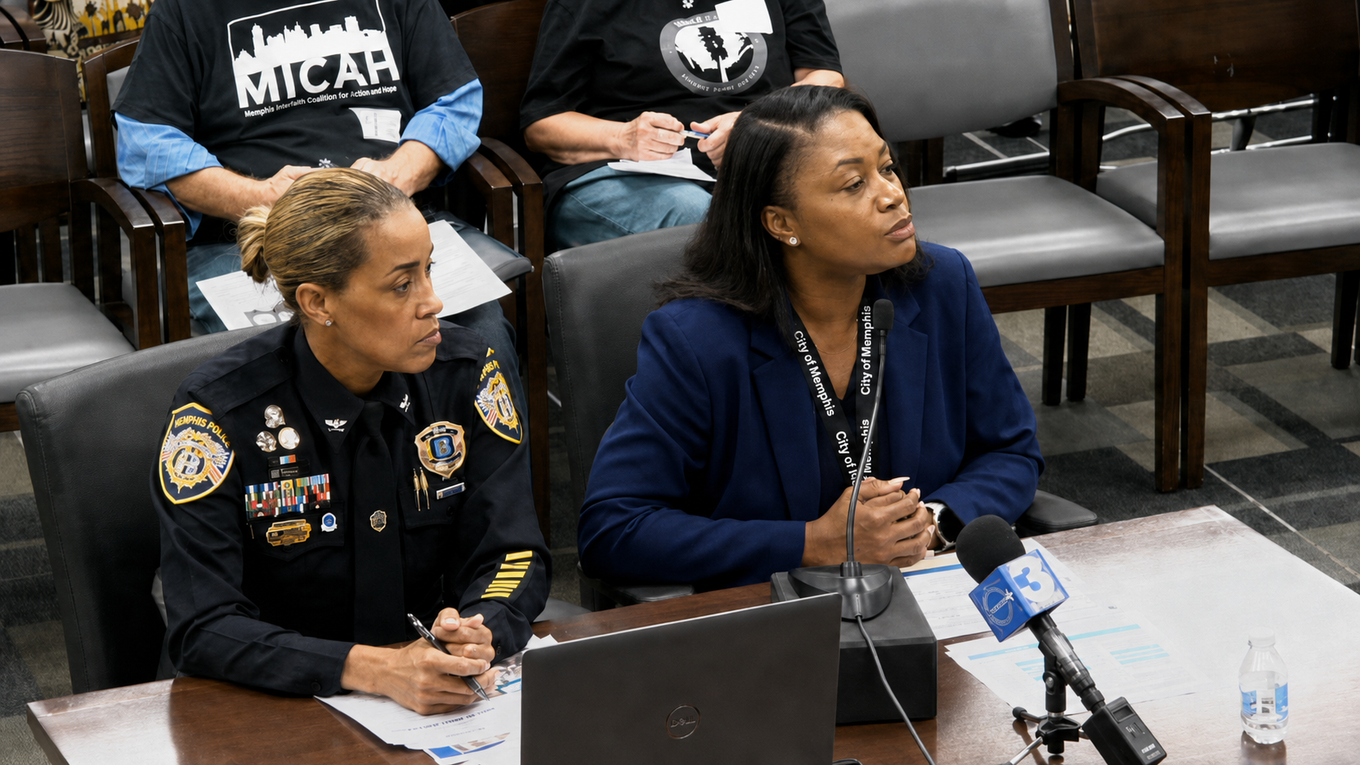
Memphis Police Chief C.J. Davis said so on the record at the Public Safety and Homeland Security Committee meeting on August 4, in an exchange that began when Councilman Dr. Jeff Warren asked a simpler question: how do these people get paid.
The committee item was an update on the Gun Violence Reduction Initiative, the program formerly known by the acronym GVIP. It was requested by Councilman Warren.
What the program is now
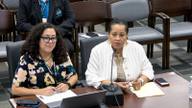
The director of the city and county joint office of neighborhood safety and engagement told the committee the initiative has been restructured into two strategies. One is place-based, led by the Memphis Police Department, and retains the name Code Zero. The other is people-based and is now called 901 Peace.
The restructuring followed a gun problem analysis performed by the National Institute for Criminal Justice Reform using Memphis Police Department data from 2022 through 2024. That analysis identified roughly 800 individuals in Memphis at very high risk of being either a suspect or a victim in gun crime. The director said the analysis also found the average age of a victim was around 30 and the average suspect age was well over 18, which meant that programs aimed only at youth would reach less than ten percent of the city's violent crime.
901 Peace does the civilian side. Three community organizations perform the outreach under it. The director named them as Memphis Allies, 901 Block Squad, and a third organization whose name is rendered inconsistently on the recording. She said the third organization receives the most funding of the three, followed by 901 Block Squad.
She gave six-month figures for the program: 93 individuals identified as very high risk, 77 active participants, 861 in-person contacts, a 90 percent reach rate, and 36 people enrolled in life coaching, a process she described as running 12 to 18 months. Of participants, 15 have been rearrested and six of those arrests were for gun offenses. She said participants are told they are not obligated to enroll in anything.
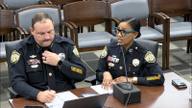
Colonel Tara Gates of the Memphis Police Department's Organized Crime Unit gave the enforcement-side figures for the year to date: 48 rapid response call-outs, 62 intervention engagements, 185 custom notifications performed jointly with 901 Peace, 21 court referrals, and 38 arrests made at shooting scenes.
She also gave station-level non-fatal shooting comparisons for the same period in 2025 against 2026. Airways station went from 173 to 101. Raines station went from 140 to 91. She reported decreases of 60 at Crump station and 67 at Austin Peay station. Citywide, she reported a decrease of 440 non-fatal shootings, which she put at 41 percent.
The question about who gets paid
Councilman Warren asked which organizations make up 901 Peace, who pays them, which gets the most, and whether the money comes from the city budget or from a grant.
The director said the money comes from the violent crime intervention fund, a state grant administered through the Tennessee Office of Criminal Justice Programs, and that the requirements attached to it were set around 2023 and 2024 in the first grant cycle.
Warren pressed on a specific gap. He said interveners are working with high-risk people who have not agreed to be referred into the program, and that under the current structure that work is not paid for, because payment depends on the person being verified as very high risk and entered into the system.
The director said that if a referral is not made to 901 Peace, the office does not know the individual exists, and that verification is what prevents the program from serving anyone and everyone.
Warren asked what it would cost to put the three organizations in the city budget on a recurring basis rather than leaving them dependent on grant cycles. The director estimated roughly $500,000 a year for each of them, while noting the figure depends on how many very high-risk individuals are identified.
He asked her to bring that cost back to the council.
What the police chief added
Chief Davis then gave the committee the funding history. She said that under a previous administration money for 901 Block Squad and possibly for the third organization sat in the police department budget, on the order of $800,000 annually. That money later moved to a different bucket, and much of what paid interveners after that was federal pandemic relief money.
When the violent crime intervention fund became available, she said, the department chose to include 901 Block Squad and the third organization in the grant application rather than spend the money only on law enforcement equipment and overtime. Those organizations submitted a scope of work.
Then she named the problem.
The grant is reimbursable. Recipients spend first and bill the state afterward, and the city does not control the money. She said some subrecipients, including some nonprofits, could not pay that money up front and wait for reimbursement, and had to fall off. People who had actually been awarded grants from the fund were not able to complete the reimbursement piece. She said the department has had several conversations with the state about changing those stipulations, and the state will not.
She said the grant was not written in a way that lets the city help with salaries and other costs, and that if the joint office of neighborhood safety is going to support those groups, funds would have to be allocated to it for that purpose.
Chairwoman Rhonda Logan drew a comparison to the city's homelessness funding, where money passes through a recognized fiscal agent before reaching the organizations doing direct service, and asked how the city resolves the disconnect between the groups doing the work and the money.
Councilman Warren, closing, said the interveners are not getting paid and told his colleagues he thought the council needed to know that. The committee chairman said the matter could be brought back.
The clock
The director told the committee separately that the violent crime intervention fund money the city has with the police department sunsets in June 2027. She said the office has been applying aggressively for other funding so the gap does not repeat what happened when federal pandemic relief ended, including an application for roughly $2 million in federal community violence intervention funding, an application for state mental health support funding for youth, and congressional appropriation funds she said were approved for two organizations at a little over $1 million total.
What happens next
The committee chairman said the funding question can be brought back to a future meeting. Councilman Warren asked the joint office to return with what it would cost the city to carry the three organizations in the budget. The director said the violent crime intervention fund money held by the police department expires in June 2027. She also said a detailed discussion of the fund's mechanics would require the fund's director and team to appear, which would come through the police department.
Your city. Your money. Your receipts.