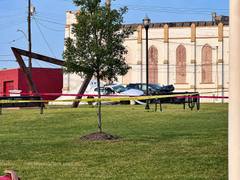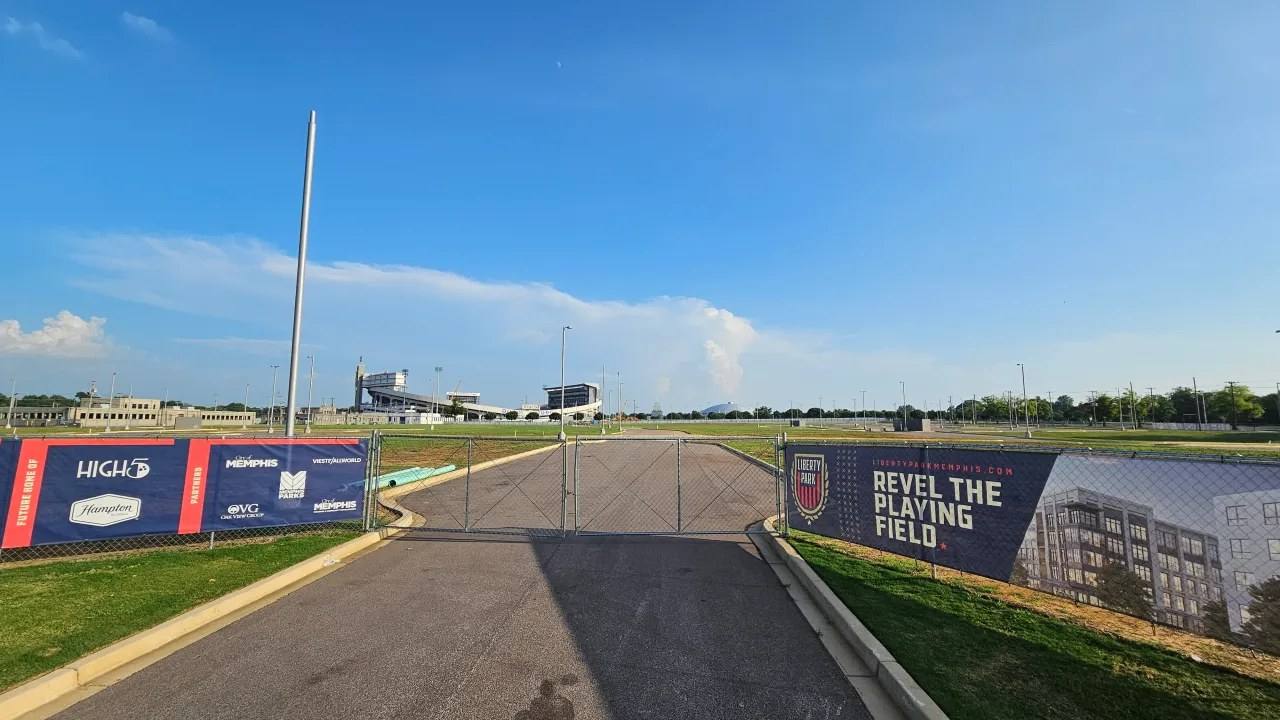
MEMPHIS, Tenn. - The City of Memphis is looking to end its contract with the joint venture managing private development at Liberty Park, where the project approved two years ago has stalled and officials have yet to break ground, according to reporting by the Daily Memphian.
The private development was approved by a unanimous Memphis City Council vote in 2024, after which development agreements and ground leases were signed by Mayor Paul Young. The city has described the private piece as a $112.5 million investment. The plan called for a five-story Hampton Inn by Hilton with 152 guest rooms, a 5,000 square foot restaurant, and a rooftop bar overlooking Liberty Park and Simmons Bank Liberty Stadium, along with two five-story residential and retail buildings facing Central Avenue containing 215 apartments, 43 of which were to be set aside for tenants earning up to 80 percent of the area median income, plus roughly 20,000 square feet of ground floor retail. The developer is an affiliate of Capstone Development in a joint venture with Memphis-based M&M Enterprises.
Liberty Park sits inside a Tourism Development Zone, a state-authorized financing tool approved for the area in 2018 covering 2.97 square miles and running through 2047. A Tourism Development Zone allows a portion of sales tax revenue generated within its boundaries to be captured and directed back into public projects in the zone rather than flowing to the state general fund. The Liberty Park zone is administered by the city''s Division of Housing and Community Development, and public dollars from it have already funded anchor projects including the Memphis Sports and Events Center and renovations at Simmons Bank Liberty Stadium.
City budget documents for the zone show program management as a distinct line item, budgeted at $1,848,000 running from July 2025 through June 2027, within roughly $5,615,118 in identified current project uses for the fiscal year reporting period.
The city has not publicly detailed the grounds for ending the contract, what it would cost, or what happens to the private development plan afterward.
Why It Matters for Memphis
Liberty Park is public land, developed with public financing, and the private buildings were the part meant to generate the return that justified the public investment. The hotel, the apartments, and the retail were the revenue base the city pointed to when it approved the deal. Two years on there is no groundbreaking. Whether the delay is a market problem, a financing problem, or a performance problem determines whether the city is protecting taxpayers by moving on, or simply resetting a clock that has already cost two years. Residents paid for the infrastructure either way.
Your city. Your money. Your receipts.