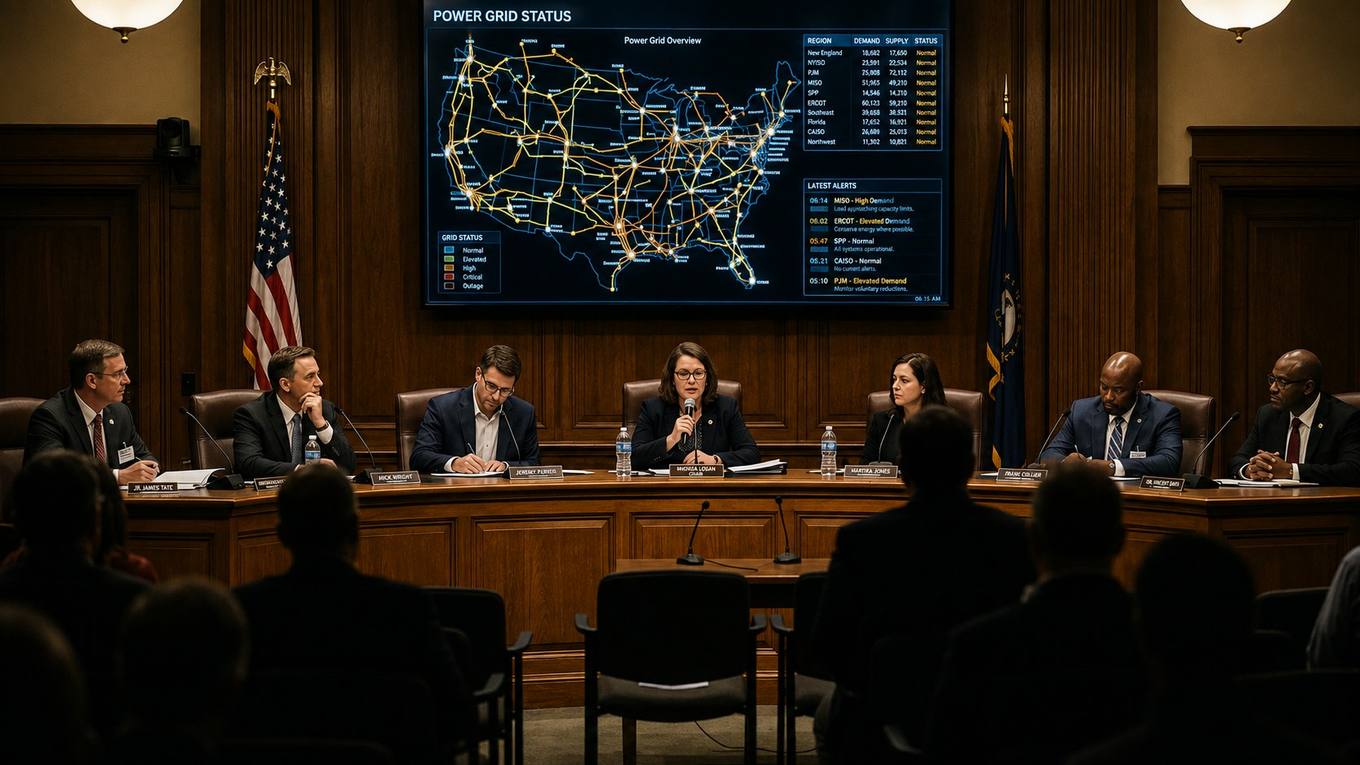
MEMPHIS, Tenn. - The Tennessee Valley Authority brought its quarterly board meeting to Memphis on Thursday, August 20, 2026, and left having answered, on the record, the question Memphis has spent a year asking: who pays when artificial intelligence comes for the power grid.
The TVA Board of Directors approved a new wholesale rate class for data centers, described in TVA's own release as protecting residential and manufacturing customers from subsidizing data center infrastructure costs. Reporting on the board materials puts mechanics on that frame: a Capacity Commitment Charge applying to data center loads above 5 megawatts, effective October 1, 2026, designed to recover incremental capacity costs from the loads that create them, with TVA projecting an all-in average billing impact for data center customers of approximately 10 percent phased over three consecutive fiscal years. "As AI and advanced industries consume more electricity, TVA's Board is making sure that hardworking American families and small businesses aren't left carrying the cost," board Chair Mitch Graves said in the release.
The board also approved the 2026 Integrated Resource Plan, which identifies a need for 11 to 32 gigawatts of additional generation capacity by 2040, and a fiscal year 2027 budget carrying more than $13 billion in planned generation and transmission spending through FY2029, alongside 4,120 megawatts of new TVA-owned capacity under construction and 3,000 megawatts under evaluation.
How the new rate protects households is, so far, a matter of taking the board's word for it. WPLN reported August 22 that the rate change was presented on a single slide in a two-hour meeting with minimal discussion, and that TVA has not released the analysis behind the structure or explained publicly how it shields residential ratepayers from data center cost allocation. The rate class takes effect October 1, 2026; until the rate schedule and the August 20 board minutes post, no ratepayer, including MLGW's, can check the math.
That gap lands hardest in Memphis. The 901 Report reported in July that Tennessee signed a pledge to keep data center costs off residential power bills while the state's own law carries an exception, and in August that twenty-three states have approved tariffs making data centers pay their own power costs while Tennessee wrote an exception instead. TVA has now written the tariff. Whether it does what the pledge promised is a question the unreleased analysis would answer.
Then there is the agenda line TVA's release does not explain: an approval listed only as "Load Greater than 100 megawatts." FOX13 reported the same night that the board gave SpaceXAI (formerly xAI) the go-ahead for a new connection directly to the TVA grid at its Whitehaven facility, with SpaceXAI bearing the costs of the connection. The company already has a direct connection at its riverport location and an operational power plant in Southaven, per FOX13. FOX13's headline frames the item as a request while its account describes an approval; the board's resolution and minutes, when posted, are the record that settles it.
A direct-to-TVA connection matters in Memphis for a specific structural reason: it routes load around MLGW, the city-owned utility that is TVA's largest local power company. Power MLGW does not deliver is revenue MLGW does not earn and load MLGW does not plan around, at the same time the new rate class changes how TVA recovers the cost of serving loads exactly like this one.
"Data centers must pay their fair share, but that doesn't mean they should be allowed to pollute our communities," Leah McCord of Appalachian Voices said, per WPLN.
Why It Matters for Memphis
The Memphis City Council's proposed 12-month data center moratorium exists to study questions the TVA board just answered for its own system: whether AI-scale loads pay their own way, on what terms, and through whose wires. The rate class is a published answer sheet with the workings torn off. The direct-connect approval is a live example of the biggest data center customer in Memphis structuring around the city's own utility.
Your city. Your money. Your receipts.