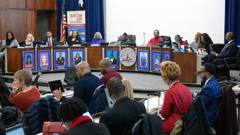
MEMPHIS, Tenn. - Memphis-Shelby County Schools and its allies have gone to federal court to try to stop Tennessee''s takeover of the district before it begins. According to Chalkbeat, the district, the Shelby County Commission, and all nine individual MSCS board members filed a lawsuit late on June 19, hours after the state-appointed oversight board met for the first time in Nashville.
The suit names Governor Bill Lee, House Speaker Cameron Sexton, Lieutenant Governor Randy McNally, and the state education commissioner. It asks for a preliminary injunction to stop the nine-member oversight board from acting, arguing that once the board is seated and begins making decisions, the harm cannot be undone. The plaintiffs contend the takeover dismantles local education governance, strips the county of its authority to approve school budgets, and violates the Fourteenth Amendment and the Tennessee Constitution.
The oversight board, created by a law Lee signed in late May, is scheduled to begin serving July 1. Under that law, the board holds final authority over the district''s budget and over contracts above $50,000, and it can hire or fire the superintendent. Its appointed members include former MSCS board member Billy Orgel, former Superintendent Dorsey Hopson, attorney Dedrick Brittenum Jr., and Tennessee SCORE chief executive David Mansouri, among others.
The legal fight arrives with a financial wrinkle already in place. The elected board approved a three-year contract for Superintendent Roderick Richmond on March 31, a deal that reporting indicates would obligate the district to a payout approaching half a million dollars if the new board removes him without cause.
Supporters of the takeover argue the state''s largest district needs added oversight after years of academic underperformance and leadership turnover, including four superintendents in five years. Opponents, including several elected officials, argue appointed managers should not override representatives chosen by voters.
Why It Matters for Memphis
This is a direct contest over who controls Memphis schools and the roughly $2 billion that runs them. The elected board answers to local voters. The oversight board answers to state officials in Nashville. The lawsuit asks a federal judge to decide, before July 1, whether the second can displace the first.
For parents, students, and teachers, the stakes are immediate. The same body that would control the budget can also remove the superintendent and other employees. Whatever the court decides in the coming days will shape who makes those calls when the school year approaches.
The Oversight Question
The irony of a takeover sold as accountability is that it concentrates authority in appointed officials who do not answer to Memphis voters. That does not make the underlying concerns about the district invalid. Academic underperformance and leadership churn are real. But the mechanism matters as much as the goal.
The question now sits with a federal judge: can the state replace locally elected governance with an appointed board, and if so, on what limits. As this case proceeds, the public deserves a clear account of what the oversight board actually does with the budget, the contracts, and the personnel power it has been handed, and whether that authority improves outcomes or simply relocates control.
Update, October 11, 2026: U.S. District Judge Waverly D. Crenshaw Jr. temporarily blocked the state takeover on July 1, 2026, the day the oversight board was to take control, leaving the elected board in charge while the case proceeded. The 901 Report covered that order on July 20.
On October 5, 2026, Crenshaw filed an order indicating he will lift the block once oversight board chair Billy Orgel notifies the court under oath that the board is "ready, willing, and able" to begin work, Chalkbeat Tennessee reported. Gov. Bill Lee, Education Commissioner Lizzette Reynolds, and legislative leaders were dismissed as defendants, FOX 17 reported. On October 7, 2026, the district, Shelby County Government, and county commissioners filed a second suit in Shelby County Chancery Court seeking a permanent injunction under state law. The 901 Report's follow-ups: "Judge Clears the Way for the MSCS Takeover, and the Start Date Now Rests With the Board Chair" and "The Takeover Fight Opens a Second Front: a Chancery Court Suit Seeking a Permanent Injunction".