BOSTON - The federal judge whose mail-voting injunction the Supreme Court lifted on procedural grounds has issued a new nationwide block, this time against a Postal Service rule that is final. U.S. District Judge Indira Talwani in Boston entered a 14-day temporary restraining order on August 27, 2026 against the new requirements the Postal Service's finalized plan imposes on states under the President's mail-in voting executive order. A hearing is set for September 3, 2026, and the administration has appealed to the First Circuit.
As The 901 Report reported in the earlier post on this litigation, the Supreme Court halted Judge Talwani's June ruling on August 24, 2026, reasoning that she had acted too early, before the Postal Service had issued a finalized plan. The Postal Service issued its final rule on August 21, 2026. The new order answers the Supreme Court's stated objection directly: the plan is now final, and the challenge is now to a concrete rule rather than an anticipated one.
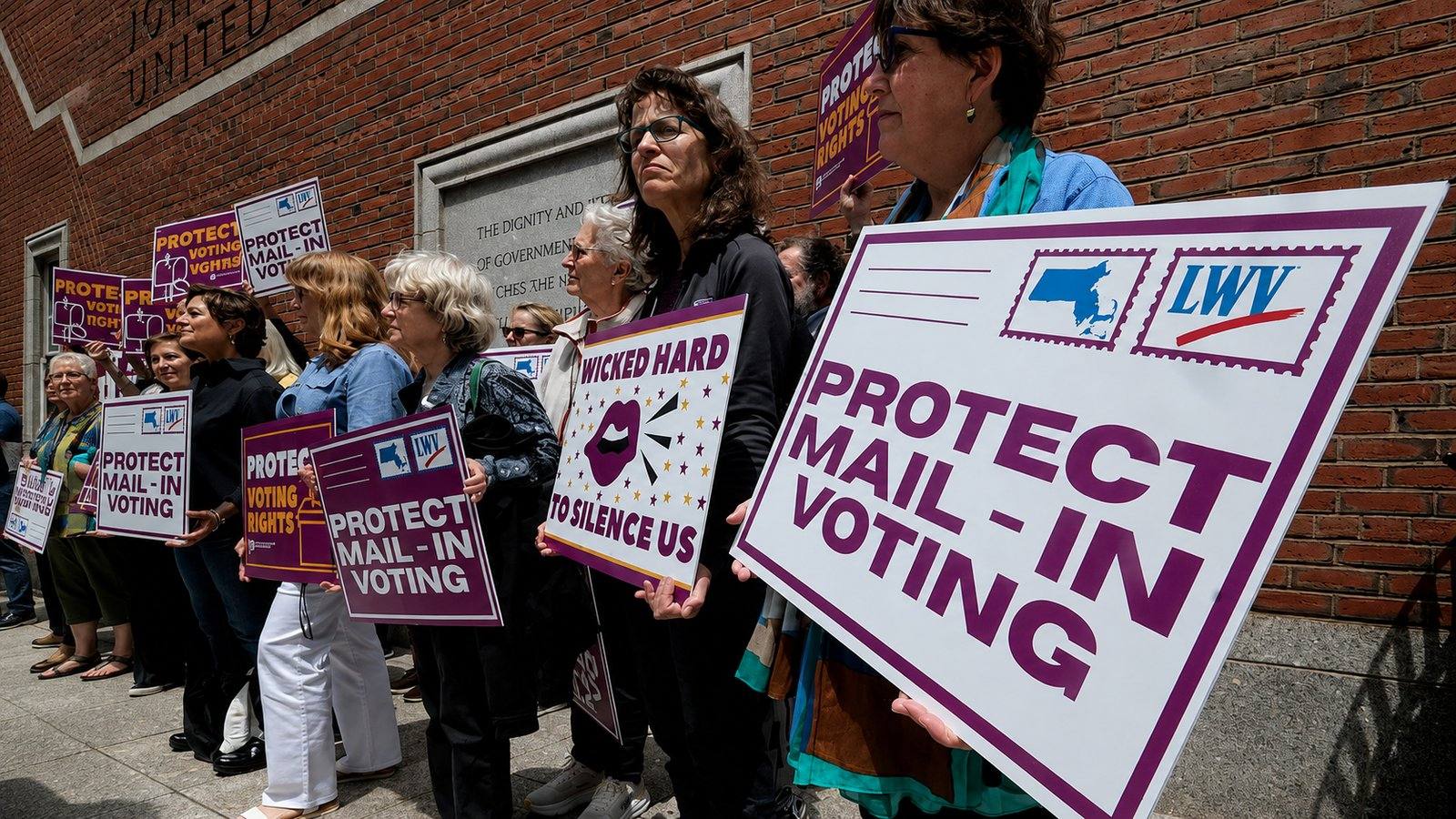
The rule at issue directs the Postal Service to deliver mail-in ballots only to individuals on state-provided absentee voter lists, implementing the executive order's restrictions. The plaintiffs, the League of Women Voters of Massachusetts and other voting rights groups, joined by roughly two dozen Democratic-led states, argue the requirement is likely unconstitutional as applied to the midterm elections. The administration defends the rule as implementing the executive order's election-integrity directives, and its appeal means the First Circuit, and plausibly the Supreme Court again, will decide whether this block stands where the last one did not.
The procedural posture is the story. The Supreme Court did not uphold the rule in August; it faulted the timing of the challenge. With a final rule on the books and a fresh order against it, the question the courts have so far avoided, whether the executive order's mail-ballot restrictions are lawful, is now squarely presented on a live record.
Why It Matters for Memphis
Shelby County runs elections by mail for the voters state law allows, and a federal rule limiting whose ballots the Postal Service will carry reaches every county election commission in the country, including this one. The November 3, 2026 general election is the clock this litigation runs against.
The Oversight Question
The Supreme Court said the last challenge came too early. The rule is now final, the block is back, and the election is barely two months off. How close to Election Day can the rules for carrying ballots stay unsettled before the uncertainty itself becomes the harm?
Your city. Your money. Your receipts.
Sources
- NPR, "Postal Service appeals order blocking plan for Trump's push to restrict mail voting": https://www.npr.org/2026/08/26/nx-s1-5945260/trump-mail-in-voting-ballots
- CNN, "Judge pauses US Postal Service plan to implement Trump's new mail voting restrictions," August 27, 2026: https://www.cnn.com/2026/08/27/politics/judge-pauses-usps-plan-restrict-mail-voting
- NBC News, "Judge blocks Trump's Postal Service regulation on mail-in ballots": https://www.nbcnews.com/politics/2026-election/judge-blocks-trumps-postal-service-regulation-mail-ballots-rcna594692
- The 901 Report, "One Injunction Left: The Supreme Court Clears Half the Path for the Federal Ballot Rule": https://the901report.com/beats/national/scotus-lifts-mail-ballot-injunction
Update, October 11, 2026: Judge Indira Talwani preliminarily enjoined key parts of the Postal Service's August 21 mail-ballot rules on September 4, 2026. The administration's first Supreme Court application (No. 26A297) was withdrawn on September 6 and replaced the same day with a new one (No. 26A305), SCOTUSblog reported. On September 13, Judge Carl J. Nichols in the District of Columbia issued a second, independent injunction against the same rules, per the Associated Press. On September 14, the Supreme Court denied the stay in United States Postal Service v. California, No. 26A305, leaving the rules blocked through the November 3 election; Justice Samuel Alito dissented, joined by Justice Clarence Thomas. Shelby County mail ballots proceed under existing state procedures. The 901 Report's follow-up: "Supreme Court Refuses to Revive the Mail-Ballot Rules for the Midterms".