MEMPHIS, August 24, 2026 - Three resolutions on the Shelby County Commission's final agenda of its term carried the same notation: the item does not meet the requirements of the permanent rules. Each needed a suspension of the rules before it could be discussed at all. The three did not fare the same way.
One, a budget amendment for criminal court staffing, cleared easily and passed 12 to nothing. One, a limit on spending for the schools oversight litigation, cleared only after an objection raised the threshold to two thirds and a 13-minute argument. The third, a $270,000 opioid appropriation, never got a second and was never heard.
What the notation means
The permanent rules require an item to complete legal and finance review and carry supporting documents, including a routing sheet, before it appears on an agenda. When those steps are incomplete, the parliamentarian reads the item, states that it does not meet the requirements, and the body must vote to suspend its own rules before the item is properly before it.
Without an objection, a suspension carries on a simple majority. With an objection, it takes two thirds of those present and voting. With 12 members present on August 24, that was eight votes.
The argument
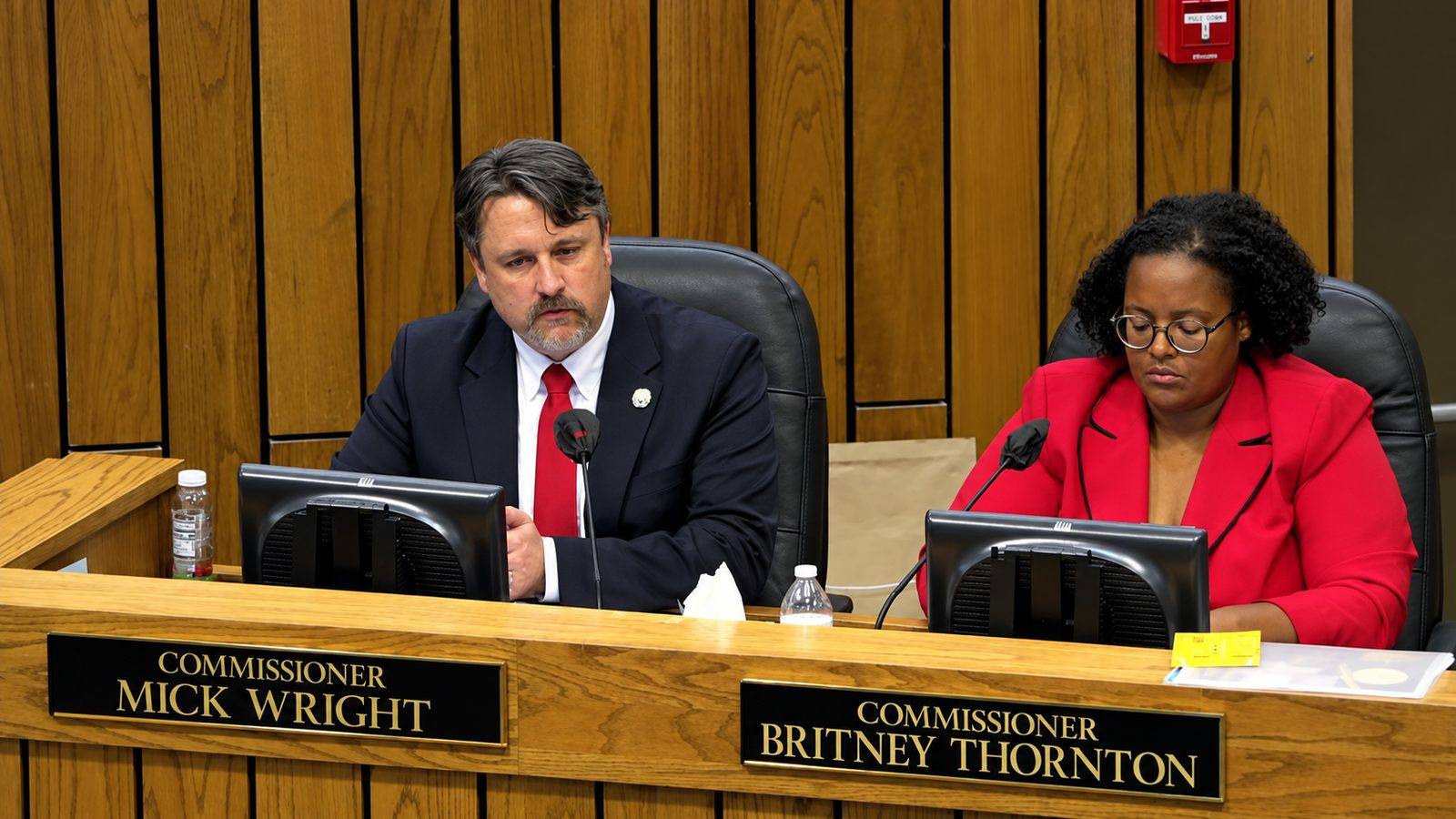
Commissioner Mick Wright made the structural case while the Commission was deciding whether to hear the litigation resolution. He was explicit that he was not arguing the merits.
He said the body has to allow space for commissioners' resolutions to be heard and for the public who come out on both sides of an issue to be heard. He said the Commission is getting closer and closer to a possible abuse of the rules, in which administrative departments do not authorize items to move forward to the agenda, so those items reach the agenda without meeting the permanent rules, which creates an additional barrier. That barrier, he said, threatens to make commissioners not equal to one another, and if members' resolutions are not treated equitably it creates a barrier to the board functioning together.
He asked that the sponsor be allowed to be heard and that the public on both sides be allowed to be heard.
Chairwoman Shante K. Avant said she would vote to allow the item forward because of the number of people who had signed up to speak and had been waiting.
The record does not contain a response from any administrative department. Nobody from the administration addressed the assertion, and no commissioner disputed it.
What happened to each item
The criminal court staffing amendment. Filed as an amendment to the adopted fiscal year 2027 budget in the amount of $260,111.32, it carried the permanent-rules notation on the committee agenda. Commissioners suspended the rules in committee without objection, took up a substitute, and advanced it. On the floor it passed 12 to nothing after the county attorney answered the one outstanding legal question in a single sentence.
The litigation spending limit. Filed as an add-on, it carried the notation on both agendas. Commissioner Charlie A. Caswell, Jr. objected to suspending the rules, raising the bar to two thirds. He said his objection was to the original resolution's substance, that money has already been spent and attorneys are already moving. The sponsor said the substitute no longer prohibits anything and asked him to withdraw. He declined and held his objection. The suspension carried nine to two with one abstention, and the resolution later passed seven to three.
The opioid appropriation. Also an add-on, it carried the notation on both agendas, and a member noted from the floor that it had by then been approved by legal and finance. The sponsor moved to suspend the rules. The chairwoman called for a second twice. None came. She ruled the motion failed and the item was not before the body.
Five organizations had waited through the meeting to speak on it. The meeting had run about four hours and 44 minutes at that point.
The pattern the record shows
Three items, three different results, and the difference was not the merits. It was whether anyone in the room was willing to spend a procedural vote on hearing them.
The rules exist for a stated reason: to ensure items are reviewed by legal and finance and properly documented before the body acts on them. That reason is real, and two of the three items were still incomplete when they reached the floor. The countervailing fact is equally on the record: the review that gates access to the agenda is performed by departments a commissioner does not control, and no commissioner is entitled to a second.
What happens next
The record shows the Commission adopted a resolution of adjournment for its 2022 through 2026 term at the same meeting. The permanent rules were not amended.
The commissioner who raised the objection is no longer on the body. Eight of the 13 seats turned over at the county's 2026 swearing-in ceremony. Any change to how items reach the agenda is now a matter for the new Commission, and nothing in the record indicates that a change has been proposed.
Your city. Your money. Your receipts.