The swap funds four new criminal court clerks from the general fund and moves the mental health court to the opioid abatement fund. The judge said the switch restricts how she can spend it. Finance said one stream of that fund is unrestricted.
MEMPHIS, August 19, 2026 - A substitute resolution presented at Wednesday''s Shelby County Commission committee meeting would fund four new criminal court clerk positions with $260,111.32 from the general fund and shift a $400,000 mental health court appropriation from the general fund to the opioid abatement fund. It advanced to the full Commission with three aye votes, one no and five abstentions.
The item as printed in the agenda packet was a straight amendment to the adopted fiscal year 2027 budget in the amount of $260,111.32 for the Criminal Court Clerk''s Office to staff and update two new criminal courtrooms. The packet notes the item does not meet the requirements of the Commission''s permanent rules. Commissioners suspended the rules to hear it, then took up a substitute prepared by Commissioner Michael Whaley, the committee chairman, that added the opioid piece.
What the substitute does
Commissioner Whaley told the committee the substitute was intended to accomplish several things at once. The original resolution would have drawn from fund balance, which he said the county is trying to avoid. Under the substitute, the mental health court commitment approved during the budget process is funded from opioid special revenue funds, and the criminal court clerk positions are funded from the general fund at an amount smaller than the opioid allocation. He said the net effect returns roughly $140,000 to the general fund balance, which he noted the committee had just heard is significantly below county policy.
Why the clerk says the positions are required
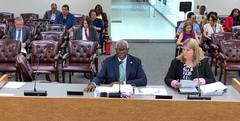
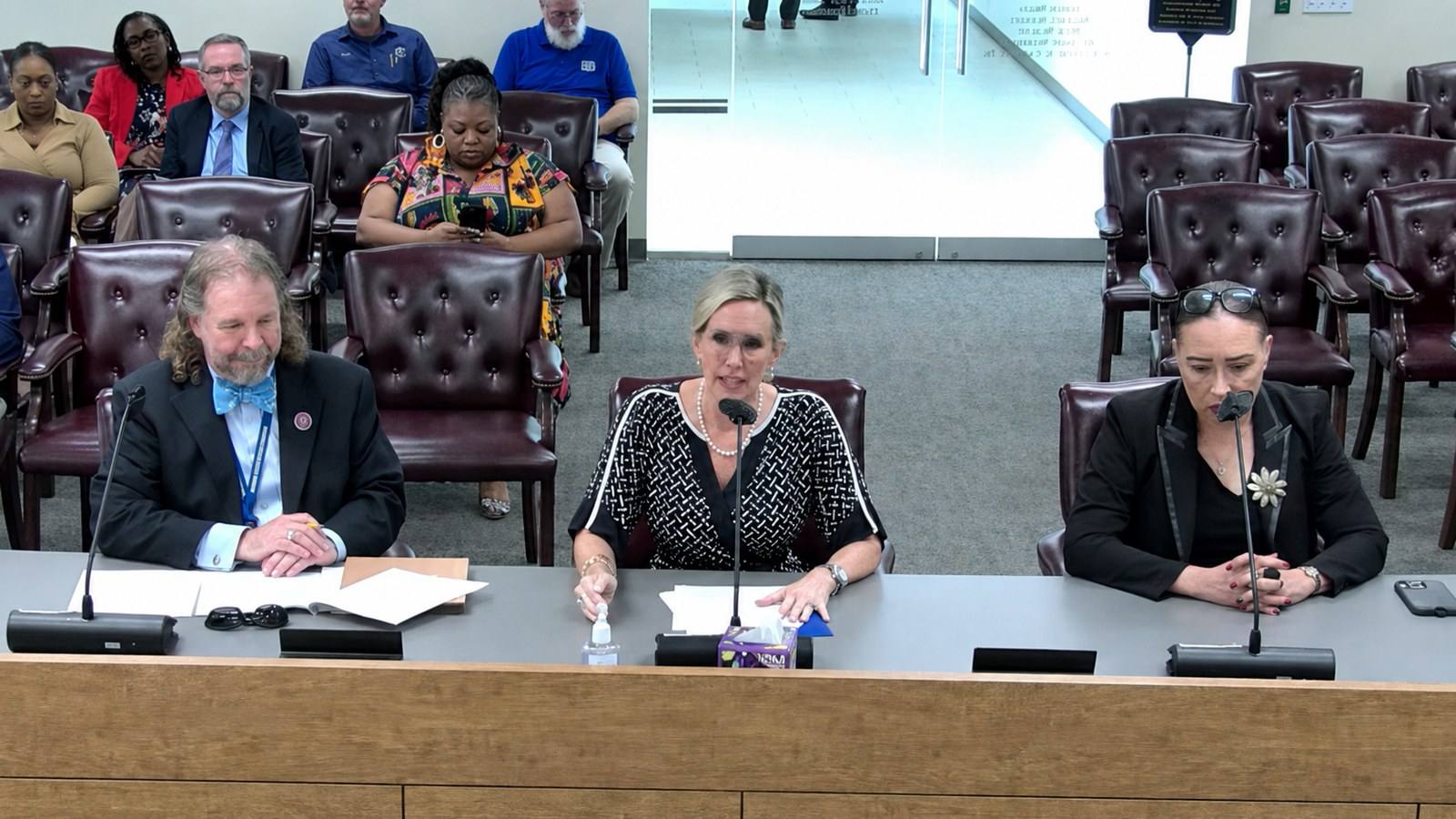
The Criminal Court Clerk told the committee the state mandated two additional criminal court divisions, and that her office is statutorily obligated to staff two clerks in each courtroom and to provide courtroom technology. The request covers four positions including fringe, plus technology for the two divisions. She said the need arose after the budget was built.
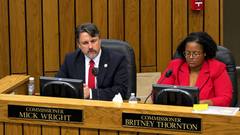
Commissioner Mick Wright asked whether the request had been submitted as part of the budget proposal. The clerk said it had not been in the submitted budget, but that her human resources director and chief administrative officer communicated the coming need to commissioners on May 20 and were told there were no questions.
Commissioner Wright then asked why the office adds staff when courts are added but did not lose staff when a division was removed. The clerk said the two clerks from the division eliminated in 2024 were repurposed within her office, one to appeals and one to records and retention, and that the office cannot absorb four more.
Commissioner Henri E. Brooks pressed a narrower question twice: whether the state bill that created the two courts, which she said the item materials reference on page two as House Bill 1268, requires the county commission to fund the positions. The clerk answered that she did not think the bill states that specifically.
The judge''s objection
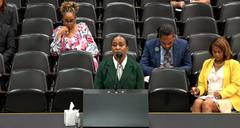
The judge who presides over the General Sessions Division 9 mental health court told the committee she was taken by surprise by the change and asked whether her court''s general fund money was being reallocated to the clerk''s office.
Commissioner Whaley said no, that the $400,000 approved in the budget for a mental health services coordinator, a peer recovery counselor and a part-time coordinator stays the same, and that only the internal funding source changes.
The judge''s objection was about what the source allows. She told the committee that opioid funds must be spent in compliance with the grant, that the switch would restrict her to the employees she has rather than the growth the state has directed, and that she had come to the meeting expecting to seek opioid funds on top of the general fund appropriation, not instead of it. She said the mental health court reached the budget for the first time in 10 years.
Finance''s answer, and the part that stayed unresolved
The director of administration and finance told the committee there are two revenue streams in the opioid funds. The bulk comes from the Tennessee Opioid Abatement Council and is held to that fund''s policies and rules. A smaller portion, which she put at about $400,000, can be used for operations within the county, including mental health purposes, and that is the stream she agreed to use for the swap.
Both accounts are on the record and they do not fully reconcile. Finance describes the smaller stream as usable for county operations. The judge describes the money as restricted in a way that caps her staffing. Neither side produced a document at the table resolving which reading governs. Commissioner Charlie A. Caswell, Jr. asked the committee to let one member seek written confirmation before Monday that the money can be used for positions.
Commissioner Amber Mills raised a separate concern, that opioid settlement money is a one-time source being applied to recurring salary costs. Commissioner Whaley responded that opioid funds arrive on a long schedule rather than all at once, and that any year''s budget is at the discretion of the Commission regardless of source.
Commissioner Brooks asked for the minutes of the fiscal year 2026 budget meeting before Monday, saying her recollection was an agreement of $400,000 from the general fund in addition to $500,000 for the mental health court, and that the body should not change what it agreed to.
The vote
Aye votes came from Commissioner Whaley, Commissioner Wright and Commissioner David C. Bradford, Jr. Commissioner Brooks voted no. Commissioner Miska Clay Bibbs, Commissioner Caswell, Commissioner Mills, Commissioner Britney Thornton and Chairwoman Shante K. Avant abstained. Three aye votes carried the item to the full Commission with a favorable recommendation.
What happens next
The full Commission adopted the substitute on Monday, August 24, 2026, on 12 aye votes.
The question that split the committee was settled in one sentence. Commissioner Charlie A. Caswell, Jr. asked the county attorney''s office for the answer he had requested five days earlier, on whether opioid abatement funds can pay mental health court salaries. The attorney answered that this is an approved use of the opioid abatement funds. No commissioner asked a further question, and the judge who had objected did not return to the podium.
The fiscal year 2026 budget minutes that Commissioner Brooks requested were not presented at that meeting.
Before the vote, Commissioner Amber Mills used the item to make a point to the incoming Commission. She said the episode is why the county needs a lobbyist in Nashville, to catch legislation like this while it is still on the floor there, rather than having to fund the resulting courts on the back end after the legislation is amended.
The clerk told the committee the two new divisions are scheduled to be standing as of September 1, 2026, and that supervisors will cover the courtrooms until any new positions are filled and trained.
The clerk who made that request no longer holds the office. Joe Towns, Jr. was sworn in as Shelby County Criminal Court Clerk at the county''s swearing-in ceremony for the new term. The four positions, the $260,111.32 and the two courtrooms are now his. Nothing in the record establishes whether the positions have been posted or filled.
Your city. Your money. Your receipts.