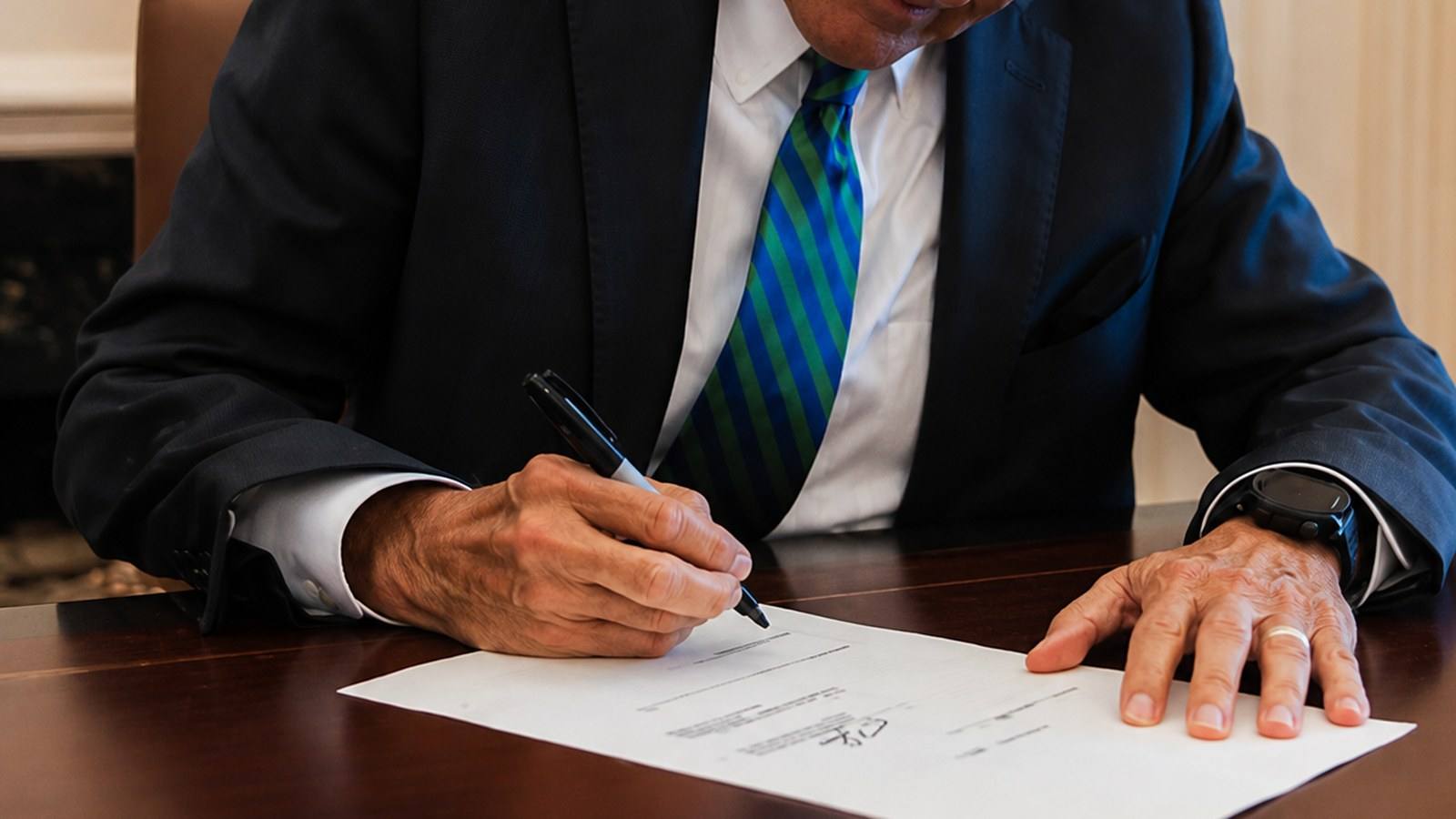
MEMPHIS, Tenn. - Governor Bill Lee has signed on to President Donald Trump's Ratepayer Protection Pledge, a voluntary White House agreement stating that data center companies should bear the costs of building, maintaining and powering their own facilities. Twenty-three Republican governors have signed it, along with Google, Meta and OpenAI, according to reporting by the Tennessee Lookout published July 27.
Lee thanked the president on X on Friday, July 24, saying Tennessee has shown it can lead the nation in innovation "while protecting hardworking families from higher utility bills".
The pledge is voluntary. It creates no obligation a customer could enforce and carries no penalty for a company that departs from it.
The enforceable instrument is state law, and Tennessee passed one this year. Under it, owners of data centers requiring at least 50 megawatts must pay for infrastructure upgrades needed to generate the electricity they demand. State Senator Brent Taylor, a Shelby County Republican, sponsored the measure in the Senate and has said it is meant to protect ratepayers from power bill increases.
That law contains two provisions Memphis residents have a direct financial interest in understanding.
The first is a cost-sharing exception. Where infrastructure upgrades benefit other ratepayers, or where they follow the normal rules applied to all large electricity customers, utilities may help a data center cover the cost, according to the Tennessee Lookout's account of the statute. Those are two broad categories, and how they get applied is a utility-level determination rather than a matter of published state formula.
The second is a self-power option. The law allows a data center to generate its own electricity, using equipment such as gas-fired turbines, without state or local oversight. Environmental groups and community coalitions have objected that such turbines emit pollution and continuous noise.
Both provisions land in Memphis with unusual force. Elon Musk's xAI supercomputer operates in a predominantly Black Memphis neighborhood that carries an existing pollution burden. Memphis Light, Gas and Water is the municipal utility that would apply any cost-sharing determination, and MLGW is owned by the City of Memphis and governed by a board its mayor appoints.
The Tennessee General Assembly considered six additional data center bills this year that would have set guardrails ranging from registration and permitting to mandatory reporting of water, electricity and fuel use. None passed.
The U.S. Environmental Protection Agency has declined to set national environmental standards for data centers, leaving those decisions to states and local governments. Several Tennessee local governments have adopted moratoriums on data center approvals while they write their own rules.
There is evidence the voluntary approach is not widely understood by the people it is meant to protect. Sarah Hunt, president and chief executive of the Rainey Center, a Washington policy research organization, told a Tennessee Chamber of Commerce and Industry infrastructure summit in July that 9 percent of voters her organization polled had heard the pledge existed, and that 61 percent wanted Congress to make it binding law once it was described to them.
Supporters of the current framework make a straightforward case. Tennessee has drawn substantial capital investment, the 50-megawatt threshold puts the default cost obligation on the company rather than the customer, and a state that regulates too aggressively risks losing projects to states that do not. That is a real argument and it is the one the law's sponsors advance.
Why It Matters for Memphis
The question a Memphis ratepayer needs answered is not whether the governor signed a pledge. It is whether any portion of the electrical infrastructure serving xAI has been, or will be, paid for through MLGW's rate base.
That question has a documentary answer. MLGW's arrangements with large industrial customers, the load studies behind them, and any board action approving cost allocation are records. The 901 Report has not seen them, and no public accounting of them was identified in the reporting reviewed for this post.
Until that accounting exists, Memphis has a voluntary federal pledge with no enforcement, a state law with an exception whose application is not published, and the largest three-service municipal utility in the country sitting between the two.