MEMPHIS, July 21, 2026 - A proposed amendment to the Memphis city charter would change who is allowed to sit in judgment when the city fires, suspends, or demotes an employee.
The board that hears those cases is the Civil Service Commission. Under the city charter, an employee's appeal is decided by a hearing officer, and the charter requires that hearing officer to be a licensed attorney, a current or former judge, or a former administrative law judge. The amendment would let the City Council seat hearing panels made up instead of persons "trained or experienced in labor and benefits matters."
The ordinance reached third and final reading Tuesday night and did not get a vote. Councilman JB Smiley Jr. moved to hold it because the sponsor, Vice Chair Chase Carlisle, was not present to explain it. Councilwoman Jerri Green seconded. It now goes to the August 4 meeting.
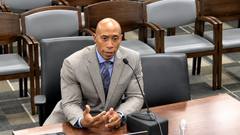
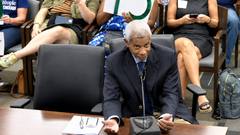
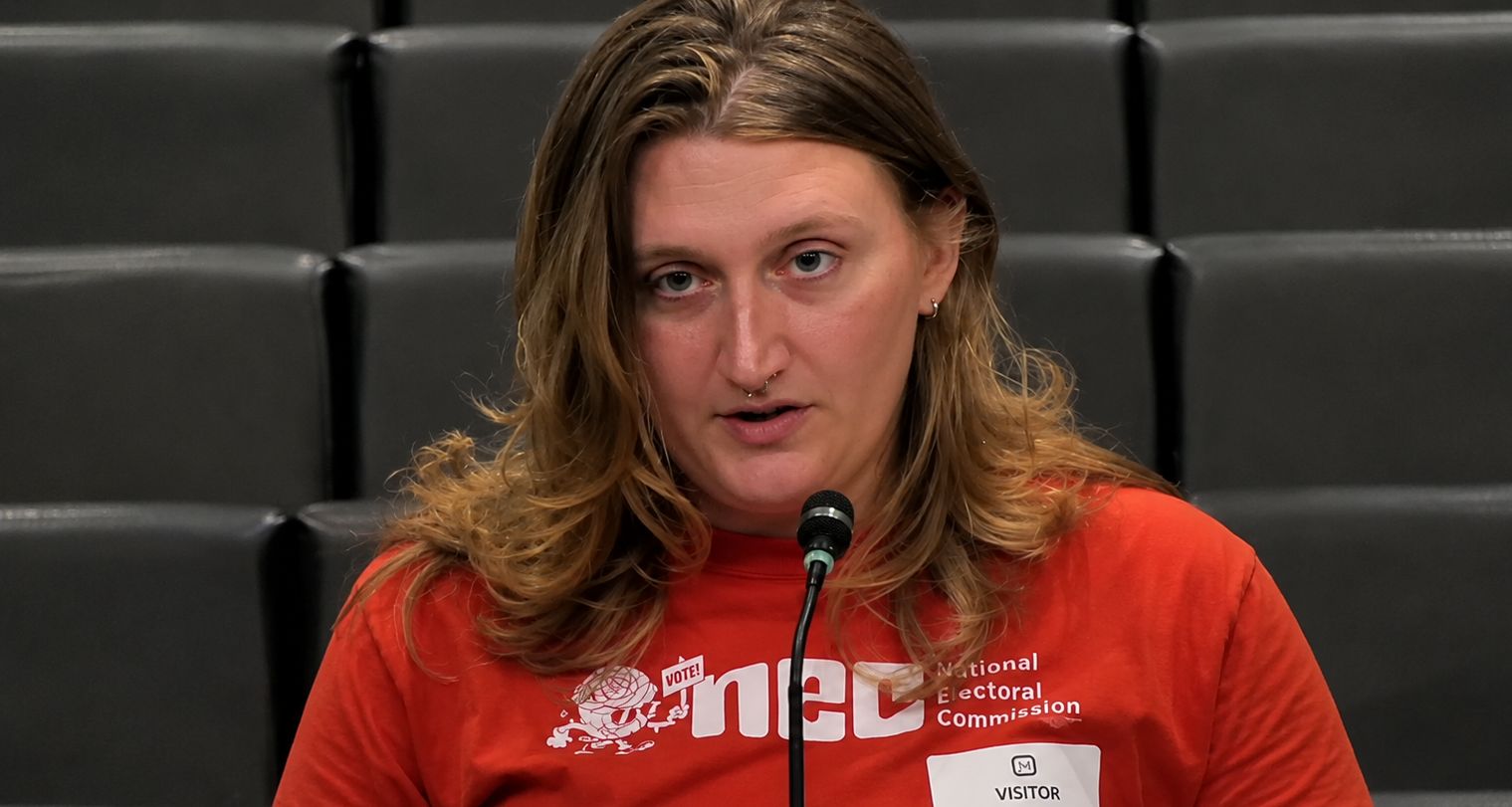
Two residents came to the podium to ask what the amendment would do. Neither got an answer, because the sponsor was not there to give one.
The 901 Report obtained the ordinance from the July 21 public agenda packet and read it against Article 34 of the Memphis charter, which created the commission, and against the city's own written policy on how these appeals work.
What the charter requires now
The Civil Service Commission is created by Article 34 of the charter. It has fourteen members. Its job, in the charter's words, is to conduct hearings to review disciplinary actions limited to suspensions, dismissals, or demotions of city employees.
Two provisions matter here.
Section 241 requires that at least seven of the commissioners be licensed attorneys, current or former judges, or individuals with prior experience as an administrative law judge.
Section 245 ties the actual decision-making to that credential. It provides that any commissioner who is a licensed attorney, a current or former member of the judiciary, or a former administrative law judge is entitled to act as a hearing officer, with the same powers as the full commission. Under Section 248, when an employee appeals a firing, the hearing officer is randomly selected from the qualified commissioners.
So today, the person who decides whether the city had a lawful basis to fire you is a lawyer or a judge. That is fixed in the charter.
This is a relatively recent guarantee. When Article 34 was rewritten in 1982, the commission had seven members and no attorney requirement. The attorney-and-judge floor, and the expansion to fourteen members, came in a 2013 charter amendment approved by voters.
What the amendment would do
The ballot question the ordinance would put to voters reads:
"Shall the City of Memphis Charter be amended to authorize the City Council, in consultation with the Mayor, to establish by ordinance uniform and comprehensive administrative procedures for disposition of appeals, as required by law, that that may affect the employment status of a civil service employee, including the composition of boards, commissions and hearing panels with persons trained or experienced in labor and benefits matters?"
The duplicated word "that that" is in the ordinance. It appears in Section 1 and again in Section 4, which is the version directed to the Shelby County Election Commission for the ballot.
The operative phrase is at the end: the council could set the composition of the boards, commissions, and hearing panels, with persons trained or experienced in labor and benefits matters.
Set against Section 245, that language would let the council seat hearing officers who are labor and benefits people rather than attorneys and judges. The current charter guarantee that your appeal is heard by a lawyer or a judge would give way to whatever standard the council writes into an ordinance.
It reaches more than firings
At Tuesday's meeting the amendment was discussed as a matter of disciplinary appeals. The ordinance is broader.
One of its whereas clauses states that state law requires the city to use certain procedures in any case that may affect the employment status of a civil service employee, and identifies those as civil service, OJI, and pension appeals. OJI means on-the-job injury.
So the amendment reaches injury claims and pension disputes, not only discipline.
The wrinkle the amendment does not resolve
There is a complication in the charter that the ordinance does not address, and it is the sharpest unanswered question in the whole matter.
Section 241 already gives the council power. In its own words, "The Council of the City of Memphis shall have the power to fix the qualifications and compensation of the members of the Civil Service Commission and to pass such ordinances as may be required to carry out the purposes and provisions of this article."
The council already has ordinance power over the commission's qualifications. What the charter fixes, and what an ordinance cannot currently override, is the seven-attorney floor in that same section and the hearing-officer credential in Section 245.
That leaves two readings of the amendment, and the ordinance chooses neither. Either the amendment is largely redundant with power the council already holds, or its purpose is to let a council ordinance override the attorney-and-judge guarantee the charter now protects. Those are very different amendments. Nobody on the floor Tuesday night said which one this is.
Section 8: conflicting charter language is annulled
The ordinance provides that from and after the effective date of the amendment, all charter provisions in conflict with the subject matter of the amendment shall be immediately annulled, vacated, and repealed. Provisions not in conflict continue in force.
The ordinance does not list which provisions it considers to be in conflict. Read alongside the credential question above, the natural candidates are the very Section 241 and Section 245 guarantees that require hearing officers to be attorneys and judges.
Section 7: money for the lawsuit
The provision that drew no public discussion is Section 7.
It authorizes the Mayor to appropriate and spend out of the general revenues of the City of Memphis a sum sufficient to pay a pro rata share of the cost of placing the amendment on the November 3, 2026 ballot, and, in the ordinance's words, for the cost of seeking a declaratory judgment, if necessary, as to the enforceability of the proposed amendment if approved by the voters.
A declaratory judgment is a court ruling on whether something is legally valid. The ordinance anticipates that after voters approve this amendment, someone will need a judge to say whether it can be enforced, and it authorizes public money to go find out.
No dollar amount is set. The ordinance says a sum sufficient.
The council held a second charter amendment the same night, item 13, which would require the council to create a lobbyist registration and disclosure process. Vice Chair Carlisle sponsors that one as well, aimed at the same November 3, 2026 ballot. They are the only two charter amendments the council has moving toward that ballot. It carries the same structure: the same finance certification, the same Section 8 annulment clause, and the same Section 7 litigation authorization. The two Section 7 clauses differ by one phrase. This one authorizes the declaratory judgment cost "if necessary." The lobbyist version contains no such qualifier.
The certification says it costs nothing
Between the ballot question and Section 2, the ordinance carries a fiscal certification.
It reads: "I, Walter Person, Director of Finance for the City of Memphis, do hereby certify that the foregoing amendment shall have no impact on the annual revenues and expenditures of the City."
That certification and Section 7, which authorizes spending from general revenues on ballot costs and on a declaratory judgment action, are in the same five-page document.
What the public said
Andrew Guthrie told the council the referendum is opaque and confusing, and that as he reads it, it appears it could undermine the basis of civil service protections in Memphis. He tied it to library workers who have been asking the council for those protections.
"Would you want to give politicians more power over the working people of Memphis?" he asked.
Brianna Bird asked what the phrase about uniform administrative procedures for disposition of appeals would mean in practice, whether the ordinance would undermine the independence of the civil service board, and what the motivation behind it was.
Council attorney Wayne Wade told the body he had rewritten the ordinance.
"Originally there was some blanket creation of authority for the council and the mayor to create a system," Wade said. "But I changed it to make it be an administrative procedures act, and I think it's compliant with the law." He said he had signed off on it.
Chairwoman Jana Swearengen-Washington said the council held the item because it wanted additional clarification as well.
There are two honest ways to read this
An advocate for the amendment would say employment appeals are better heard by people who actually know labor and benefits law than by a randomly assigned attorney or judge who may have no background in either, and that the change modernizes a system built around courtroom credentials rather than subject-matter expertise.
A skeptic would say the attorney-and-judge requirement is what keeps the hearing officer independent of the administration that is doing the firing, that removing it from the charter lets a sitting council seat hearing officers more to its liking, and that a change of this kind belongs in plain view rather than in a ballot question most voters will read once.
The ordinance does not settle which of these it is. The person who could have was not in the room.
What happens next
The ordinance is scheduled for third and final reading at the August 4 council meeting, with the sponsor expected to be present.
The 901 Report has requested the earlier draft, any legal memorandum supporting the fiscal certification, and any correspondence identifying the origin of the ordinance.
Update, October 11, 2026: The Memphis City Council passed this charter amendment, Ordinance 5978, on third and final reading on August 4, 2026. Councilman JB Smiley Jr. was the only member recorded voting no. The 901 Report covered the vote, and the residents who asked what the amendment would do, in Four Residents Asked What the Civil Service Charter Amendment Would Do. The Council Attorney Asked Them to Raise Their Hands if They Knew the Law. Then It Passed.
The question will now appear on the November 3, 2026 ballot for Memphis voters, one of three city charter questions, alongside the separate library workers' civil service question and the lobbyist registration amendment. Early voting in Shelby County runs Wednesday, October 14 through Thursday, October 29.
Your city. Your money. Your receipts.