MEMPHIS, July 21, 2026 - A proposed amendment to the Memphis city charter would require the City Council to create a lobbyist registration and disclosure process. The amendment does not say who would have to register, what they would disclose, who would enforce it, what happens to anyone who ignores it, or when the council would have to write the ordinance that answers those questions.
It does say who pays if someone sues.
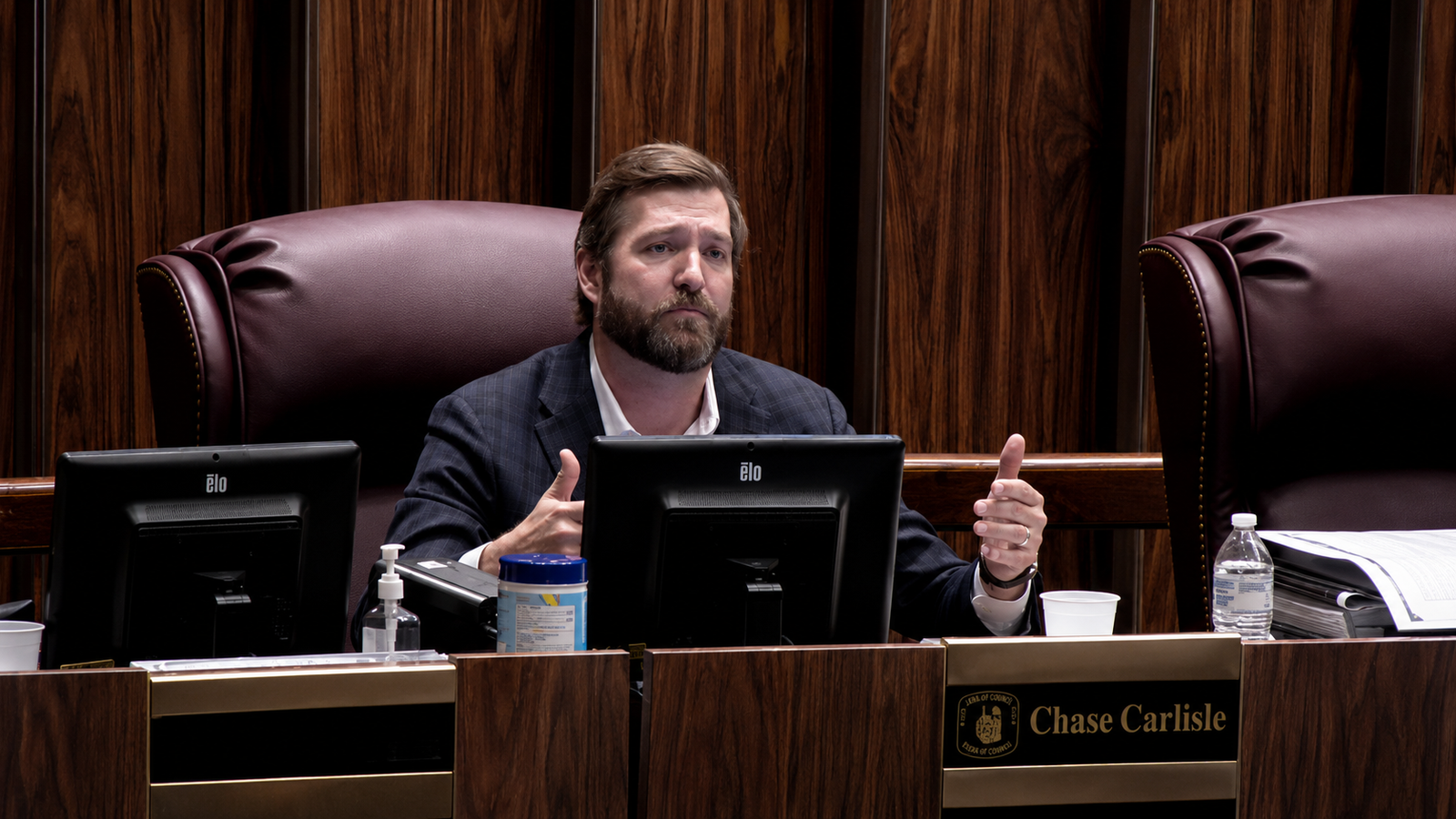
The item reached third and final reading Tuesday night and did not get a vote. Councilwoman Janika White reported it came down from committee without a recommendation. Councilman JB Smiley Jr. moved to hold it because the sponsor, Vice Chair Chase Carlisle, was absent.
"I don't want to spend all day on an issue when the person who proposed it is not here to talk about the justification," Smiley said.
Councilman Philip Spinosa seconded. It moves to the August 4 meeting.
What voters would actually be voting on
The ballot question reads in full:
"Shall the Home Rule Charter of the City of Memphis, Tennessee, be amended to require the Memphis City Council, by ordinance, to create a lobbyist registration and disclosure process to ensure transparency and accountability?"
That is the entire question. It appears in Section 1 and again in Section 4, which is the version directed to the Shelby County Election Commission for placement on the ballot.
The substance sits in a whereas clause, which is preamble rather than operative text. It describes a requirement under which lobbyists would register annually and file their state-mandated disclosure statements with the City of Memphis.
A yes vote would obligate the council to pass a lobbyist ordinance at some future date. What that ordinance says is not in front of the voter.
What the eleven sections do not contain
The ordinance runs to eleven sections. None of them defines a lobbyist.
There is no threshold, so it is not clear whether the requirement would reach paid contract lobbyists only, or also in-house government affairs staff, nonprofit advocates, or neighborhood associations.
There is no penalty for failing to register.
No office is assigned to receive filings, maintain the registry, or enforce it.
And there is no deadline by which the council must pass the implementing ordinance. A charter obligation with no deadline can sit unfulfilled indefinitely.
Supporters would reasonably answer that this is ordinary drafting. A charter authorizes, an ordinance implements, and stuffing operational detail into a ballot question is bad practice in its own right. That is a fair argument. It is also the argument the sponsor was not present to make.
Section 7: the money for the court fight
The ordinance authorizes the Mayor to appropriate and spend out of the general revenues of the City of Memphis a sum sufficient to pay a pro rata share of the cost of placing the amendment on the November 3, 2026 ballot, and, in the ordinance's own words, for the cost of seeking a declaratory judgment as to the enforceability of the proposed amendment if approved by the qualified voters of the City.
A declaratory judgment is a court ruling on whether something is legally valid. The ordinance anticipates that after Memphis voters approve a lobbyist registry, someone will need a judge to say whether it can be enforced, and it authorizes public money to go find out.
No dollar figure is set. The ordinance says a sum sufficient.
The council held a second charter amendment the same night, item 14, dealing with civil service appeals. Vice Chair Carlisle sponsors that one too, aimed at the same ballot, and its Section 7 is nearly identical. The one difference is that the civil service version authorizes the declaratory judgment cost "if necessary." This one contains no such qualifier.
The First Amendment clause
One whereas clause states that the Memphis City Council recognizes First Amendment rights must be safeguarded and endeavors to do so in all circumstances.
Lobbying registration ordinances are routinely challenged on First Amendment grounds, because petitioning the government is protected activity. The clause indicates the drafters are aware of that exposure. Section 7 indicates they have budgeted for it.
Section 8: conflicting charter language is annulled
The ordinance provides that from and after the effective date of the amendment, all laws constituting the present charter of the City of Memphis in conflict with the subject matter of the amendment shall be immediately annulled, vacated, and repealed. Provisions not in conflict continue in force.
The ordinance does not identify any charter provision it considers to be in conflict.
The certification
Between the ballot question and Section 2, the ordinance carries a fiscal certification.
It reads: "I, Walter Person, Director of Finance for the City of Memphis, do hereby certify that the foregoing amendment shall have no impact on the annual revenues and expenditures of the City."
Section 7 of the same ordinance authorizes spending from general revenues on two things: a share of the ballot cost, and a declaratory judgment action.
The identical certification appears on the civil service amendment held the same night.
The clock
The ordinance directs the Comptroller to deliver a certified copy to the Shelby County Election Commission in charge of holding the state general election on November 3, 2026.
Article XI, Section 9 of the Tennessee Constitution, which the ordinance cites, requires the proposal be published and the election held at least 60 days after publication. Sixty days before November 3, 2026 is September 4, 2026.
The council has held this ordinance once, over the sponsor's absence. The August 4 meeting leaves room. A second hold starts consuming the margin.
What happens next
The ordinance returns to the council August 4 for third and final reading, with the sponsor expected to be present.
The 901 Report has requested any draft implementing ordinance, the committee record, and any legal review supporting both the First Amendment clause and the fiscal certification.
*Your city. Your money. Your receipts.*
Update, October 11, 2026: The Memphis City Council passed this charter amendment, Ordinance 5977, on third and final reading on August 4, 2026, with no recorded no votes, after sponsor Vice Chair Chase Carlisle urged colleagues to let voters decide. The 901 Report covered that meeting in Four Residents Asked What the Civil Service Charter Amendment Would Do. The Council Attorney Asked Them to Raise Their Hands if They Knew the Law. Then It Passed.
The lobbyist registration and disclosure question will appear on the November 3, 2026 ballot for Memphis voters, one of three city charter questions. Early voting in Shelby County runs Wednesday, October 14 through Thursday, October 29, and Administrator of Elections Linda Phillips has urged voters to read the ballot questions at shelbyvote.com before they reach the machine, according to Action News 5.