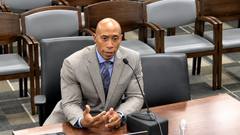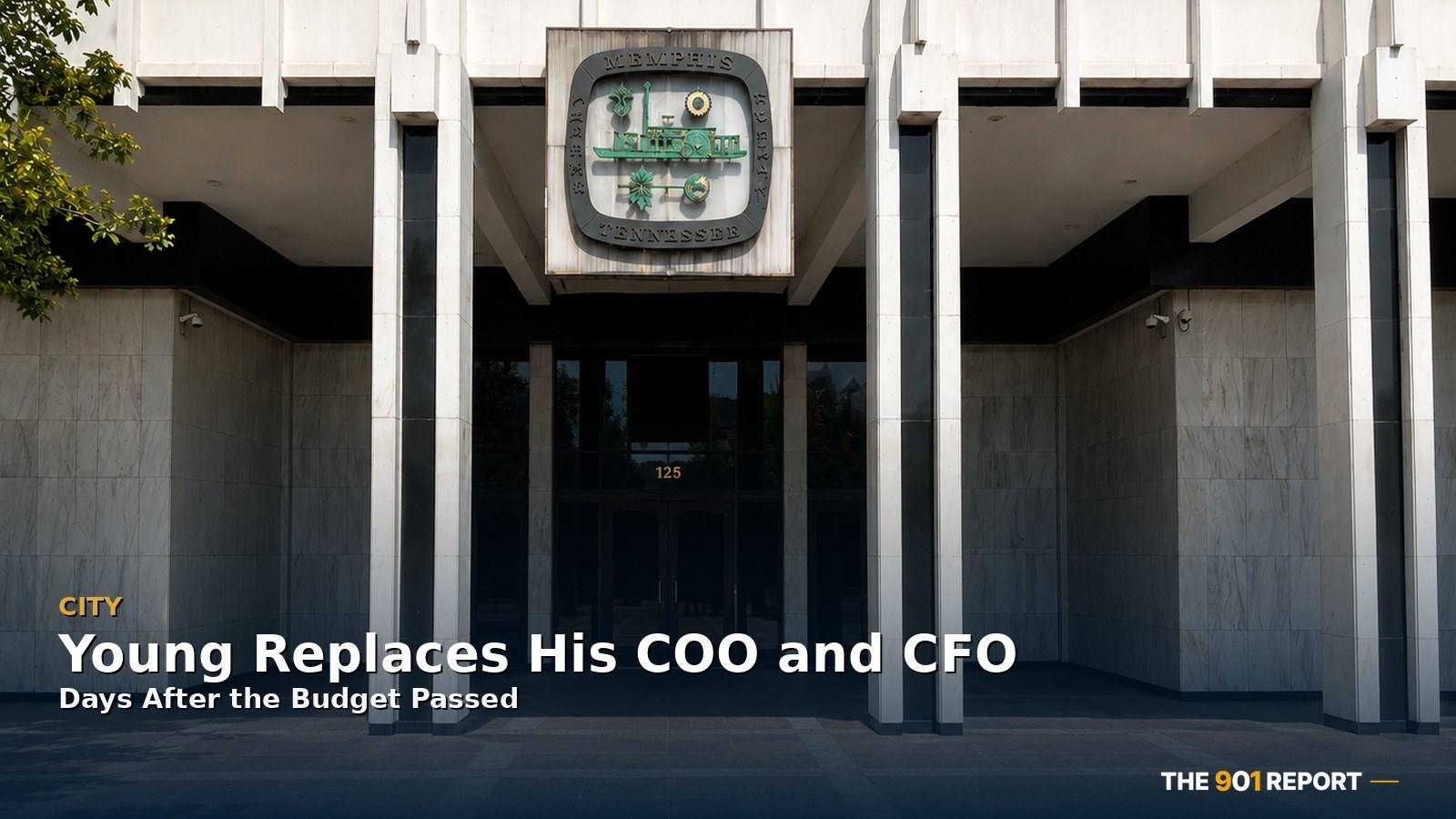
MEMPHIS, Tenn. Three days after the City Council passed the FY2027 budget, Mayor Paul Young remade the top of his administration. On Friday, June 26, Young announced a new Chief Operating Officer, a new Chief Financial Officer, and an interim City Engineer, and said his chief of development and infrastructure is leaving the administration. The two highest-profile appointments, the COO and CFO, take effect pending confirmation by the City Council.
The clearest way to read the shakeup is to look at who is leaving and who is arriving.
Chief Operating Officer. Out is Antonio Adams, a 17-year city employee who rose through roles in general services and labor relations before being elevated to COO, and who served under former Mayor Jim Strickland. In is Chris Winton, an executive who spent 25 years at FedEx, rising from an IT internship to Chief People Officer, and later held senior roles at Tesla and Comcast. Winton's background is in human resources, operations, and workforce strategy at large organizations. His appointment requires Council confirmation.
Chief Financial Officer. Out is Walter Person, who held the city's top finance job after a career that included a Harvard degree and a Wharton M.B.A., and who also served under Strickland. In is Art Davis, currently the city's Deputy Chief Financial Officer in the Treasury, who previously served as chief operating officer and chief financial officer of the Memphis River Parks Partnership, the nonprofit that rebuilt Tom Lee Park, where the administration says he managed more than $85 million in construction projects. His appointment also requires Council confirmation.
City Engineer. Manny Belen, the current city engineer, is retiring. Young named Greg Dotson, a licensed professional engineer in six states with more than 27 years of experience, most recently the State Transportation Leader for West Tennessee at Gresham Smith, as interim city engineer.
Development and Infrastructure. John Zeanah, the chief of development and infrastructure who led the creation of the Memphis 3.0 comprehensive plan, is transitioning out of the administration and will remain engaged as a consultant.
Young framed the changes as a step up, not a course correction. The administration said the appointments strengthen the executive team as it enters its next phase, and the mayor said the city has built a strong foundation and that the work now is about "delivering at a higher level." The timing and the surrounding numbers give the moment weight: the announcement came just after budget season concluded, and it lands as the Milken Institute ranked Memphis 205th of 206 cities on its Best-Performing Cities index, a measure of economic growth, jobs, and neighborhood well-being.
Why It Matters for Memphis
The COO runs day-to-day city operations and the CFO runs the city's money. Replacing both at once, two years into a four-year term, is one of the most consequential management decisions a mayor makes, and Young is doing it by moving on from two officials he inherited from the previous administration. For residents, the practical question is not the org chart. It is whether new leadership in those two seats changes how the city spends, reports, and answers for roughly $897 million a year.
The Oversight Question
A new CFO inherits more than a title. He inherits the questions left open when the budget passed. The 901 Report's FY2027 analysis flagged specific gaps in the city's finances, including a $13.4 million cut to the voter-approved sales tax referendum revenue with no explanation in the budget, and a 2023 promise to disclose the actuarial cost of the pension enhancement that, as of this spring, had not been kept. Those were finance questions, and finance has new leadership now. The test of this shakeup is not the resumes in the press release. It is whether the people who now run the city's money are willing to show the receipts the last team did not.
Update, October 11, 2026: The Memphis City Council confirmed Art Davis as the city's chief financial officer on July 21, 2026, the Daily Memphian reported. The Council also confirmed the mayor's new chief administrative officer that night, according to the same report. The 901 Report has not independently confirmed the Council's action on Chris Winton's appointment as chief operating officer and will update this post when the record is confirmed. The 901 Report's follow-up: "The Council Confirmed the Mayor's Team and Changed How MATA Is Governed, Both in One Night".