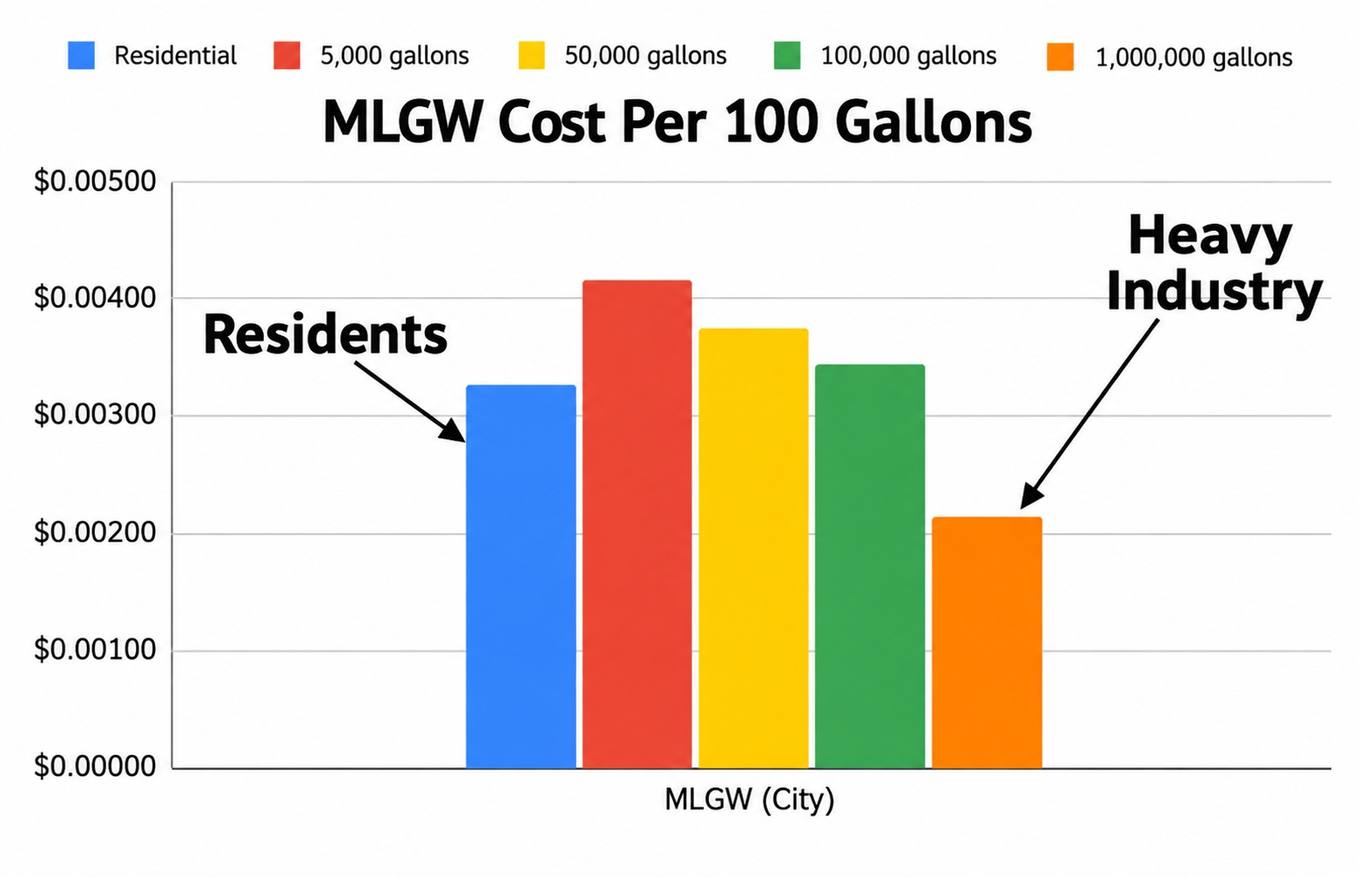
MEMPHIS, Tenn. - Protect Our Aquifer planned to deliver a petition with more than 1,000 signatures to Memphis Light, Gas and Water on Wednesday, September 16, 2026, asking the utility to end what the group describes as a rate structure under which its largest industrial water customers pay less per unit as their consumption rises, the Memphis Flyer reported.
The petition targets what the group calls a regressive structure: residential customers pay flat rates regardless of usage, while major industrial users get a steep discount that, in the group's words, means "the more water they pump, the less they pay." Protect Our Aquifer wants a structure that rewards conservation and efficiency instead of volume.
"We need smart water management and a rate structure that reflects the value of the resource," executive director Sarah Houston said, per the Flyer.
The group points to Jackson, Mississippi as a model: JXN Water implemented a progressive structure in 2024 in which higher usage tiers cost nearly double the base, rising from $7.48 to $14.96 per 748 gallons. Jackson's system emerged from a federal receivership after infrastructure failure, a materially different posture from MLGW's; the comparison is about rate design, not system health.
The Flyer's September 16 report carried no response from MLGW. The timing matters: the utility is expected to present its budget for next year, including customer rates, in October, according to the Flyer. Rate changes go through the MLGW board and then the Memphis City Council for approval.
Why It Matters for Memphis
Every drop comes from the Memphis Sand aquifer, and the pricing question is arriving at the same time as unprecedented large-load growth: data center development is the subject of a pending Memphis City Council moratorium fight, and large industrial users are the customers a volume discount favors most. Who pays what per gallon, and whether price signals encourage or discourage heavy pumping of the region's sole drinking water source, is a public-money and public-resource question that the board can put on an agenda any month it chooses.
The Oversight Question
MLGW publishes its rate schedules, but the distributional math, how much of the water system's revenue comes from which customer class at which marginal price, is not presented to ratepayers in any regular public document. Before the board accepts or rejects the petition's premise, the receipts to ask for are the block-tier volumes and revenues. That is the difference between debating a slogan and debating a rate.
Update, October 11, 2026: MLGW's budget for next year arrived in early October with three years of proposed water and gas rate increases, which could eventually add about $10 to an average water bill, Action News 5 reported October 7. The coverage did not say whether the proposal changes how large industrial users are charged per gallon, the question the petition raised. The 901 Report covered the proposal in MLGW's Budget Asks for Three Years of Gas and Water Rate Increases, and the October bill complaints in MLGW Customers Say October Bills Doubled and Tripled.
Your city. Your money. Your receipts.