MEMPHIS, July 27, 2026 - Shelby County paid a firm to design the renovation of its juvenile court building, took delivery of finished construction documents in 2024, and never put them out to bid.
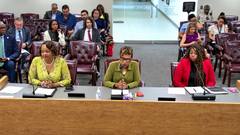
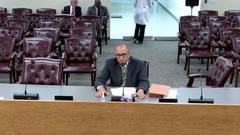
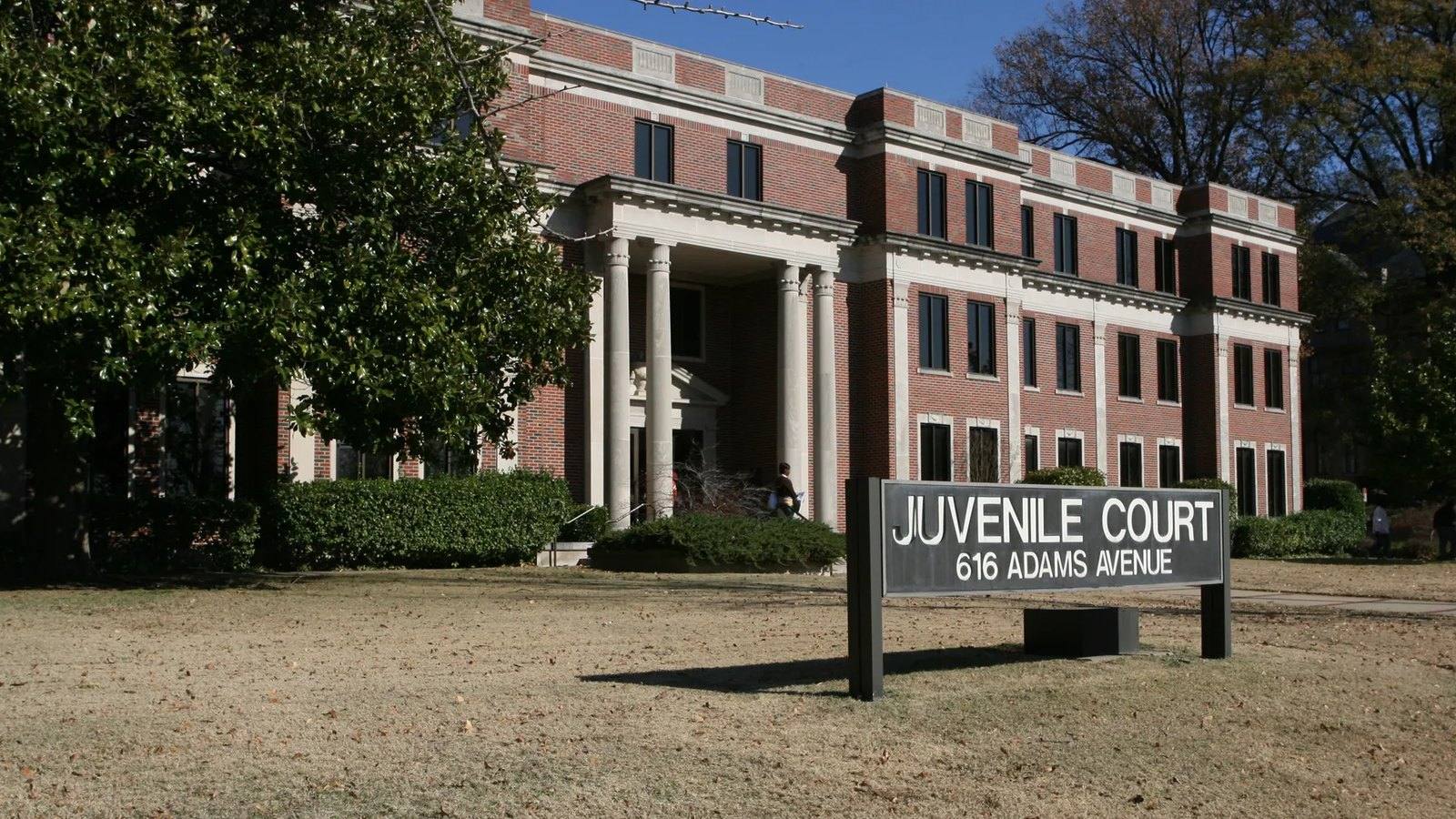
Public Works Director Cliff Norville disclosed this to the Shelby County Board of Commissioners on Monday, near the end of a forty-minute discussion of what to do about the building at 616 Adams Avenue. The same building was the subject of an environmental report presented to a county committee five days earlier.
The commission hired Pickering in 2024, he said. The firm prepared construction documents for the renovation of 616 Adams. They were bid documents, ready to hit the street. The county had them in hand in 2024. It did not have the funds to pursue them, and there were higher priorities.
The documents, he said, reconfigure the building to address the accessibility problems the court has been describing. Structural plans in the set address seismic requirements and current code.
Minutes earlier, Vice Chair David C. Bradford Jr. had told the body that a new building would take at least a year of design before a contractor could even be hired. Norville's point was that for a renovation, that year is already paid for and already spent.
Juvenile Court Judge Tarik Sugarmon told the commission he had not known about it.
"My recollection is that I was not involved in the planning for the renovation," he said. He said he understood that renovation was the direction the county was leaning in 2024, that he did not know about the Pickering group, and that he thought there was still a breakdown in communication.
Norville said his own recollection was different. He said support services held planning meetings with Pickering, the judge and the clerk after Judge Sugarmon took the bench, and that the building was designed to meet their standards. He allowed that they may have changed their minds since.
Chairwoman Shante K. Avant asked that the documents be provided to the judge.
Four numbers
Norville handed commissioners four scenarios. The building is roughly 172,000 square feet.
Move everyone out, gut it to bare concrete, rebuild. Lease space at $20 a square foot, buildout to suit at $50, renovation at $470. Staff offsite about three years. Two moves. Roughly $99 million, not counting the moves, which Norville said he could not yet estimate but would run into the hundreds of thousands.
Build new. About $650 a square foot. Staff stay put during construction and move once. Roughly $108 to $110 million.
Renovate in place, after hours. A 20 percent premium for night work, because demolishing concrete block bedroom walls above ten working courtrooms is loud. Roughly $98 million.
Renovate in place, during business hours. The $470 rate with no premium. Roughly $81 to $82 million, which Norville called a little more than a back-of-the-napkin calculation and said would still have to be bid.
He was careful to say the cheapest scenario is not necessarily the preferred one. The question, he said, comes down to how big the county's wallet is.
Judge Sugarmon asked the body to hear from the architects before accepting those figures. His concern was that the renovation estimates may not include the seismic work required to bring the structure to current code, and that no contractor would agree to renovate a building while the public and staff occupy another part of it, because the airborne contaminants do not stay put.
Jimmy Tucker of Self Tucker Associates Architects, who toured the building again the week before, said the seismic exposure depends on how much of the building gets reconfigured, and that adding courtrooms, which the court needs, means larger footprints and more structural disturbance. That planning, he said, has not been done.
What the county has already spent
Norville's second point was that the county has not been idle.
The commission funded sprinkler system improvements in 2016. The roof was replaced in 2017 and still carries ten years of warranty. The chiller plant was replaced in 2019 and has ten to fifteen years of life left. In 2024, when the court vacated the building for about six months, the county spent over $900,000 on mold remediation, remediated lead paint in areas inspectors identified, and cut access holes every six feet through the air conditioning ductwork so the ducts could be cleaned.
He also traced where the money that might have built a new courthouse went. Self Tucker's 2017 assessment recommended a new facility and priced it at $80 million. The administration concluded it could not afford that, and pursued a separate site for the young people who were then living at 616 Adams. The commission voted in 2020 to buy the Old Getwell Road facility and in 2022 to fund two phases of renovation there. Shelby County has put about $31 million into that building, now operated by the Division of Corrections.
Construction costs have risen roughly 40 to 50 percent since 2017.
The $92 million
A special assistant to Mayor Lee Harris told the commission the administration has allocated $92 million for the project. Norville was more precise about what that means.
The money is in the county's five-year capital improvement plan. It was put there soon after the 2017 study. Other priorities pushed it back repeatedly. The funding begins in 2028.
Judge Sugarmon said the court is asking for $1 million now to start the process, and that the project needs to begin in 2027 rather than 2028. An amendment to that effect was distributed to commissioners but never moved to the floor. Vice Chair Bradford confirmed on the record that the item before them did not include it, and said he preferred it that way.
Budget Committee Chairman Michael Whaley said he did not understand what allocating $1 million in fiscal 2027 accomplishes on a project over $100 million, and argued for a different approach: pull the existing capital plan forward, using money already budgeted to projects unlikely to be fully spent this year. That, he said, does not cost more and does not jeopardize debt service.
He also warned against deciding this building in isolation. If the county takes one project at a time, he said, it ends up thirty years down the road with inefficient systems nobody is happy with. Nobody has decided whether a new juvenile court is freestanding, or joined to the youth justice center, or joined to the criminal justice center, because nobody has seen the study.
What the clerk said
Juvenile Court Clerk Janine Gordon spoke before any of the cost discussion.
Her office was without restrooms for more than 30 days. There is currently no operable elevator, which means the building is not ADA compliant. There are rodents and pests. Staff members with asthma begin coughing when they walk in. One team member is on oxygen and cannot move through the building. Gordon, who is asthmatic and a two-time breast cancer survivor, said she starts coughing in the garage and keeps an air purifier in her office.
In the last 30 days her office has had several leaks, in central records and in finance. Newly purchased furniture was damaged and the vendor agreed to replace it at no charge. Paper records were damaged, though the official scanned records survived.
She asked the commission to replace the building rather than renovate it.
Commissioner Henri E. Brooks, who once worked in that clerk's office, described legal files sitting under a tarp beneath a hole in the ceiling and called it a lawsuit waiting to happen, arguing that damaged disposition records could expose the county if a defense lawyer took the issue to federal court.
What happens next
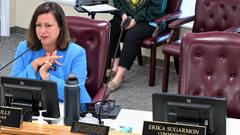
The resolution asking the mayor to bring forward a plan to accelerate funding for replacement passed 9 to 0. Commissioner Erika Sugarmon disclosed before the vote that Judge Sugarmon is her brother, said there is no conflict of interest, and voted.
Norville told the commission that whichever direction it chooses, his plan is to use a construction manager at risk arrangement, the method the county is using on the new mental health facility at the Shelby Farms complex, which he said is on budget and on schedule.
The mayor's special assistant told the body the administration wants to know what the commission wants to do, and stated that the mayor opposes building a new jail until the county's school needs are better met.
The commission's next meeting is Monday, August 10.