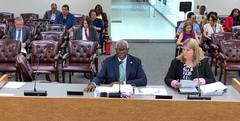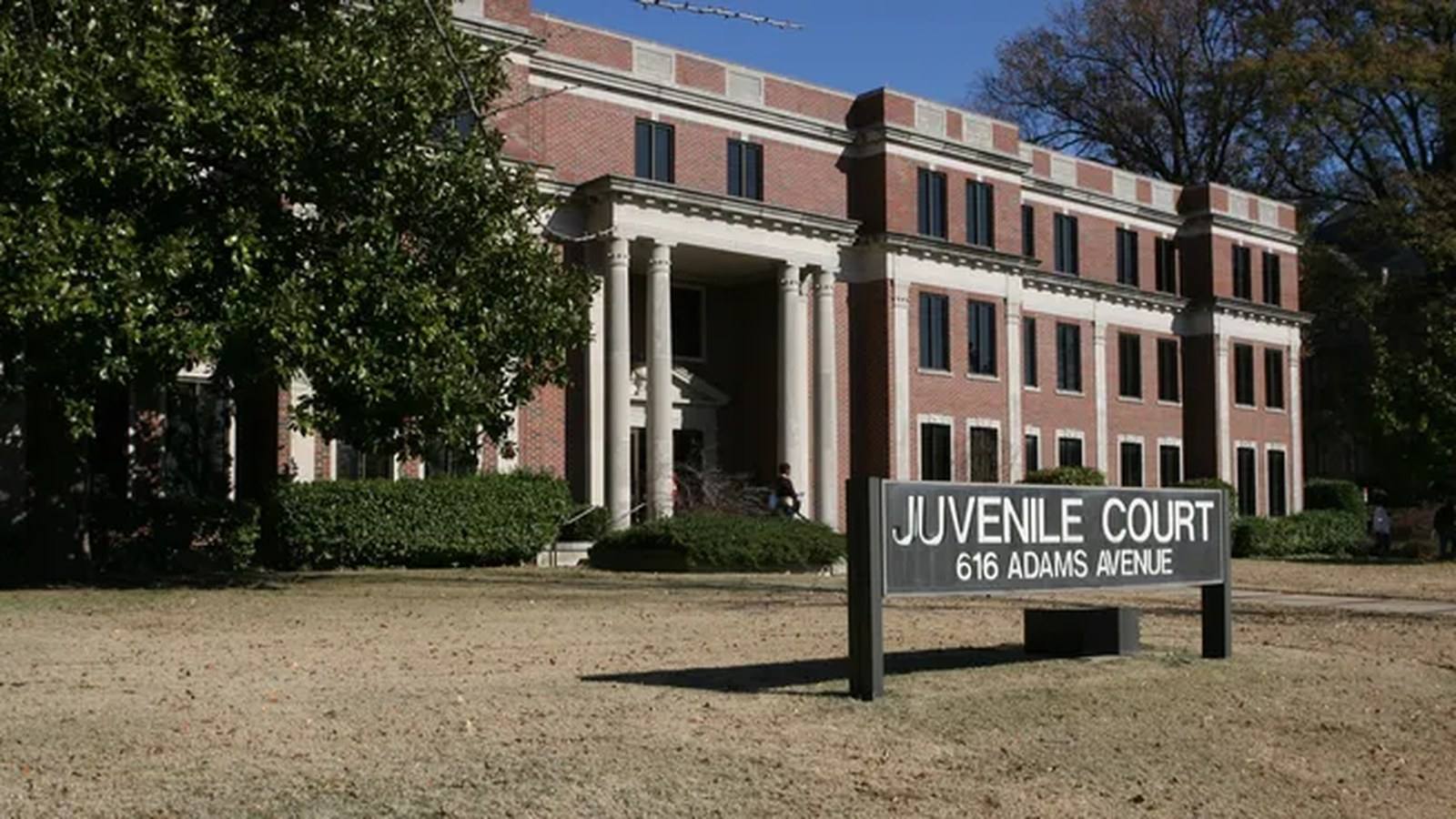
MEMPHIS, July 22, 2026 - Shelby County has had roughly $92 million programmed for a substantial investment in the juvenile court campus, and has pushed that money back year after year, Mayor Lee Harris told a county committee Wednesday morning.
The committee then voted, 4 to 0, to ask him to stop pushing it back.
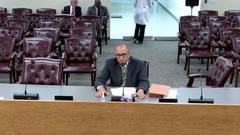
The vehicle was an add-on resolution from Commissioner Henri E. Brooks requesting that the county mayor bring forward a plan to accelerate funding for the replacement of juvenile court and its offices immediately. It reached the committee without a legal review, without a finance review, without a summary sheet and without a routing sheet. The parliamentarian read each of those deficiencies into the record before the item was heard, and the committee suspended all of its rules to take it up.
What the preliminary summary found
Juvenile Court hired an environmental consultant in June of this year. A preliminary summary arrived Tuesday, the day before the vote.
Marquita Evans, deputy chief executive officer for Juvenile Court, described its contents to the committee. The consultant identified elevated and amplified airborne mold spores capable of producing mycotoxins. It identified lead-based paint present in the original building and in the northwest addition. It detected airborne fibers, and the court is awaiting a further round of laboratory samples to determine whether those fibers are asbestos.
Air and drinking water sampling had been completed. The judge told the committee those laboratory results were expected by the end of the week, with the full written report to follow the week after.
No commissioner had seen the full report. The vote was taken on the summary.
Evans told the committee she has been displaced from her own office for about two and a half to three weeks because black mold was growing on the walls. She said she has worked for the court for 12 years and does not know what her exposure has been.
The $1 million that did not fix it
Juvenile Court Judge Tarik Sugarmon told the committee the building is 96 years old and that renovation is no longer an option.
He said a remediation was performed on the building in 2024 at a cost of about $1 million, and that the same conditions persist. He said the lead paint has not been remediated and that the consultant's report indicates it is not. He also said he was not given a copy of the environmental report produced after that 2024 work, and that the answers he has sought are not in his domain to obtain.
The judge said the cost estimates prepared to date assume staff and services stay in the building while emergency renovations happen around them. Those estimates do not include the cost of relocating the court to temporary space, which he said would raise the price of any renovation.
Commissioner Brooks, who said she worked in the building from the mid-1970s through 1987 and who toured it recently, described a tarped and taped hole in the ceiling of the clerk's office above handwritten paper files on children's cases. An elevator was out of service during the tour, was repaired, and failed again, which the committee chair noted is both an accessibility problem and a public one.
The question that was asked four times
Commissioner Mickell Lowery asked, repeatedly, a narrow question: which technical authority recommended replacing the building rather than renovating it. Facilities management? The health department? He said he was not asking for a report and did not dispute the conditions described. He said that before the county builds anything new, there should be expertise behind the recommendation beyond the elected officials making it.
He did not get a name until the fourth exchange, when Evans identified the consultant as the environmental firm Fisher Arnold. That firm's assessment is the environmental one. No one at the meeting identified a facilities, engineering or public health authority that had evaluated replacement against renovation on cost or structural grounds.
Mayor Harris said he would bring the county's facilities director to Monday's regular session to give the background on assessments made over the years. He also told the committee that in his view the choice between preservation and replacement is fully at the discretion of the commission, and that he had been convinced replacement is in order after taking the tour.
Two honest readings of the record are available here, and the record settles neither. One is that the conditions are documented well enough that waiting for a further engineering opinion is itself a risk. The other is that a decision to replace rather than renovate a county building is a capital judgment that normally rests on a facilities or engineering assessment, and no such assessment was produced or cited on Wednesday. Commissioner Lowery voted for the resolution.
The disclosure
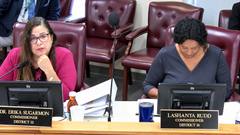
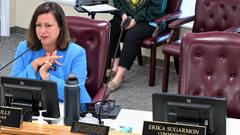
Before the vote, Commissioner Erika Sugarmon stated on the record that Juvenile Court Judge Tarik Sugarmon is her brother, that legal counsel advised her there is no conflict of interest, and that she would vote on the item both Wednesday and at Monday's regular session. She voted aye.
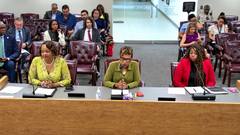
The four ayes came from Commissioners Sugarmon, Brooks and Lowery, and Chairwoman Shante K. Avant. Chairwoman Avant noted that the project had already been pushed from fiscal year 2027 to fiscal year 2028.
What was not answered
No replacement cost was given. The roughly $92 million the mayor described is what has been programmed for a substantial investment in the campus, not a price for a new building. No one stated what replacement would cost.
No date was set. The resolution asks for a plan to accelerate funding. No target fiscal year, no construction timeline and no deadline for delivering the plan were stated.
No one from facilities management, the county engineer's office or the health department was present, and no facilities or engineering assessment comparing replacement to renovation was produced or cited.
The full environmental report was not produced, and the 2024 post-remediation report was not produced. The judge said he had never received the latter.
No one stated how many children, employees and members of the public are in the building on a typical day, or what interim protective measures are in place while a plan is developed.
No one explained why a project already programmed at roughly $92 million was moved from fiscal year 2027 to fiscal year 2028, or who made that decision.