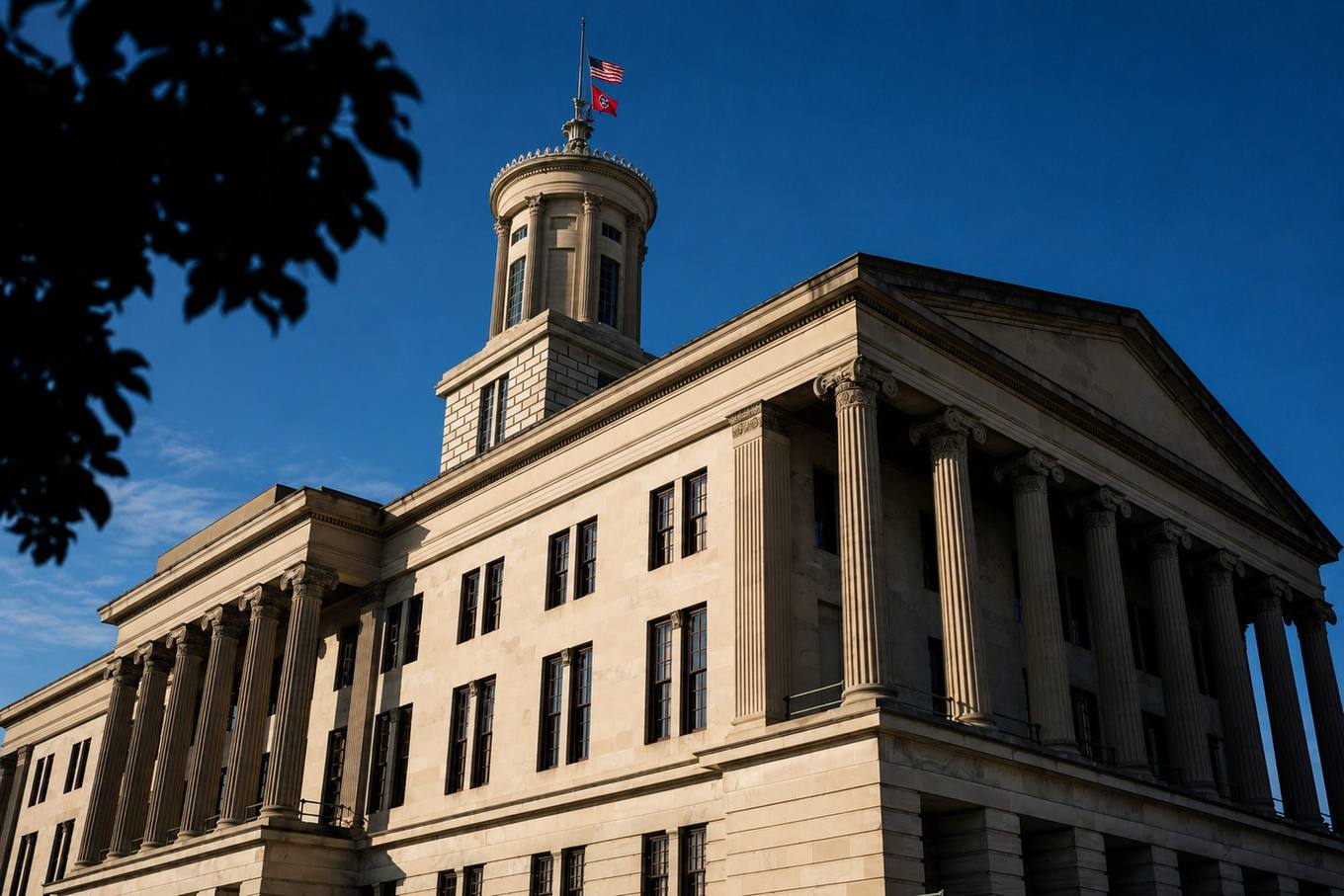
MEMPHIS, Tenn. - Tennessee finished its fiscal year with $1.2 billion more than it budgeted for, and the caution came attached to the number.
The state ended fiscal year 2025-26 with a $1.2 billion revenue surplus, the Tennessee Lookout reported Tuesday, August 18, 2026, with the Chattanooga Times Free Press and WKRN carrying the same figure. Finance and Administration Commissioner Jim Bryson attributed the overage to inflation and higher-than-expected corporate tax collections, and flagged the fragility himself: "It's important to remain cautious. These corporate estimated payments may require some adjustments."
July alone beat the state's estimates by $418 million, per the department's monthly revenue release as reported August 14. The state's 2025-26 budget totaled $57.9 billion, 51 percent of it funded by state tax revenue, per the Lookout.
The surplus arrives against named pressures. The Tennessee Lookout's August 19, 2026 analysis quantifies five: a road funding gap with $4.7 billion in surplus money dedicated over three years and no permanent source behind it; federal reductions flowing from the June 2025 reconciliation law; $77 million in new annual SNAP costs plus up to $171 million in penalties if payment error rates persist; TennCare's $19.2 billion annual cost against a declining federal reimbursement share; and an education lottery deficit that could reach several hundred million dollars by 2030 as sports betting erodes lottery revenue. "Even the tiniest of changes in TennCare could cost hundreds of millions of dollars," said Mandy Spears of the Sycamore Institute.
The surplus is not a windfall check; it is a negotiating position. It flows into the 2027-28 budget process that begins in November 2026, when every agency, district, and local government makes its case. Spears offered the standard caution, per the Lookout: surpluses tend to reflect conservative budget estimating rather than economic strength.
Governor Bill Lee's eight years in office have produced yearly surpluses that sometimes reached billions, deployed for education funding reforms, school voucher expansion, business tax cuts, and infrastructure, per the Lookout. Where this one goes will be decided in hearings that start in November.
Why It Matters for Memphis
Memphis-area institutions enter this budget cycle carrying documented needs: Memphis-Shelby County Schools operating under a state takeover after a forensic audit that flagged $54.2 million in potential fraud, waste, or abuse; a transit authority whose funding gap the City Council has fought over all year; and state-shared revenues that every Memphis budget conversation leans on. A documented $1.2 billion overage weakens every "there is no money" answer those institutions will hear in Nashville, and the corporate-tax caveat and the five named pressures are the counterargument the state will make.
Your city. Your money. Your receipts.