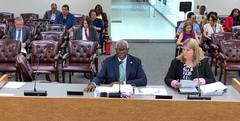
MEMPHIS, Tenn. - On May 7, in a single day, the Tennessee General Assembly repealed a 56-year-old state prohibition on mid-decade redistricting, passed a new congressional map, and sent it to Governor Bill Lee, who signed it the same afternoon.
The map splits Memphis.
The 9th Congressional District, held by Democrat Steve Cohen since 2007 and the only majority-Black district in Tennessee, was carved into three pieces. Shelby County is now divided among the 5th, 8th, and 9th districts. The new 9th no longer stops at the edge of Memphis. It runs roughly 200 miles east, reaching toward Franklin and the Nashville suburbs, tying together voters in different media markets and different time zones.
State Senator Brent Taylor, a Republican, announced he is running in the new 9th shortly after the governor signed the map.
The House approved the map 64 to 25, with three Republicans abstaining. The Senate passed it 25 to 5. Under the new lines, according to an analysis by Inside Elections, all nine Tennessee districts would have voted for President Donald Trump by at least 20 points. The current 9th backed Kamala Harris by 43 points in 2024.
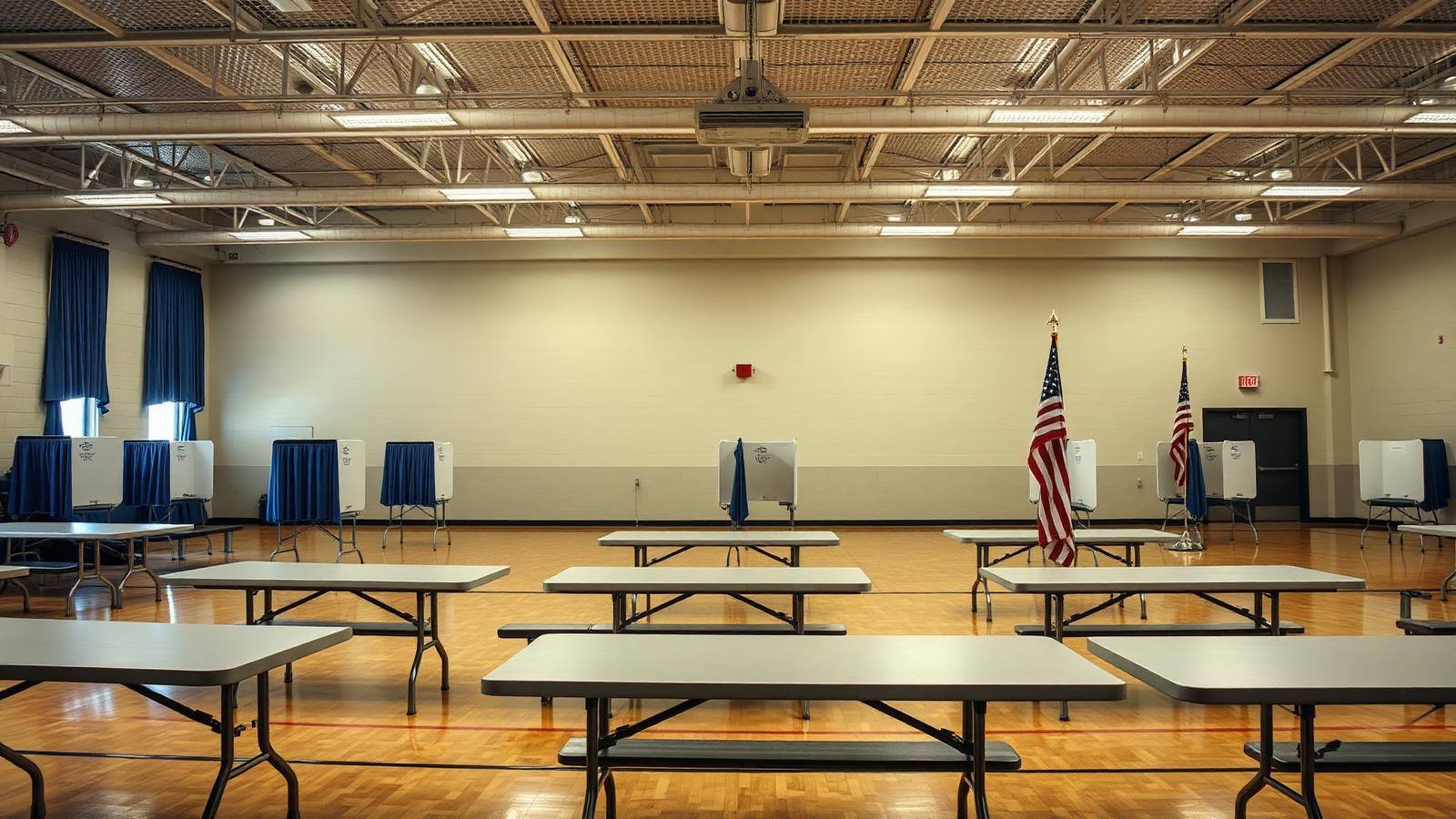
The practical effect for you is simple and immediate: the August 6 primary is being run under the new map, and early voting starts Friday, July 17. If you have voted in the 9th District your whole life, you may not be in it anymore.
You can look this up. The Tennessee Comptroller''s Office built an interactive tool that takes your street address and returns your revised congressional district, along with your state and local districts. It is at comptroller.tn.gov, and the Secretary of State links to it from its 2026 redistricting notice. Enter a full street address with city and ZIP; post office boxes will not match. Do this before you vote.
What each side says
Republicans have not disputed that the map was drawn for partisan advantage. State Senator John Stevens, the Republican who sponsored the bill, defended it plainly, saying Tennessee is a conservative state and its congressional delegation should reflect that. He also said the map represents the state''s attempt to maximize its partisan advantage, and noted that Democrats in Illinois, Massachusetts, and elsewhere have drawn maps to their own benefit. Partisan gerrymandering, as distinct from racial gerrymandering, is not illegal under federal law.
Democrats say the line was crossed. State Representative Justin Pearson of Memphis, who is himself running for the seat, told the House that the state was eviscerating its only Black-majority congressional district. State Senator London Lamar of Memphis said the state cannot fracture the voting power of a majority-Black city and then claim race had nothing to do with it. State Senator Raumesh Akbari, the Democratic caucus leader from Memphis, urged colleagues to vote no.
The timing is not incidental. The special session came roughly a week after the U.S. Supreme Court limited the use of race in drawing congressional districts, a ruling that effectively removed the racial-gerrymandering protections that had been read into the Voting Rights Act. Tennessee became the ninth state to enact a new map ahead of the midterms.
Representative Cohen has filed suit, seeking to delay the new map until the 2028 elections. That litigation is unresolved. Until a court says otherwise, the new map is the law, and it governs the ballot you will receive.
Why It Matters for Memphis
Set aside, for a moment, who wins. The mechanical fact is that Memphis, a city of roughly 600,000 people, no longer has a congressional district of its own. Its voters are distributed into three districts, each of which extends far into rural West and Middle Tennessee, and each of which would have gone for Trump by more than 20 points.
That means no member of Congress will represent a district where Memphis is the center of gravity. A member whose district runs from Memphis to the Nashville suburbs answers to a constituency for whom Memphis is one stop among many. When this city needs a federal advocate, for disaster money, for infrastructure, for the federal dollars that flow into MSCS and MLGW and the health system, the question of who exactly is obligated to fight for it gets harder to answer.
This is also a story about your own ballot, right now. Between a new congressional map and roughly 700 absentee ballots that went out missing races, Shelby County voters are heading into an election with more uncertainty about what they are voting on than in any recent cycle.
Check your district before you vote. Use the Tennessee Comptroller''s address lookup tool, linked from the Secretary of State''s 2026 redistricting page. For ballot and absentee questions, the Shelby County Election Commission is at 901-222-1200 or shelbyvote.com.
The Oversight Question
There is a legitimate argument, made openly by the map''s sponsor, that this is ordinary partisan politics, that both parties do it, and that the courts have said partisan advantage is not by itself unlawful. Memphians are entitled to hear that argument, and it is not frivolous.
But the accountability question is narrower and harder to wave off. Representation is the mechanism by which a city''s problems reach Washington. Memphis has a school district under a state forensic audit, a jail with failing infrastructure, and a federal task force operating on its streets. Every one of those has a federal dimension. The map now guarantees that no one in Congress owes their seat primarily to Memphis.
You cannot hold accountable a representative who does not need you. That is the point of a district, and it is what this city just lost.
Your city. Your money. Your receipts.
Update, October 11, 2026: On July 23, 2026, a three-judge federal panel in Sherman v. Hargett denied a preliminary injunction against the new congressional map, so the map governs both the August primary and the November general election. The underlying claims remain pending, according to the panel's order and the ACLU of Tennessee. In the August 6, 2026, District 9 primaries, state Rep. Justin J. Pearson won the Democratic nomination and state Sen. Brent Taylor won the Republican nomination, Tennessee Lookout reported. The 901 Report's follow-ups: "Federal Judges Let Tennessee Split Memphis Into Three Districts for the August Primary" and "Pearson and Taylor Won the District 9 Primaries".
Your city. Your money. Your receipts.