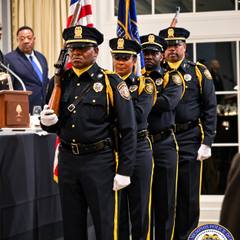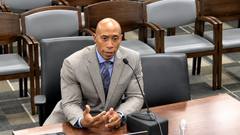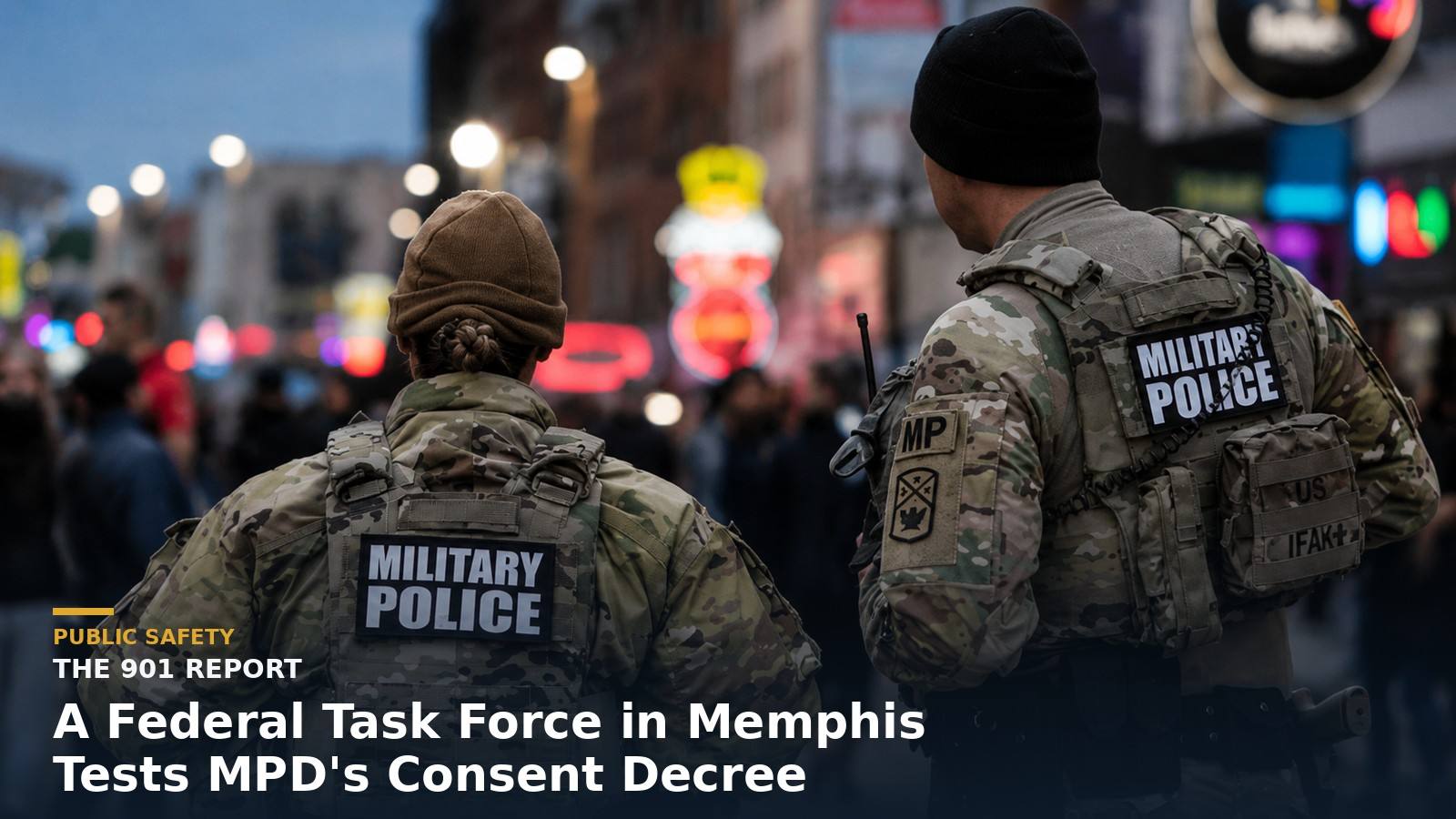
MEMPHIS, Tenn. A long-standing court order governing how the Memphis Police Department gathers intelligence has moved back to the center of public debate, as a federal law enforcement surge operates in the city. With this post, The 901 Report continues its Public Safety coverage with a focus on MPD oversight.
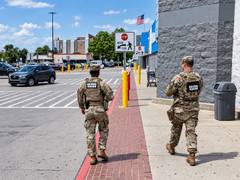
At issue is the Modified Kendrick Consent Decree. The American Civil Liberties Union of Tennessee sent a legal letter to Mayor Paul Young and Police Chief C.J. Davis demanding strict compliance with the decree as President Trump's "Memphis Safe Task Force" deployed National Guard troops and federal agents to the city. The administration has framed the task force as a public safety effort, with federal directives calling for intensive policing and saturation of high-crime neighborhoods. Supporters argue the added resources can help drive down violent crime in a city that has struggled with it.
The ACLU's concern is how that federal effort intersects with the consent decree. The Kendrick decree dates to 1978 and grew out of revelations that Memphis police had surveilled civil rights leaders and political organizers. It was modified in 2020 to address modern tools such as social media monitoring and body cameras. According to the ACLU, the decree bars MPD from sharing First Amendment-related intelligence about activists or protesters with federal agencies absent a parallel criminal investigation, from coordinating surveillance of lawful demonstrations with National Guard units, and from giving federal forces access to city surveillance systems for political intelligence. The group has asked MPD to put written protocols in place and train officers on those limits.
The debate sits against a broader oversight backdrop. A December 2024 U.S. Department of Justice report issued under the Biden administration described patterns of unconstitutional and discriminatory policing by MPD. The ACLU and Stand for Children Tennessee have sought public records related to those findings, including use-of-force reports, and have said MPD issued a blanket denial of the request. Reporting also indicates the federal monitor overseeing the decree, through U.S. District Judge Jon McCalla, has continued to shape its terms. The city and MPD have generally defended the department's conduct and its cooperation with federal partners as lawful and focused on public safety.
Why It Matters for Memphis
This is where two legitimate public interests meet and sometimes collide: the desire to reduce violent crime, and the constitutional rights of residents to speak, assemble, and organize without being surveilled. The consent decree exists precisely because Memphis has been on the wrong side of that line before. How MPD navigates the federal surge will show whether the protections in the decree hold under pressure.
The transparency question is just as concrete. Residents cannot evaluate whether the department is complying with a court order, or addressing documented concerns, if the underlying records stay sealed. Public access to use-of-force data and surveillance protocols is the difference between oversight that works and oversight that exists only on paper.
The Oversight Question
A consent decree is only as strong as its enforcement. The Kendrick order has stood for nearly five decades, but a court order on paper does not protect anyone unless the department follows it and the public can verify that it has. The arrival of federal forces raises the stakes on both halves of that equation.
The question this beat will track is straightforward and nonpartisan: is MPD complying with the order that governs it, and can Memphians see the evidence either way. Public safety and constitutional rights are not opposing goals, and residents are entitled to both, along with the records that prove which they are getting.