MEMPHIS, Tenn. - The Congressional Budget Office published a ten-page analysis on January 28, 2026 estimating what it has cost federal taxpayers to deploy National Guard and active-duty personnel to American cities. It is the only nonpartisan, itemized public accounting of those costs, and it broke the numbers out city by city.
Memphis was one of the cities.
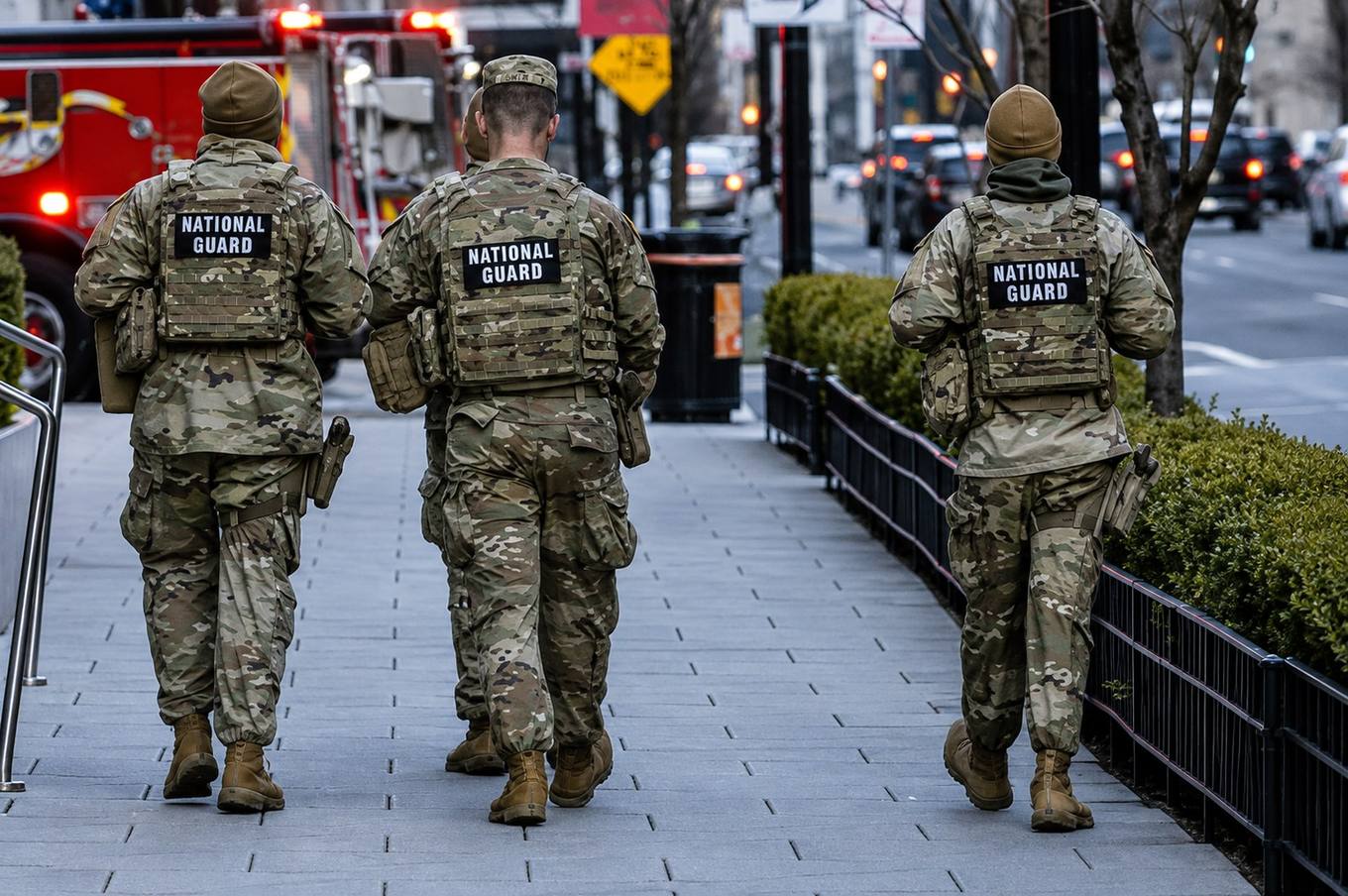
According to the CBO analysis, the Memphis deployment ran approximately $28 million per month with a force of about 1,500 personnel. Across the six cities where deployments occurred since June 2025, the agency put the total at roughly $496 million through the end of December 2025. Reporting on the analysis at the time placed the running figure at upwards of $589 million.
The agency also estimated that maintaining deployments at their December 2025 size would cost about $93 million a month going forward, and that deploying 1,000 Guard personnel to a lower-cost city comparable to Memphis would run roughly $18 million a month, against about $21 million for a higher-cost city like Washington.
The per-person arithmetic is where the Memphis figure comes from. CBO estimated military pay and benefits for activated Guard personnel at about $260 per day, health care at another $25, meals and incidental expenses between $74 and $92 depending on location, and transportation at about $34. Lodging ranged from $129 a day in Memphis to $196 in Washington. Those components produced daily totals of roughly $522 to $607 per service member, with Memphis at the lower end of that range.
Memphis is one of the two that stayed
Most of the deployments in Los Angeles, Chicago and Portland were demobilized on January 21, 2026, following legal challenges. When CBO published, Washington and Memphis were the two deployments still in place.
The agency also modeled what continuation would cost. If the Memphis deployment ran through all of 2026, along with 200 Guard personnel who remained mobilized in Texas and two additional months in New Orleans, CBO projected the cumulative figure would reach approximately $1.1 billion. Washington alone, extended through the end of 2026, was estimated at upwards of $660 million.
The analysis was prepared at the request of Senator Jeff Merkley of Oregon, the ranking member of the Senate Budget Committee, who has been a vocal opponent of the deployments. The cost estimates are CBO's own work product. The agency is nonpartisan and produces analyses at the request of members of both parties.
CBO was explicit that projecting forward is difficult, noting that the scale, length and location of future deployments are hard to predict, that legal challenges have halted deployments in some cities, and that administration policy has changed.
What is missing
The Memphis Safe Task Force was established by executive order on September 15, 2025. Federal personnel arrived that month. The operation has continued through the writing of this post.
CBO's published figures stop at the end of December 2025 for actual costs, with projections beyond that. The 901 Report has identified no updated public CBO estimate, and no federal accounting of the Memphis deployment's cost since. Nor has the city or the state published one.
That gap matters because the monthly figure is a rate, not a total, and the force size may have changed. This post does not multiply $28 million across the months of the operation, because doing so would assume a troop level nobody has published. What can be said is that the last independent estimate put the Memphis operation at $28 million a month, and that the operation has run for roughly six months since that estimate was made without a public update.
Why It Matters for Memphis
These are federal dollars, not city dollars, and that distinction is real. No line in the Memphis general fund pays for the Guard.
It matters anyway, for two reasons.
The first is that the Justice Department has built a $300 million grant program, the Model Cities Initiative, explicitly around the Memphis operation as a model, with applications closing September 1. Cities deciding whether to pursue that model are entitled to know what the model costs. So are the taxpayers funding it, in Memphis and everywhere else.
The second is that cost is one half of a ratio and Memphis only ever hears the other half. The administration and its supporters point to a violent crime decline of more than 40 percent in 2026 against the same period a year earlier, drawn from Memphis Police Department data, and to more than 7,400 arrests and 1,219 weapons seizures cited by the White House. A White House spokesperson has said crime has dropped across all major categories and that residents are safer. Those are real numbers and they belong in the discussion.
But a claim about effectiveness is not testable without a denominator. Memphis Police Department data also showed overall crime at a 25-year low in September 2025, in a release published six days before the executive order creating the task force, with murder at a six-year low. Whether the operation caused the subsequent decline, accelerated a decline already underway, or ran alongside it is a question that requires knowing what was spent to find out.
Accountability Watch
Who is accountable: The Congressional Budget Office, which produced the only itemized public estimate. The U.S. Department of Defense and the Department of Justice, which run the deployment and the task force. The Tennessee congressional delegation, which can request an updated analysis. Governor Bill Lee, who mobilized the Tennessee National Guard.
What is pending: An updated public cost estimate for the Memphis deployment, and disclosure of current force size.
Timeline: Task force established by executive order September 15, 2025. Federal personnel arrived that month. CBO analysis published January 28, 2026, covering actual costs through December 31, 2025. Deployments in Los Angeles, Chicago and Portland demobilized January 21, 2026. Memphis deployment continuing.
Status as of July 31, 2026: No updated federal cost estimate identified. No current force size published.
How to verify: The CBO analysis is publication 61943 and is posted in full at cbo.gov, including the per-day cost components and the city-by-city breakdown. Senator Merkley's office published the transmittal. Requests for current force size go to the U.S. Marshals Service, which leads the task force, and to the Tennessee Military Department for Guard strength.