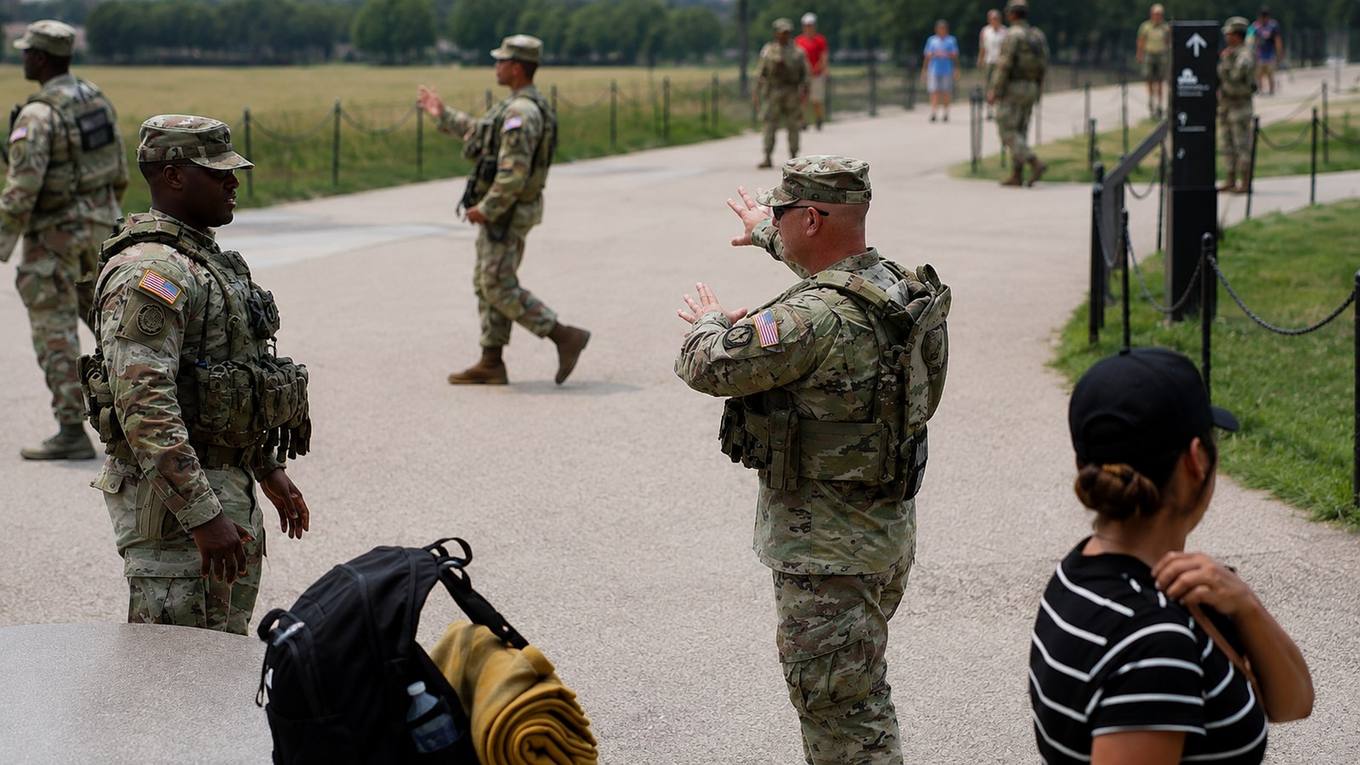
WASHINGTON - The Defense Department has told Congress that extending the National Guard deployment in Washington through January 2029 will cost roughly $1.43 billion beyond what has already been spent, or about $51 million a month.
The projection was first reported by The Washington Post and confirmed by the Associated Press, Roll Call and ABC News. It came in a written response from Jules W. Hurst III, the nominee for Pentagon comptroller, answering a question for the record submitted by Senator Elizabeth Warren of Massachusetts, a member of the Armed Services Committee.
The estimate covers the period beginning October 1, 2026, the start of fiscal 2027, through January 2029. It assumes a steady state of about 2,500 Guard personnel in Washington, down from a surge that reached roughly 4,600 to 5,000 this summer around the 250th anniversary of the Declaration of Independence.
The Pentagon said last month the mission will continue until January 20, 2029, or until terminated by the president.
How this compares to Memphis
The Congressional Budget Office estimated in January 2026 that the Washington deployment was costing about $55 million a month. The same analysis put the Memphis Safe Task Force at approximately $28 million a month for roughly 1,500 personnel.
The new Pentagon projection works out to about $20,400 per person per month in Washington. The CBO figure for Memphis works out to about $18,667. Those are within roughly 9 percent of each other, which is what you would expect given Washington's higher lodging costs, and the consistency is a reason to trust both numbers rather than either.
The difference is not the rate. It is that one city has a forward-looking figure and the other does not.
Washington's cost is projected through January 2029. Memphis has no federal estimate more recent than January 28, 2026, which is 190 days ago. The Memphis operation has continued throughout that period, and this newsroom has been unable to establish the current force size here.
Why one city got a number and the other did not
The mechanism is worth understanding because it is repeatable.
The Washington figure exists because a senator on the Armed Services Committee submitted a question for the record during a confirmation process, and the nominee for Pentagon comptroller answered in writing. Questions for the record are a routine instrument. A senator asks, the nominee answers on paper, and the answer becomes public.
The CBO analysis that produced the Memphis figure exists for a similar reason: Senator Jeff Merkley of Oregon, ranking member of the Senate Budget Committee, requested it. Nonpartisan agencies produce these estimates at the request of members of either party.
Tennessee has two senators. Neither has been reported to have requested an updated estimate for the Memphis deployment.
Why It Matters for Memphis
This is not an argument that the deployment should end or continue. It is an argument that the number should exist.
Memphis has now been the subject of a federal operation for roughly eleven months. The Justice Department built a $300 million grant program around it, with applications closing September 1. The Tennessee Bureau of Investigation is examining eight use of force incidents by task force officers, four of them fatal. The city's own dashboard stopped reporting immigration arrests.
Every one of those questions is easier to argue about with a current cost figure and harder without one. A resident asked whether the operation is worth it cannot answer without knowing what it costs, and neither can a supporter.
The reporting on Washington also surfaces a category of expense that has not been examined here at all. The National Guard signed a $292 million contract for roughly 2,000 apartment units for troops in Washington, which the Guard says will save about $90 million in hotel costs. Where task force personnel are housed in Memphis, at what cost, and whether any of that money goes to local landlords is a question nobody has asked.
The Army is also carrying a multibillion-dollar budget shortfall that officials say the prolonged mission has worsened, according to ABC News. That is the other side of the ledger and it belongs in the same conversation.
Accountability Watch
Who is accountable: The Department of Defense, which produced the Washington projection. The Congressional Budget Office, which produced the January analysis. Senators Marsha Blackburn and Bill Hagerty, who represent Tennessee and can request an updated estimate.
What is pending: Any updated federal cost estimate for the Memphis Safe Task Force, and any disclosure of current force size.
Timeline: Washington deployment began August 2025. Memphis Safe Task Force established by executive order September 2025. CBO analysis published January 28, 2026. Pentagon projection provided to Congress and reported August 4, 2026. Washington mission set to run through January 20, 2029.
Status as of August 6, 2026: Washington has a projection through January 2029. Memphis has no federal estimate since January 28, 2026.
How to verify: The Congressional Budget Office analysis is publication 61943 at cbo.gov and contains the city-by-city breakdown. Questions for the record and nominee responses are published through the Senate committee of jurisdiction. The U.S. Marshals Service leads the Memphis task force and is the point of contact for force size.
Your city. Your money. Your receipts.