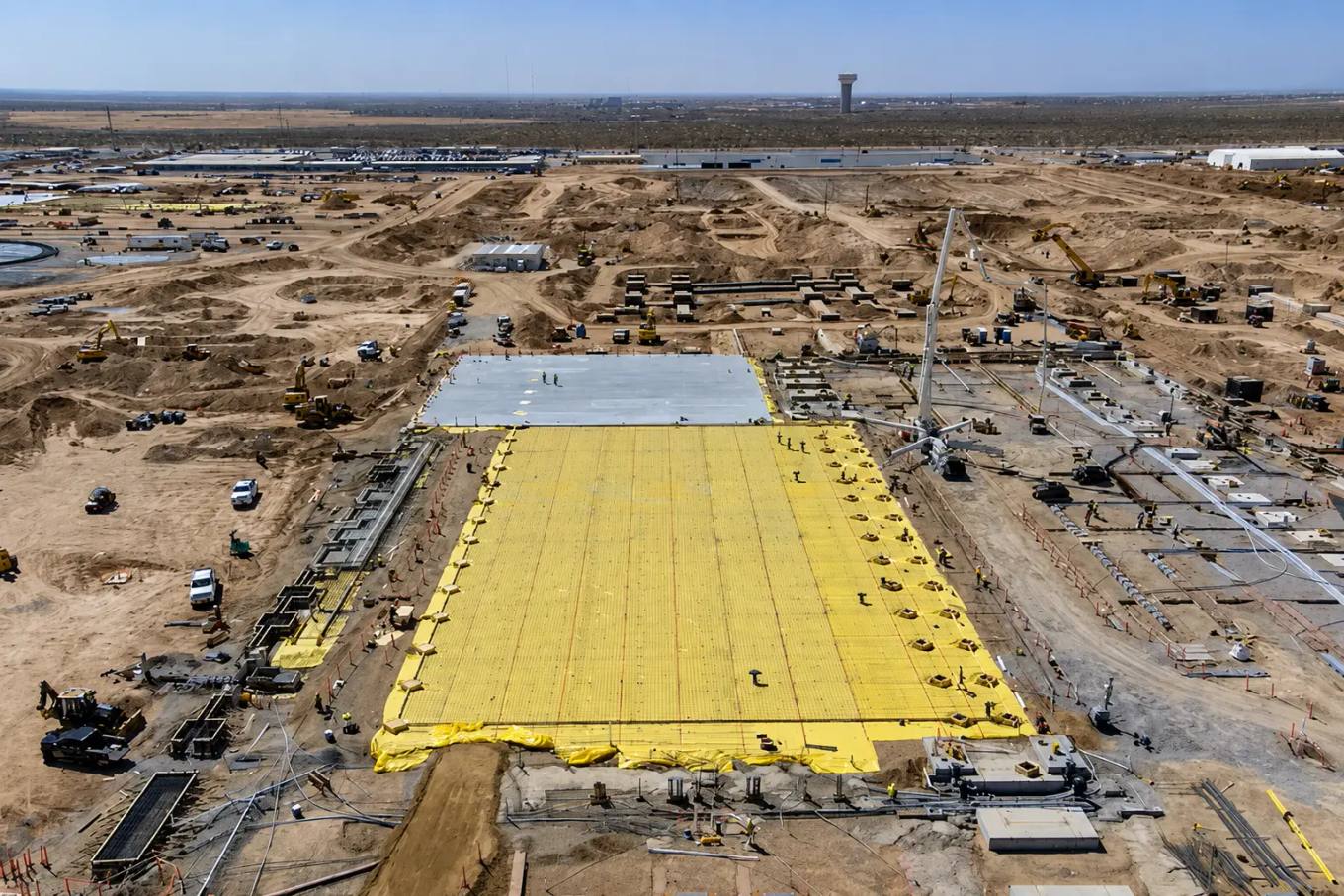
AUSTIN, Texas - Governor Greg Abbott directed the Public Utility Commission of Texas and the Electric Reliability Council of Texas on August 3 to conduct what his office called a comprehensive verification and audit of every data center moving through the grid interconnection queue. His press release states the audit must be completed before any data center project moves forward, and that any project failing the requirements must be denied connection to the Texas grid.
ERCOT responded by postponing its Batch Zero transmission planning study, the first phase of its new large-load approval process.
The scale explains the action. ERCOT is tracking more than 1,800 projects in its queue representing over 474 gigawatts, which Abbott's letter noted is more than five times the region's all-time record peak demand. Abbott said approximately 90 percent of the new power requests are data centers.
What Texas is now requiring companies to disclose
The audit directs data center developers to report to ERCOT and the PUCT on:
- Power use and generation
- Water use and cooling operations
- Tax breaks they will receive
- Ownership of the facilities
- Efforts to reduce impacts on local communities
That list is worth reading against the record in Memphis, because four of those five items are questions this newsroom has been unable to answer about the Colossus campus.
Ownership. Two mechanics' liens recorded at the Shelby County Register of Deeds on July 30 and 31, totaling $136,892,782.78, name MZX Tech LLC and CTC Property LLC as the property owners. Neither names SpaceXAI. Which entity holds the incentive agreements and the utility arrangements has not been publicly established.
Tax breaks. Whether and how much public incentive is attached to the campus, and to which entity, has not been published in a form a resident can read.
Power use and cost allocation. Memphis Light, Gas and Water's Service Policy Manual, Section 12.4, states in a single sentence that MLGW will negotiate all terms, conditions, design and financial arrangements with customers whose demand exceeds 5,000 kilowatts. Below that threshold, Section 12.3 gives a published formula. Above it there is no published standard, only negotiation.
Water use. Memphis draws its drinking water from the Memphis Sand aquifer. Data center cooling water use here has been a public concern and has not been the subject of any published disclosure requirement.
The part that cuts against the comparison
Texas's action would not have reached the situation Memphis actually had.
Abbott's directive applies to data centers seeking connection to the ERCOT grid. Reporting on the order notes that some data centers build on-site power generation that allows them to bypass traditional grid connection entirely, and that the ERCOT region does not even cover the whole state.
The Memphis operation ran on its own gas turbines. Those turbines are the subject of a Clean Air Act suit brought on behalf of the NAACP, and the company has said it will remove 69 of them by July 2027 under an agreed order with Mississippi regulators. A rule that conditions grid interconnection on disclosure does not touch a company that never asked for a grid interconnection.
That is not a flaw in what Texas did. It is a limit on what any interconnection-based rule can do, and it is the specific limit that matters most in Memphis.
The case for the Texas approach, and against it
The Data Center Coalition, a trade group representing large technology companies, responded that if handled correctly the review can showcase good actors in the industry rather than delaying them unnecessarily, and that Texas will continue to be the national leader in economic development. That is a real argument: an audit of 1,800 projects with no stated timeline is a freeze of unknown duration, and capital moves to jurisdictions with predictable timelines.
Abbott is also up for reelection this fall, and reporting notes the directive follows political pressure and public backlash over data center impacts. A reader is entitled to weigh that.
The counterargument is that ERCOT's own numbers make the case: a queue representing five times the record peak demand is not a queue anyone can evaluate one project at a time, and the state acknowledged it did not have basic information about facilities already advancing toward approval.
Why It Matters for Memphis
The useful comparison is not that Memphis should copy Texas. It is that Texas, facing a scale problem Memphis does not have, decided the state did not know enough about who owns these facilities, what they use, and what they were given.
Memphis does not know those things either, and has not asked in any published form.
The difference is that Texas has a state utility commission with a docket where the asking happens. MLGW is municipally owned and its rates are set through the City Council, which is a more directly accountable structure in principle and a less visible one in practice. There is no docket. There is Section 12.4, which says the terms are negotiated.
The City Council approves MLGW's rates and confirms its board. That is the body with authority to ask for a disclosure requirement, and it has not been reported to have considered one.
Accountability Watch
Who is accountable: In Texas, Governor Greg Abbott, the Public Utility Commission of Texas and ERCOT. In Memphis, Memphis Light, Gas and Water, and the Memphis City Council, which approves MLGW rates and confirms its board.
What is pending: In Texas, the audit, with no published timeline. In Memphis, nothing. No disclosure requirement covering large-load customers has been identified.
Timeline: Abbott directive issued August 3, 2026. ERCOT postponed the Batch Zero study the same day. Applicants had been set to learn by August 7 whether they were included in the first phase.
Status as of August 6, 2026: Texas approvals paused. Memphis has no comparable requirement identified.
How to verify: Governor Abbott's directive and press release are published at gov.texas.gov. ERCOT and the PUCT publish interconnection queue data and rulemaking notices. MLGW's Service Policy Manual, Sections 12.3 and 12.4, is published at mlgw.com. The Shelby County Register of Deeds is free and searchable for the lien instruments.
_
_