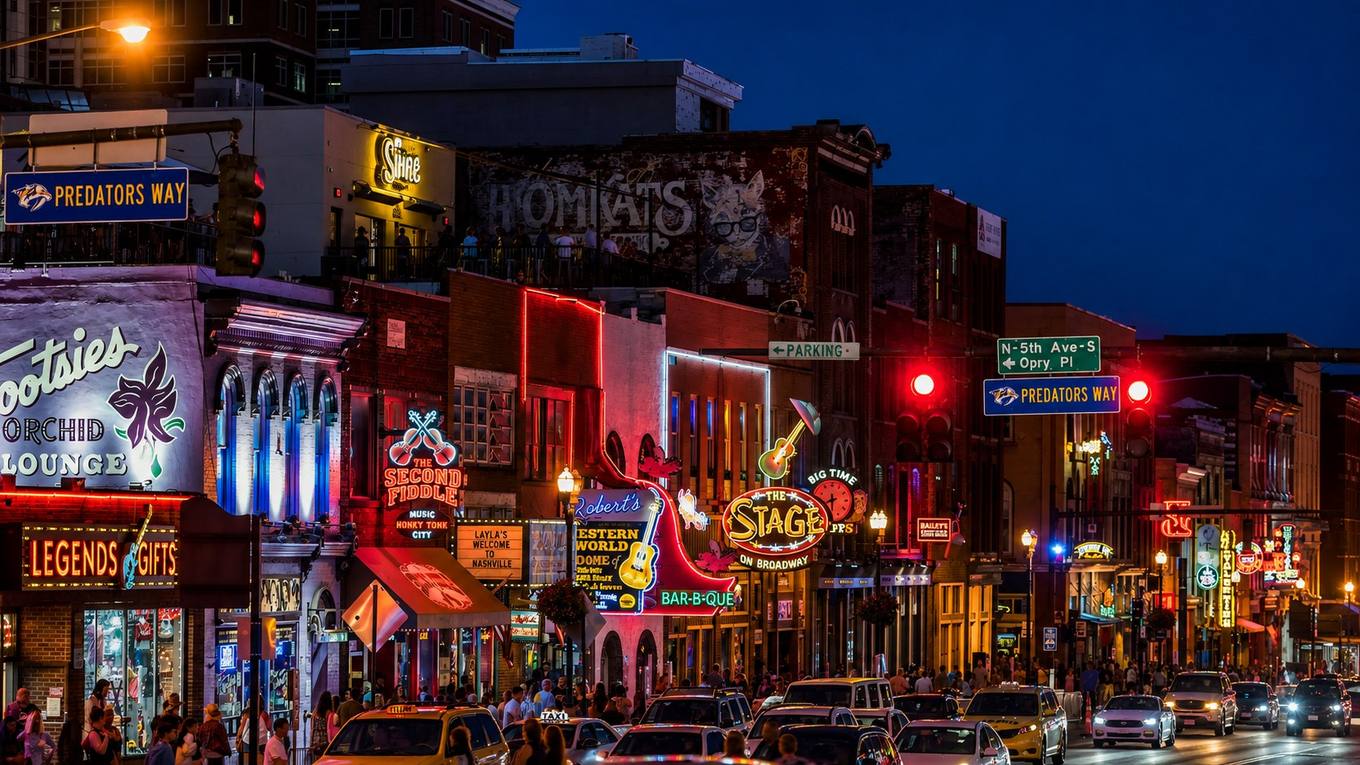
MEMPHIS, Tenn. - Republican legislative leaders have floated the idea of a special session on property tax appraisal reform, responding to Lower Broadway bar owners in Nashville who say surging valuations threaten to close them, Tennessee Lookout's Stockard on the Stump column reported Friday, August 14, 2026.
One idea broached in radio interviews would base property appraisals on purchase price rather than current market value, per the column. Under that approach, a property bought for $25 million would keep that appraised value until it sold again, no matter what was built around it.
The obstacles are not small. The state Comptroller's office found no anomalies in the appraisal system, according to the Lookout. The Tennessee Constitution requires property taxes to be equal and uniform, a standard a purchase-price carve-out would have to survive. And the column rates the odds of a special session “slim to none,” with November elections and the holidays crowding the calendar.
What has already happened is concrete. House Speaker Cameron Sexton passed tourism development zone legislation creating a state board that can divert up to $30 million toward Lower Broadway tax payments, drawn from a Convention Center Authority surplus of roughly $300 million, per the Lookout. That mechanism already exists in law, whether or not a special session ever convenes.
Appraisal law is state law, and it does not stop at the Davidson County line. A purchase-price standard written for one street in Nashville would govern how every Tennessee county values commercial property, including Shelby County, where reappraisal drives the tax base that funds the city and county budgets.
Why It Matters for Memphis
If the appraisal rules change for Lower Broadway, they change for Beale Street, the medical district, and every commercial corridor in Memphis. A standard that freezes values at purchase price rewards whoever bought earliest and shifts the burden toward newer buyers and homeowners, and any statewide rewrite would land on Shelby County's next reappraisal cycle. The $30 million diversion is also a template: surplus public money steered to a specific district's private tax bills is a mechanism other tourism zones, including Memphis's, could seek.
The Oversight Question
The Comptroller found no anomalies in the appraisal system, and the Constitution requires equal and uniform taxation. If the system is working as designed, what problem would a special session solve, and who benefits from solving it?
Your city. Your money. Your receipts.