MEMPHIS, July 21, 2026 - The layer of clay that protects the Memphis aquifer is thinner than the city has believed, and researchers have identified 13 additional places where it may be breached, a University of Memphis scientist told a council committee Tuesday.
Dr. Brian Waldron presented findings from an ongoing aquifer study commissioned in 2018 by Memphis Light, Gas and Water together with the city.
His team found that what had long been treated as a single clay layer is actually two geological formations, one of which contains a substantial amount of sand. Sand does not protect an aquifer. Removing it from the calculation cut the average clay thickness by 19 feet across the county, Waldron said, and in one location by 100 feet.
Running that same analysis surfaced 13 additional potential breaches.
The significance is what sits above. Waldron told the committee the shallow aquifer above the clay is not protected, is exposed, and is contaminated in local places. Where the clay is breached, water from that shallow aquifer can move down into the Memphis aquifer, which is the source of the city's drinking water.
How fast contamination moves
Waldron told the committee groundwater in the Memphis aquifer moves extremely slowly. In some places, he said, it takes about a year to travel the width of a room. That is why contamination from decades of poor disposal practice may exist without having shown up yet.
Getting down to the water table in the first place is a different speed. Waldron said his team found that under wet conditions, a spill reaches the shallow water table in about three months.
That finding, he said, means the concern is not only sudden spills that get cleaned up quickly. It is chronic, unnoticed leaks.
The team is also examining arsenic in the Ensley Bottoms area of southwest Memphis. Waldron said TVA has maintained its ash ponds are not the only source, and that the readings his team has taken fall within the range naturally present in Mississippi River Valley alluvial material. He said the team cannot yet distinguish a man-made source from a natural one.
The records they cannot get
To catch contamination before it reaches a well field, Waldron said, the team wants to place monitoring wells between potential contaminants and production wells. To know where to put them, it needs to know where the existing private wells are.
Shelby County has that information. There are roughly 600 to 700 private wells, and the county health department holds the paper logs.
Waldron told the committee the team requested access and was told to file a public records request at 10 cents per copy.
"That's thousands of dollars," he said.
Asked whether the health department is working with the researchers, Waldron said it is not at present.
Councilwoman Yolanda Cooper-Sutton asked him to send the request to the council.
"This is 10 cents. This is really severe," she said. "You all are doing the work, and so we need partnership."
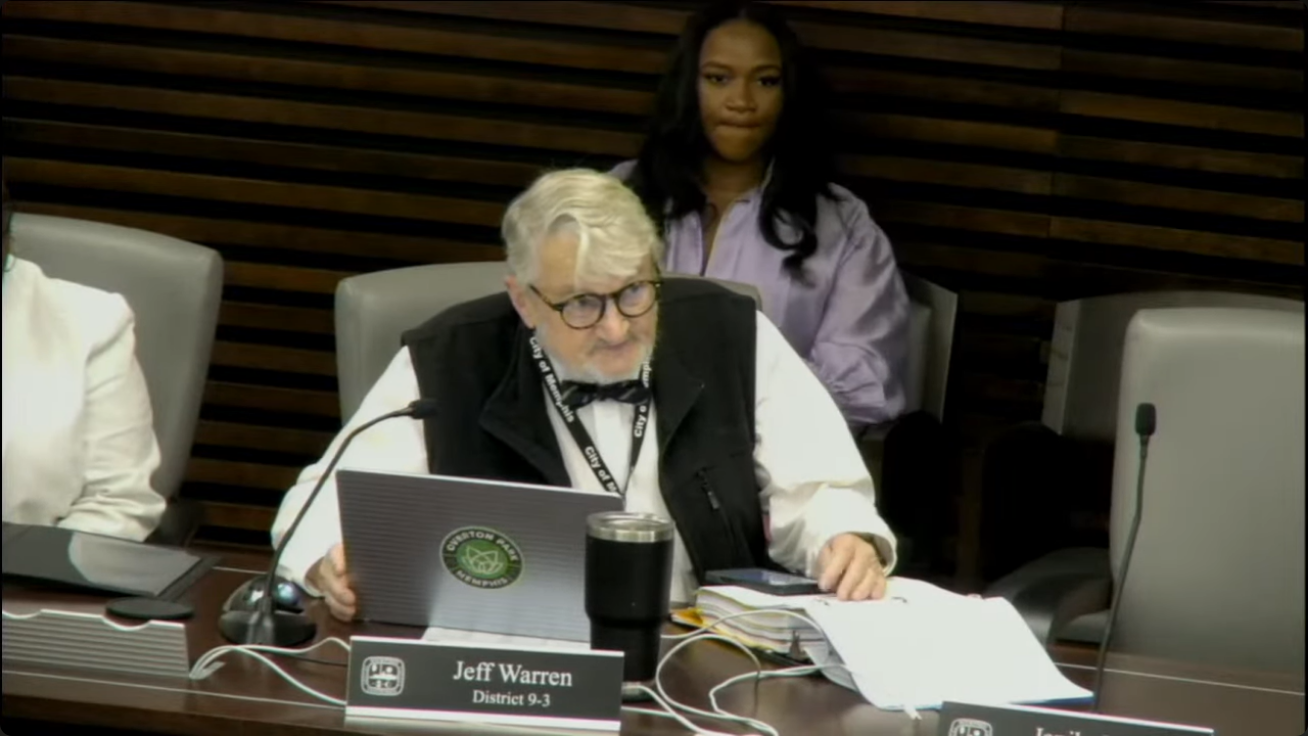
Councilman Dr. Jeff Warren proposed the council formally ask the Shelby County Commission to direct the health department to cooperate on well monitoring. He noted the health department already has authority to test private wells for public safety and asked why samples could not be tested for additional contaminants at the same time.
The aquifer is not only ours
Warren also raised a longer horizon. He asked about creating a multi-state authority to oversee the aquifer, modeled on the kind of interstate authority that governs shared infrastructure elsewhere.
MLGW President Doug McGowen confirmed the formation crosses portions of eight states and is the fourth largest aquifer in the United States. Locally it is called the Memphis aquifer. Its formal name is the Middle Claiborne Aquifer, and elsewhere it is known as the Sparta.
"We keep thinking of this like it's ours," Warren said. "It's really not."
What happens next
Waldron said the next step is public forums, beginning at the main library because MATA routes serve it, followed by three more in other communities. He asked council members to recommend locations. Cooper-Sutton asked that the records request be forwarded to the council so members can press the county on it.