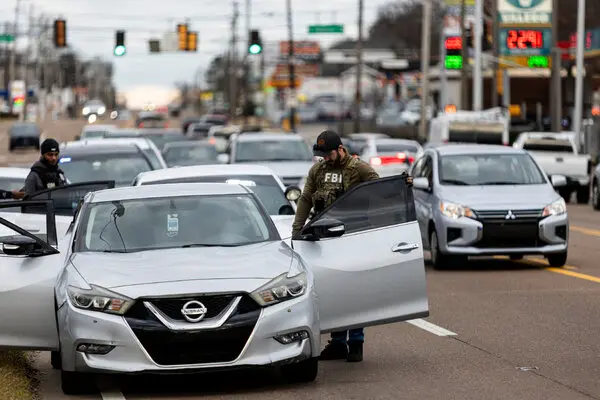
MEMPHIS, Tenn. - Four Memphis residents sued the Memphis Safe Task Force in federal court on Wednesday, May 13, alleging that agents retaliated against them for legally observing and recording federal law enforcement in public.
The lawsuit, filed in the U.S. District Court for the Western District of Tennessee, names Hunter Demster, Jessica Chodor, Kenneth Halt, and Melissa Peeler as plaintiffs. Defendants include Acting U.S. Attorney General Todd Blanche, U.S. Marshals Service Director and Task Force Chair Gadyaces Serralta, and U.S. Marshal for the Western District of Tennessee Tyreece Miller.
The complaint alleges a "startling pattern of retaliation, intimidation, and harassment" against bystanders documenting task force operations, and says agents have invoked Tennessee's so-called Halo Law, which restricts approaching officers within 25 feet, to push observers back or arrest them.
The case landed the same week as a fatal shooting tied to the same task force.
What happened
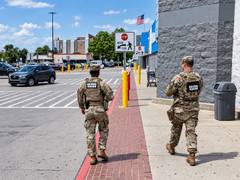
The Memphis Safe Task Force is a multi-agency federal operation ordered by President Donald Trump. It draws personnel from the U.S. Marshals Service, DEA, HSI, ATF, FBI, and several other federal and state agencies, and has been operating on Memphis streets since October 2025.
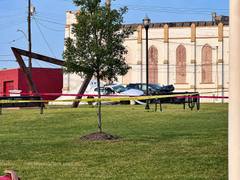
On Wednesday, May 13, DEA agents working under the task force shot and killed 41-year-old Darrin Pigram at a Burger King in the 2600 block of North Hollywood Street, near James Road in Frayser, while attempting to serve an arrest warrant. Officials said Pigram was wanted for aggravated assault, aggravated burglary, and employing a firearm in the commission of a dangerous felony, and that he pulled a weapon before agents fired. The Tennessee Bureau of Investigation is leading the shooting review.
The ACLU lawsuit was filed hours after the Pigram shooting. It is not about that incident. It is about a separate pattern the plaintiffs say began earlier: being surveilled, cited, or arrested for filming task force activity from public sidewalks.
Why It Matters for Memphis
The right to record police in public is protected in the Sixth Circuit. The lawsuit's central claim is that a federally-run task force has been enforcing a state distance law to punish observers rather than to protect officers.
The city does not command the task force. But federal operations happen on Memphis streets, in Memphis neighborhoods, and the political consequences land here. When a federal agent kills someone in Frayser, the residents processing that killing live in a city where local officials have very little say in what the task force does next.
That gap, between where the operation runs and who answers for it, is the accountability problem the lawsuit is trying to force into court.
Sources
Complaint, Demster et al. v. Blanche et al., U.S. District Court for the Western District of Tennessee, filed May 13, 2026: courtlistener.com and aclu.org
Associated Press, "Memphis residents claim harassment, arrest and abuse by Trump-ordered Memphis Safe Task Force," Travis Loller
Commercial Appeal, "Activists, ACLU sue task force, allege surveillance and intimidation," Lucas Finton, May 13, 2026
Tennessee Lookout, "ACLU lawsuit: Startling pattern of First Amendment violations by Memphis Safe Task Force," May 14, 2026
Daily Memphian, "DEA agents shoot suspect at Frayser Burger King," May 13, 2026
Action News 5, "Memphis Safe Task Force shoots, kills suspect during arrest attempt at Frayser Burger King," May 13, 2026
Update, October 11, 2026: The four residents' motion for a preliminary injunction in Demster v. Blanche, No. 2:26-cv-02546 (W.D. Tenn.), was argued on September 23, 2026, according to the ACLU. No ruling had been reported as of October 11, 2026, and the court has made no findings on the residents' allegations. The 901 Report's follow-up: "Federal Judge Weighs First Court Limits on Task Force Retaliation Against Memphians Who Record It".
In the separate May 13, 2026 shooting of Darrin Pigram, Shelby County District Attorney Steve Mulroy's office announced in July 2026 that it would not charge the federal agent who fired, finding the use of deadly force legally justified, and later released surveillance video, Tennessee Lookout and Action News 5 reported. Pigram's family's attorney said the video does not match the office's account. The 901 Report's follow-up: "No Charges for the Agent Who Killed Darrin Pigram".