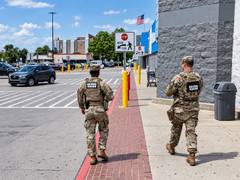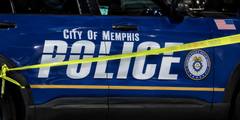
MEMPHIS, Tenn. - Two men were killed by members of the Memphis Safe Task Force within four days this month, and the questions now being asked in Memphis are not about crime statistics. They are about who is answerable when a federally organized unit operating in a city kills someone in it.
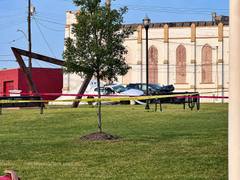
Tyrin Johnson, 20, was killed by members of the Tennessee National Guard. Alfonso Ivy, 47, was killed days later during a Drug Enforcement Administration-led warrant service at an East Memphis extended-stay hotel.
Johnson's grandfather, Evaniel Johnson, has asked to see the video. He wants to know whether the footage supports the account that his grandson turned toward Guard members with a gun. That is the entire request: not a verdict, not a lawsuit, just the recording.
The investigations are open. No one has been charged in either death, and the accounts of what happened have not been independently established. Everyone involved, including the officers and Guard members, is entitled to the presumption of innocence. The families are entitled to answers.
The number
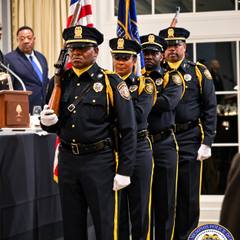
The Memphis Safe Task Force is a multi-agency unit combining local police with the Tennessee National Guard, state troopers, and several federal agencies. It was announced by President Donald Trump in September and deployed with the approval of Governor Bill Lee.
According to Tennessee Bureau of Investigation records, there have now been five shootings involving task force members. That figure matches the total number of officer-involved shootings involving the Memphis Police Department and the Shelby County Sheriff's Office for all of 2024. In 2025, before the task force was formed, the TBI investigated four police shooting cases in Memphis.
Five incidents. In roughly ten months. Matching what two entire local agencies produced in a full year.
The case for the task force
The administration's argument is that it works, and the crime numbers are not nothing.
City records show serious crimes, including murder and sexual assault, down about 40 percent over the last ten months compared with the same period a year earlier. Police Chief C.J. Davis told the Council that murders in the first six months of 2026 were down 44 percent year over year, with 62 homicides through mid-June compared with 110 at the same point last year. Motor vehicle thefts were down 62 percent. As of June, the task force had made more than 10,000 arrests, according to the U.S. Marshals Office. U.S. Marshal Tyreece Miller called the results unprecedented.
Those numbers are real, and any honest accounting has to include them.
The case against it
Two things complicate the story.
First, crime in Memphis was already falling before the task force arrived. The overall crime rate has been dropping since 2023 and hit a 25-year low last year. MPD reported a 23 percent drop in major crime before the surge began, and nearly 500 fewer people were shot in Memphis in 2025 than the year before. Councilwoman Jerri Green, who also works in the public defender's office, attributed most of the recent decline to the Memphis Police Department, noting that National Guard members cannot make arrests.
The president has said crime in Memphis is down 78 percent since the task force arrived. WREG checked that figure against the city's own Safer Communities Dashboard and found overall crime down about 40 percent.
Second, the accountability structures are unclear. The National Police Accountability Project has called for independent investigations into both deaths and the removal of federal agents from the city, arguing that Guard members are trained primarily for military service rather than policing. The NAACP has written to acting Attorney General Todd Blanche demanding that the Justice Department open investigations and end the surge. State Representative Gabby Salinas has urged the Shelby County Commission to consider legal action against Governor Lee over the deployment.
Supporters counter that the surge is a legitimate response to a violent crime problem that overwhelmed local resources, and that its results speak for themselves.
Why It Matters for Memphis
When a Memphis police officer shoots someone, there is a known process. There is a chief who answers to a mayor, a council that can hold a hearing, a TBI investigation, a district attorney, and a civilian complaint mechanism. Memphians know where to go, even when they do not like what they find.
When a Tennessee National Guard member deployed by a governor at a president's request shoots a 20-year-old in Memphis, none of those levers obviously apply. The Guard member does not report to Chief Davis. He does not report to Mayor Young. The Memphis City Council did not vote to bring him here and cannot vote to send him home.
That is the actual issue, and it is separate from whether the task force reduces crime. A city can be safer and still have no way to hold accountable the people making it safer. Those are two different questions, and Memphis is currently being told the answer to the first one settles the second.
There is a related note. The Memphis Police Department is currently holding forums at each precinct to explain the Kendrick Consent Decree, the federal court order that limits how MPD can gather information on citizens engaged in political activity. Memphis has a documented history of police surveillance overreach, which is precisely why that decree exists. The city is teaching residents about the limits on its police at the same moment federal and state forces operating outside those limits are on its streets.
The Oversight Question
The crime numbers and the accountability question are being treated as if one answers the other. They do not.
Suppose the task force is working exactly as advertised. Suppose the 40 percent drop is entirely attributable to it. Even then, Memphis would still need to be able to answer a grandfather who asks to see the video of his grandson's death, and it would still need a process for deciding whether a shooting was lawful, run by someone the public can reach.
Right now nobody can say with confidence who that person is. That is not a partisan observation. It is a gap in the machinery, and it will remain a gap after the surge ends and the units go home, when the only thing left behind is a set of unanswered files.
Evaniel Johnson asked for footage. It is a small request, and it is the right place to start.
Update, October 11, 2026: The autopsy report on Tyrin Johnson, 20, released August 27, 2026, found he was shot in the back, and the medical examiner ruled the manner of death a homicide, a medical classification rather than a criminal finding, Action News 5 and the Associated Press reported. The AP, citing the report, described him as armed. The TBI said the shooting remained under investigation, and a spokesperson for District Attorney General Steve Mulroy said he will decide how to proceed once TBI findings are final. No charges have been filed. The 901 Report has found no public release of video of the shooting as of this update.
Separately, the District Attorney's office announced on July 20, 2026, that it would not charge the DEA agent who fatally shot Darrin Pigram on May 13, 2026. The 901 Report's follow-ups: "The Autopsy Is Public: The 20-Year-Old Killed by Guard Soldiers in July Was Shot in the Back" and "No Charges for the Agent Who Killed Darrin Pigram".