MEMPHIS, July 21, 2026 - Repairing the sidewalks of Memphis would cost somewhere between $60 million and $90 million, city engineering staff told a council committee Tuesday. Under an ordinance the council has never rewritten, almost none of that is the city''s bill.
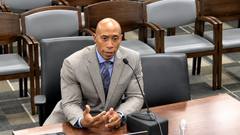
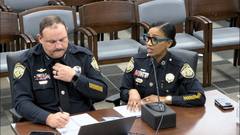
Christopher Harper, who administers construction and inspection for the Division of Engineering, told the committee the city maintains roughly 3,400 miles of sidewalk and that responsibility for maintaining the sidewalk adjacent to a property rests with the property owner. He said the estimate came from applying the same pavement condition data the city uses for streets.
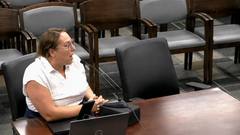
Councilwoman Yolanda Cooper-Sutton, who had requested the discussion, told the committee the ordinance dates to 1967.
"What was happening back in 1967, we don''t even have to go there in this city," she said. "And we don''t even want to go there, because we know exactly what''s happening in 1967 and why this kind of ordinance was created."
The half million
Cooper-Sutton said the city set aside $500,000 in 2022 for a program to help property owners with sidewalk repairs, and that she has asked repeatedly since joining the council where that money is.
"No one can seem to tell us where that half a million dollars is," she said.
Harper confirmed the money exists and has not moved.
He told the committee $500,000 is currently allocated, that it was meant to fund a grant program, and that the grant program was never established. He attributed the delay to legal hurdles he could not detail and said he was not certain of the fiscal year in which it was allocated. He confirmed the money has not been touched.
A separate and older program does operate. Harper said the city has run a sidewalk assistance program since roughly 2013, that it is not a cost share grant but a full assessment, that the application is available online and by mail with a QR code printed on sidewalk violation notices, and that his office keeps a notary available to notarize the paperwork. He described the threshold to qualify as very low.
Cooper-Sutton also referenced an additional $200,000. It is not clear from the meeting whether that is a separate allocation or a restatement of part of the same fund.
What enforcement looks like
Harper gave the committee the enforcement numbers for the last fiscal year. In FY26 the city conducted 852 sidewalk inspections, sent 497 notices, and forwarded 356 cases to the city attorney''s office for enforcement through environmental court.
He said the office depends on citizen complaints to generate inspections, that staff inspect roughly a block at a time to catch nearby problems in one trip, and that a backlog of inspections exists. When staff work through that backlog, he said, they prioritize properties that are not owner occupied, such as commercial or tenant occupied buildings, because those owners tend to respond faster and fewer cases end up in court.
That means the enforcement effort is weighted away from the owner occupied homes where a repair bill lands hardest on an individual.
Cooper-Sutton described a constituent she said was about 99 years old and on a fixed income who could not get in and out of her own house because of the sidewalk.
"That''s a quality of life. That''s a quality of living," she said.
What happens next
Cooper-Sutton asked engineering staff to return with the location and status of the $500,000, the districts where citations are concentrated, and the list of property owners referred to environmental court. She said she had also raised the issue with the administration. No date was set for that information to come back.