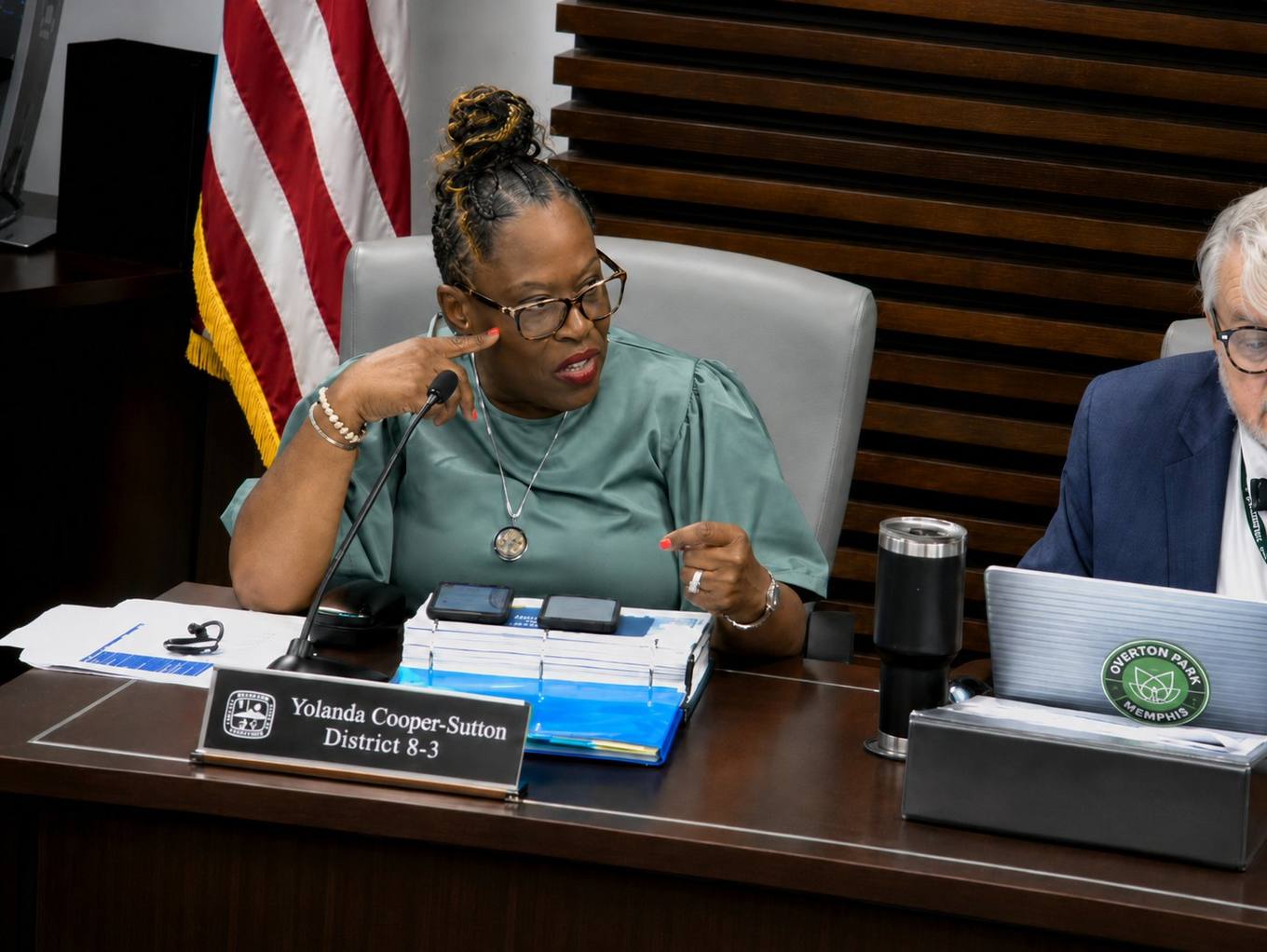
MEMPHIS, Tenn. - Memphis-Shelby County Schools opened for the year on August 3, 2026. The next morning, at the Memphis City Council's Public Works, Solid Waste, and General Services Committee, Councilwoman Yolanda Cooper-Sutton asked whether anyone had checked the sidewalks children walk to school on before classes started. The answer she got was probably not.
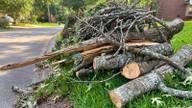
She said she had driven around looking at sidewalks and that what she saw alarmed her, because of overgrown trees and grass, particularly in Super Districts 8 and 9. She said children deserve safe, accessible, walkable sidewalks, and that when a child has to walk in the street on the way to school it is a public safety issue.
She asked whether there is a plan involving public works, community enhancement and Memphis-Shelby County Schools, and whether the matter had been addressed. She said she wanted every sidewalk and every overgrown tree and vegetation cleaned up, and that she has her own photographs of the locations she is describing.
What the departments said they do
The community enhancement director said the city launches an annual clean pathways effort before children return to school, that it started in mid-July this year, and that the department is working to complete everything within at least a five-block radius of every Memphis and Shelby County school. That work covers dumping, litter pickup, boarding structures open to casual entry, and blight remediation on privately owned properties.
She said metrics were still being compiled and that the department had cut what she believed to be 1,039 properties around schools so far, and would continue until it made a dent, because there is grass and dumping everywhere.
Then she drew the boundary. Trees and sidewalks do not fall under the authority of community enhancement, which addresses blighted, neglected, privately owned properties.
Councilwoman Cooper-Sutton asked who should address it, saying her focus is the children walking. She named children in the Mitchell and Jeter areas. She asked whether the department had received complaints about those sidewalks and how they had been addressed. The director repeated that sidewalks specifically do not come to community enhancement, which handles vacant lots and private property.
The public works director said his division responds to complaints, and is responsible for line-of-sight issues and safety issues affecting the traveling public on the street. On trees, he said the division clears a low-hanging limb that is affecting actual traffic but does not prune trees all the way up, noting that streets across the city have large trees overhanging them. On sidewalks he said the same standard applies, and added that sidewalks are private property and belong to the adjoining property owners, though the division will address line-of-sight issues coming out into the public right of way.
Councilwoman Cooper-Sutton said she was hearing everything other than whether the city had done what it is supposed to do and whether the work was targeted, and asked the departments to come back and tell her what they have, because she has the photographs and had named the areas that needed attention.
Earlier in the exchange, after asking whether there had been a meeting or a plan before school started, she said she was finished because she did not get an answer.
What the other members added
Councilwoman Janika White said she had raised the same subject the prior year, not in front of the council but by calling the community enhancement director directly, and had reached out again around June or July this year to ask whether the work was happening again. She said her understanding was that the department has been proactive about it. The community enhancement director confirmed the work is in progress and the metrics are being compiled.
Chairwoman Rhonda Logan said the difficulty is that council members do not know the program exists. She proposed that every council member send the departments five to ten of the most egregious properties in their districts, and that the work be scheduled for May, when school is out, so the effort is complete before children return. She said she had sent in a request the previous day herself after driving past children in the streets.
She also raised the longer-term problem. She said the city has a sidewalk replacement program but she does not know how robust it is, and that as she understands it, it is limited to certain income levels or to seniors. She asked whether the departments had considered partnering with community development corporations or local nonprofits that could monitor an area and report the worst conditions, so property owners can be notified.
She said the city needs a structured way to do this in conjunction with the parties responsible, because answering a council member's call every two months leaves the same blocks blighted again shortly afterward.
Committee Chairman J. Ford Canale asked members to take other topics offline with the directors or to add them formally to a committee agenda, noting the presentation on the agenda item had not yet been given.
Chairwoman Jana Swearengen-Washington, who had requested the Lamar corridor item, said afterward that she still had not heard anything about the grass and that the departments were not prepared to talk about it.
What happens next
The community enhancement director said the clean pathways work is in progress, that the department will continue until everything that needs attention has been addressed, and that it is compiling metrics as it did for the Lamar corridor. She said a discussion of a plan for sidewalks specifically is something the department can bring to the upcoming committee meeting. Both directors were asked to return with what they have on the specific areas raised. Chairwoman Logan's proposal that members submit five to ten priority properties each, and that the work move to May, was not reduced to a motion.
Your city. Your money. Your receipts.