MEMPHIS, Tenn. Memphis Light, Gas and Water touches more homes than any single elected official does. It is the largest three-service public utility in the country, serving more than 428,000 electric customers across Memphis and Shelby County, along with hundreds of thousands of gas and water accounts. With this post, The 901 Report opens an ongoing MLGW beat, and the place to start is the same as every other beat: who holds the power, where they meet, and where the money goes.
MLGW is governed by a five-member Board of Commissioners. The members are nominated by the Mayor of the City of Memphis and confirmed by the Memphis City Council, and the board also includes two non-voting advisory members. The Memphis City Council holds additional oversight of the utility, including approval of its rates. The board meets in public at 8:30 a.m. on the first and third Wednesday of most months at the MLGW Administration Building, 220 South Main. President and CEO Doug McGowen runs day-to-day operations.
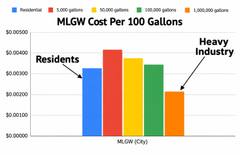
The money question is already on every bill. In late 2023, the City Council approved a 12 percent rate increase, phased over three years. The final 4 percent installment took effect on January 1, 2026, adding about $5 per month for the average residential customer. MLGW says the increase is fully directed to reliability, citing decades of underinvestment that left outages roughly twice as frequent and three times as long as they were in 2000. The utility's Roadmap to Reliability program includes expanded tree trimming, drone-based equipment inspections, and grid modernization, with a progress dashboard the utility updates monthly.
One structural fact shapes everything MLGW does: it does not generate its own power. MLGW buys electricity exclusively from the Tennessee Valley Authority and is TVA's largest single customer, representing roughly 11 percent of TVA's total load. When rolling blackouts happen during extreme weather, MLGW says those orders come from TVA, not from the utility itself.
Why It Matters for Memphis
A utility bill is a monthly tax that no one votes on directly. The people who set MLGW's direction are appointed, not elected, yet their decisions reach further into household budgets than almost anything the City Council does. That is exactly why the beat exists. The board meets in public twice a month, the rate money is supposed to be tracked, and residents are entitled to see whether the reliability they are paying for actually shows up.
The reliability promise is the test. Customers are now paying the full 12 percent increase. The utility has said that money buys fewer and shorter outages. Over the coming year, that is a claim that can be measured against the dashboard, the outage record, and the board's own reporting.
The Oversight Question
The hardest accountability gap in local government is often the one no one votes on. MLGW sits in that gap: appointed leadership, a bill every household pays, and a power supply controlled by an outside agency. That structure is not wrong, but it demands attention, because the usual lever of accountability, the ballot, does not reach it directly.
The question this beat will keep asking is simple. Residents are paying more, on the promise of better reliability. Is the money producing the result, and can the public actually see the proof. Those are answerable questions, and answering them is the job.