Hearing #2: The Police Overtime Shell Game
The second FY27 budget hearing in plain English. The administration confirmed something on the public record that changes how Memphians should read the entire police budget - and the rest of the FY27 proposal with it.
Filed: May 27, 2026
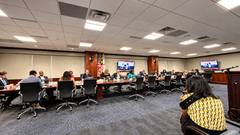
Hearing: Memphis City Council FY27 Budget Hearing #2, Tuesday May 19, 2026
Source video: Watch the replay
Read the Hearing #1 briefing →
The Bottom Line
The proposed FY27 police overtime reduction is not a reduction.
For four straight years, Memphis Police Department actual overtime spending has run between $35 million and $42 million. The proposed FY27 overtime budget is $29.8 million - the lowest proposed level in recent years. The 901 Report's pre-budget oversight review flagged this gap as a finding with no documented operational plan behind it.
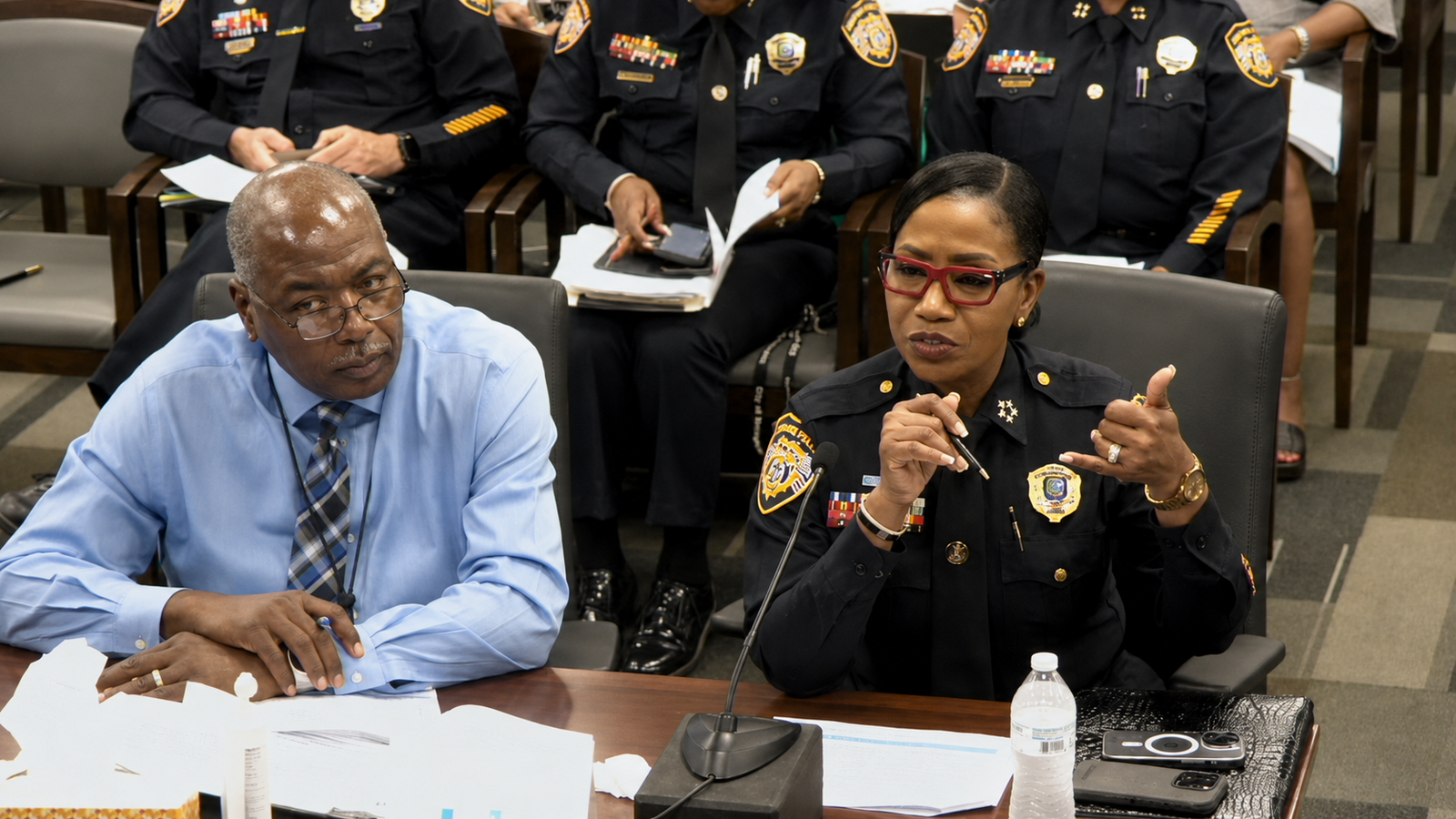
At yesterday's hearing, Chief CJ Davis and Memphis Police Department leadership explained where the reduction comes from. It is not from an operational change. It is not from staffing additions. It is not from a deployment redesign.
It is from a state grant.
The City has a $40 million state Violence Intervention Fund grant. About $12 million remains in the pot. The administration confirmed on the public record yesterday that $4-5 million of that remaining $12 million will be used to pay police overtime in FY27 - billed to the state, reimbursed back to the City. This is what Chief Davis described as the "flexibility" the grant gives the department.
The grant ends in fiscal year 2028.
When the grant expires, the police overtime cost lands back on the General Fund. The "reduction" was an accounting move dressed up as fiscal discipline.
That is the headline of Hearing #2.
There are other significant findings - Public Works disclosing 16 vacancies it's funding to fill, the Solid Waste division reporting a $109 million budget covering 181,000 customers, Engineering staffing at 12-15% vacancy as a structural baseline, the Fire Department reporting an ISO Class 1 rating held by less than 1% of departments nationally, and a sewer fund operating at the lowest residential rates in the country while needing major reinvestment in 45-year-old wastewater treatment plants.
But the police overtime shell game is the finding that matters most. Because it tells you something the rest of the budget book does not: the FY27 budget is being made to balance on the assumption that fiscal year 2028 will solve itself.
What Actually Happened: The Police Block
Chief CJ Davis and Memphis Police Department Finance Manager Vincent Eason led the Police block. They opened with staffing.
The numbers the Department disclosed on the public record:
• Total authorized complement: 3,098 civilian and sworn employees
• Vacant positions: 799
• Actively posted and funded: 354
• Unfunded positions: 445
• Of those 445 unfunded, 360 existed as unfunded in 2024
• 85 additional positions added to the "unfunded" bucket this year - described by the Chief as "part of our effort to target reductions in the Memphis Police Department"
That is the staffing picture. Memphis Police Department is operating with 799 vacancies, of which 445 - about 57% of all vacant positions - are not funded at all. The administration's own framing is that adding 85 positions to the unfunded list helped them cut $18 million from the proposed budget.
The Department also disclosed:
• Two recruit classes in motion - 81 graduating this week, 145 more in June
• The Chief raised the possibility the Department may return to Council in FY27 to add more funded positions if hiring exceeds plan
• 91% of the Police budget is personnel
• Less than 1% is capital outlay and grant subsidies
So far, this is a normal budget hearing presentation. The conversation got significant when Councilman Warren started asking about the state Violence Intervention grant.
The Exchange That Should Be Memphis's FY27 Headline
The exchange took place during the police block. I am reproducing it with what was said, by whom, in order. Source: the public hearing record.
Councilman Warren asked the administration where the City's $20-40 million in state Violence Intervention grant funding stood, how much remains, and what it is being spent on.
The administration's response, in summary:
The total grant is approximately $40 million
$12 million remains
It is a reimbursable grant - sub-grantees spend, then bill the state for reimbursement
Warren pressed: Is any of that $12 million going to fund the Group Violence Intervention (GVI) interveners - the on-the-ground workers who are the entire reason for the grant?
The administration's answer: No. The Memphis Police Department is not the check-off for sub-grantees. The interveners have to apply directly to the state grant administrator (a state-grant-funded employee who reports to the state, not to the City). The interveners are still working to get their applications in.
Warren pressed again: So what is the $12 million being spent on?
The administration's answer, in summary:
Police overtime - $4 to $5 million of the remaining $12 million will go to police overtime in FY27
About $1 million more in police overtime through the rest of the current fiscal year (FY26)
Vehicles - including a potential helicopter ("about $7 million," paid over time)
Other items the state has approved
Warren did the math on the record:
"Now we've taken that 12 million and we're down to 7 million. . So we have 7 million of that funding left that we're going to have to spend and request reimbursement for."
Then Chief Davis confirmed the structural piece - that the grant ends in FY28, with no recurrence:
"We're not really having a reduction. We're just not seeing it occur again."
That is the entire mechanism. There is no operational plan reducing police overtime. There is a state grant temporarily funding it. The grant expires in two years.
The 901 Report's pre-budget review flagged the missing operational plan as Finding #1. The hearing did not produce an operational plan. It produced a different answer: there isn't one, because there doesn't need to be one yet. The state is paying for it for now.
This is the FY27 budget's most consequential disclosure to date.
What This Means for the FY27 Vote
A few things to be clear about, because the math here matters.
This is not necessarily wrong. Using a state grant for police overtime is allowable under the grant terms. The state approved the use. The Department is following the rules.
But it is also not what it looks like. The proposed FY27 police overtime budget of $29.8 million does not mean the Department has found a way to do its work with $5-12 million less labor. It means the Department has found a way to shift $4-5 million of overtime cost from the General Fund to a temporary state grant. The work is the same. The cost is the same. The taxpayer is paying - just through a different pipe.
And in FY28, the pipe closes. When the Violence Intervention grant expires with no recurrence, that $4-5 million in police overtime cost lands back on the General Fund - while the Department continues operating with 445 unfunded positions, 799 total vacancies, and the same structural overtime demand.
The Council is being asked to approve an FY27 budget where the largest single piece of the police overtime "reduction" is a one-time mechanism that ends in two years. That is a question every Council member should be asking before voting yes.
The Council member who got this on the record is Councilman Warren. This is the second hearing in a row he has forced the administration to confirm a structurally significant disclosure on tape - the debt cliff at Hearing #1 ($60M → $36M, with $27M of the difference consumed by administration borrowing decisions between 2020-2026), and now the police overtime grant mechanism at Hearing #2. The 901 Report is tracking who is doing the oversight work. So far, Warren is doing more than his share.
The Other Significant Findings From Hearing #2
The police OT story is the headline. But Hearing #2 also produced four other substantive disclosures worth noting before they get lost.
1. Engineering: 12-15% Structural Vacancy
Engineering Director Manny Belen disclosed that the division operates at 12 to 15% vacancy as a structural baseline - not a current shortage, a normal state. Currently 16 vacancies out of approximately 155 authorized positions (about 10%, slightly better than baseline). The vacancies are "all in the process of being filled or been posted."
The 901 Report's read: This is the kind of disclosure that should prompt a follow-up question Council did not ask - if your normal staffing posture is 12-15% short, what is the actual deliverable capacity of the division, and how is the FY27 budget calibrated to that reality versus to the authorized complement that exists on paper? That question goes on the running list.
2. Public Works: 16 Vacancies, $1M Cut
Public Works Director Scott Morgan disclosed:
Authorized complement: 114
Vacancies: 16 (currently - was higher last month)
FY27 personnel and materials & supplies cut: approximately $1 million (about 5%)
The cut was achieved through reductions in overtime and professional services
Same pattern as Police on a smaller scale - when divisions are pressed to find cuts, the first place they cut is overtime. The structural question: is the work actually getting smaller, or are they just budgeting for less of it?
3. The Paving Math Got More Specific
At Hearing #1, the administration disclosed about $20 million dedicated to paving. At Hearing #2, the breakdown came out:
$13.5 million through CIP, managed through the Division of Engineering - the larger roads
$6.5 million to Public Works in-house crews - neighborhood paving via mill-and-overlay, restriping, etc.
Public Works in-house crews pave approximately 61 lane miles per year
This is useful for accountability tracking. The 901 Report can now go pull last year's actual paving lane-mile totals and compare. Council should ask for the same.
4. The Sewer Fund: Lowest Residential Rates in the Country, But Aging Infrastructure
Public Works disclosed the Memphis sewer fund operates at the lowest residential rates in the country at $17.38 per residence per month. The fund has 3,200 miles of sewer pipe and two wastewater treatment plants - both 45 years old.
A March 2025 sewer bond issuance has bolstered the fund's investment capacity. The fund has assessed 99% of the sewer system under the consent decree program (10% of pipe assessed and cleaned per year, every year, for ten years). But significant rehabilitation needs remain, particularly on the large-diameter pipe that is expensive to repair.
The 901 Report's read: This is an example of a division giving Council the full picture - historical rates, current investments, future needs. It contrasts sharply with what Police did not provide on overtime. Different divisions are running different transparency standards within the same hearing.
5. Fire: ISO Class 1, 1,860 Authorized, 78 Vacancies
Fire Chief Colin Burress (Memphis Fire Department) presented:
Authorized complement: 1,860
Vacancies: 78 (75 posted, 3 admin positions Fire is not filling)
FY27 proposed budget: approximately $247.2 million (up $7.4 million from FY26)
Fire is not requesting any ISL (initial staffing levels) increases in FY27
Memphis Fire holds an ISO Class 1 rating - held by less than 1% of departments nationwide
Personnel is 89% of the budget; materials and supplies 11%
Average structure fire response time: 265 seconds (about 4 minutes 25 seconds), against NFPA 1710 target of 320 seconds for first-due apparatus. Below the standard, which is what you want.
A 911 dispatch redesign is in the FY27 plan: callers will get a fourth option - a mental health option - alongside police, fire, and EMS. The expected impact is reducing false-alarm volume, reducing apparatus wear and tear, and freeing fire crews for actual fire emergencies. This is a meaningful operational improvement and the kind of thing Council should be funding more of.
6. Solid Waste: $109 Million for 181,000 Customers
Solid Waste Director Phillip Davis reported a $109.1 million FY27 budget serving 181,000 customers. The presentation was clean and businesslike. No major structural issues raised. Code enforcement on cart theft was mentioned. Council did not push deep here, which is reasonable given the higher-priority issues in the police block.
What Council Did NOT Ask at Hearing #2
The 901 Report tracks these patterns across hearings, not just within a single hearing.
✗ The $13M Citywide Contractor and Consultant Cut - Still Not Asked About
This finding from the pre-budget review: contractor and consultant spending is proposed at $39.4 million - $13 million below the current FY26 forecast of $52.7 million - with no explanation of how the reduction will be achieved.
This was a hearing where Engineering, Public Works, Solid Waste, Police, and Fire all presented their FY27 budgets. Five divisions. Five opportunities to ask the question. It was not asked once.
The Police budget specifically reduces "professional services" alongside overtime as part of the $18 million in cuts. No Council member asked which professional-services contracts are being canceled, which vendors are being non-renewed, or what work that was previously contracted will now be done in-house or not at all.
This is now two hearings in a row without the contractor question being raised. The 901 Report will keep flagging it. With $13 million of contractor spending unexplained, Council should not approve the FY27 budget without that disclosure.
✗ The Tyre Nichols Civil Trial - Still Not Mentioned
The civil trial begins July 13 - 34 days after the proposed budget vote on June 9. The City has previously characterized the exposure as something that could "bankrupt Memphis." There is no contingency reserve line in the proposed budget for civil judgment exposure.
This was a Memphis Police Department budget hearing. The Memphis Police Department is the defendant. It was not mentioned.
✗ The Information Technology Software Anomaly - Still Not Asked About
This was Hearing #1's missed question and Hearing #2's missed question. The 46.5% of IT budget on software licenses (vs. peer benchmark of 27%) anomaly will not get a hearing of its own until the IT block. But it can be foreshadowed in any hearing where the administration discusses fleet or asset management. The Police block included a discussion of vehicles, helicopters, and grant-funded purchases. None of it led to the software question.
✗ The 311 System - Not Raised
Same as Hearing #1.
What Council Did Ask, and Did Well
✅ Councilman Warren: The Grant Mechanism
As covered above. This is the most important question asked at any hearing this season. Warren forced the administration to confirm on the public record that the police OT "reduction" is a grant-funded shell. Without his pressure, Memphians would not have that disclosure before the budget vote.
✅ Councilwoman Logan / Chairwoman Swearengen-Washington: Paving Equity
The paving conversation that started at Hearing #1 continued at Hearing #2 with specifics - $13.5 million via CIP for larger roads, $6.5 million via Public Works in-house crews for neighborhoods, 61 lane miles annually. The Council members who pressed for equitable geographic distribution at Hearing #1 got more concrete numbers at Hearing #2. The follow-up question now: what are last year's actuals? Memphis should be able to compare 61 projected lane miles to actuals delivered, by district, by year. That's the next question on the list.
✅ Multiple Council Members: Fire Department Equity
Fire's Q&A included Council members pressing for neighborhood and ZIP-code-level disclosure of fire and EMS call volumes - and whether FY27 resource deployment is calibrated to those concentrations. Chief Burress did not have the data ready in the hearing but committed to come back with it. That's a clean, narrow, well-posed question with an actionable follow-up. Good oversight.
✅ The 911 Mental Health Option
This was presented by Fire as part of the dispatch redesign. It is a real operational improvement worth highlighting. The 901 Report will track delivery.
The Pattern So Far Across Two Hearings
Two hearings in. Eleven scheduled days of hearings remaining before the June 9 vote. Two patterns are clearly emerging.
Pattern 1: The Administration Is Deferring Structural Questions to After the Vote
At Hearing #1, the "10,000 housing units" strategy was scheduled to be presented to the HCD committee on June 9 - the day of the budget vote.
At Hearing #2, the police overtime "reduction" was confirmed to rely on a state grant expiring in FY28 - after the budget the Council is voting on.
Both are examples of the same structural problem: the substantive accountability moment is scheduled to happen after the budget vote that funds it. This is not accidental. It is a budget-making pattern Council members should be asking the administration to address directly.
Pattern 2: One or Two Council Members Are Carrying the Oversight Load
Across two hearings, the consequential disclosures have been pulled out of the administration by a small number of Council members - primarily Councilman Warren (debt cliff, police OT grant mechanism, Joint Office funding gap), Chair White - Janika White, Super District 8-2, chairing budget hearing blocks (pothole plan, 10,000 housing units redefinition, mental health facility challenge), Councilwoman Easter-Thomas (pre-K, sales tax referendum fund), and Councilwoman Green (auto registration fee MATA shortfall, county audit precedent).
Other Council members are present in the chamber and asking questions. But the structurally significant disclosures are coming from a recurring core. That is worth tracking and worth saying out loud. The 901 Report will be publishing a Council-member scorecard before the vote.
The Updated Running Questions List
Updated to reflect Hearing #1 and Hearing #2:
Old questions still on the list (carried from Hearing #1):
- Speed-hump maintenance responsibility and the temporary-vs-permanent split
- New median planting maintenance plan and cost
- State law on pothole damage claim reporting (Tennessee Code Annotated cite)
- The 10,000 housing units strategy (HCD committee June 9 - same day as vote)
- Auto registration fee underperformance drivers and audit request
- Identification of who in city government explores new revenue
- The 26% xAI community/education fund detail
- The consolidated Joint Office of Neighborhood Safety funding picture
- The County's contribution to the Joint Office
- Animal Services bridge plan and full FY27 staffing needs
- Library central-branch bathroom redesign before sign-off
- The pre-K $1.5 million resolution (Easter-Thomas, forthcoming)
New questions from Hearing #2:
- What is the Memphis Police Department's plan for the $4-5M in overtime currently funded by the state Violence Intervention grant when the grant expires in FY28?
- The actual annual paving lane-mile delivery by Public Works in-house crews - last 3 years, by district
- Engineering's structural 12-15% vacancy rate - what does it mean for actual deliverable capacity?
- Fire and EMS call volume by ZIP code, with FY27 deployment calibration analysis
- The dispatch-redesign "mental health option" - staffing, training, integration timeline
- The sewer fund's 45-year-old wastewater treatment plant capital needs over the next 10 years
Questions The 901 Report would still add to the list, carried from Hearing #1:
- The written operational plan supporting the $29.8M police overtime budget (now answered: there isn't one beyond the grant)
- A complete contractor inventory by division
- The basis for the $13M proposed reduction in contractor spending
- The IT software asset inventory
- The 311 system proof of concept
- The Tyre Nichols civil trial exposure briefing
- A 10-year and 20-year pension projection
- The FY26 Q1 Executive Division contractor-vs-frozen-position reconciliation
Next Up
Hearing #3 happened later in the week and we will be publishing that briefing tomorrow.
Hearing #4 happens Monday June 1, 2026 - eight days before the budget vote. The 901 Report will be publishing a pre-hearing preview Sunday night and same-day coverage Monday evening.
The budget vote is Tuesday, June 9, 2026.
Memphis is voting on $898 million in 13 days. The 901 Report is publishing every hearing in detail before Council votes. We are not telling you how to vote. We are documenting the public record so Memphians can see for themselves whether the elected officials they sent to City Hall are asking the questions a $898 million budget deserves.
About this briefing: The 901 Report is Memphis's independent civic accountability organization. Every figure in this briefing is sourced to public documents and the publicly recorded May 19, 2026 hearing. We are non-partisan, not affiliated with any candidate or campaign, and not funded by any government agency. The full hearing transcript and our pre-budget oversight findings are available at the901report.com.*