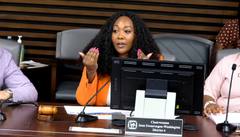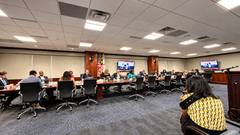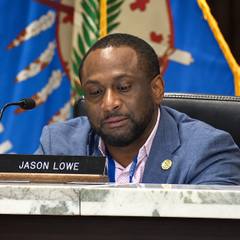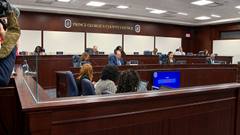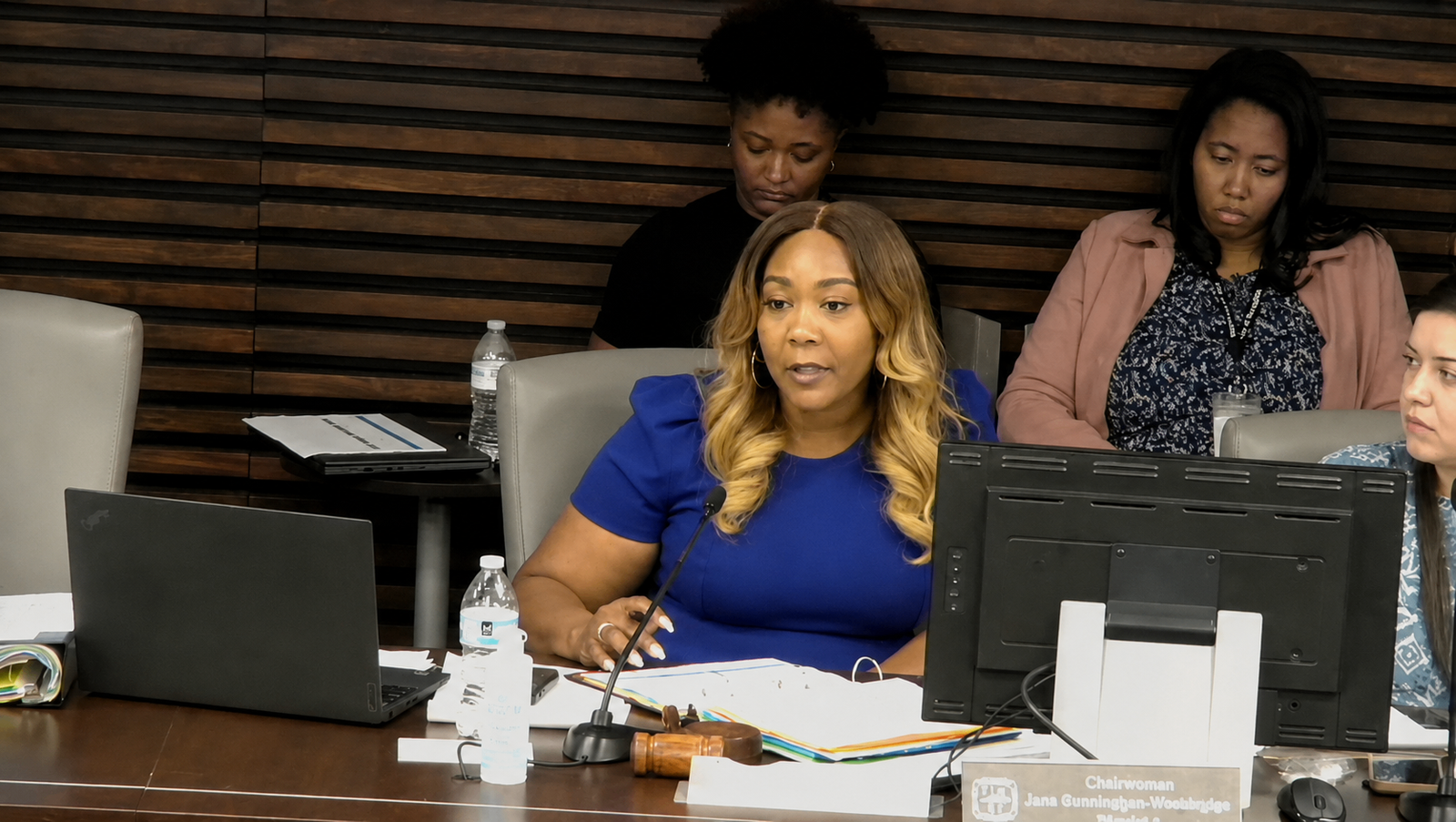
Correction, October 11, 2026: An earlier version of this post misidentified the Council Chairwoman in the image caption and alt text. She is Chairwoman Jana Swearengen-Washington. The post also gave the hearing date as Wednesday, May 21, 2026; May 21, 2026 was a Thursday.
Hearing #3: The Math Doesn't Work - And the Chair Said So
The third FY27 budget hearing in plain English. The hearing where the housing math finally got asked, the contractor question finally got asked, the City Attorney did not mention the largest civil exposure on the City's books, and the Chair publicly named what every previous hearing had been dancing around.
Filed: May 28, 2026 Hearing: Memphis City Council FY27 Budget Hearing #3, Thursday May 21, 2026 Source video: YouTube livestream archive - Note: stream dropped during the Parks presentation Read Hearing #1 → Read Hearing #2 →
12 DAYS TO THE BUDGET VOTE.
The Bottom Line
The third FY27 budget hearing produced more substantive disclosures than the first two combined. Five things happened that Memphians should know.
One. The 10,000 housing units promise got its first real math check. Housing & Community Development Director Ashley Cash confirmed on the public record that Memphis produced approximately 161 affordable housing units in FY26 and is projecting roughly 766 units in FY27 (about 500 baseline plus 266 from federal home funds and CDBG repivoting). The Mayor's goal is 10,000 by 2030. A Council member said out loud what the math required: "I'm just trying to see how we going to get to 10,000." HCD's response: the comprehensive strategy presentation will come in June - after the budget vote. The math the Council was asked to fund: producing units at four times the current rate, every year, for three years, with no documented plan.
Two. The $13 million unexplained citywide contractor cut finally got asked about. In the General Services block, a Council member directly asked: "Why hasn't general services required a cost-benefit analysis comparing contractor versus employee cost before approving the contracts?" The answer, in essence: we don't have a plan to convert contractors to permanent positions. The same Council member then disclosed that contractor spending is two to three times permanent employee cost, confirming what The 901 Report flagged pre-budget. After three hearings, this is the first time the question got asked. The administration did not have an answer.
Three. The City Attorney's office presented its FY27 budget and did not mention the Tyre Nichols civil trial - the litigation that begins July 13, 34 days after the proposed budget vote, with exposure the City has previously characterized as something that could "bankrupt Memphis." Chief Legal Officer Tannera Gibson discussed software upgrades, blight litigation expansion, the delinquent tax collection rollout, and a backlog of public records claims being cleared. She mentioned "unexpected litigation" once, in passing. The largest single civil exposure facing the City was not named. The block ended abruptly.
Four. Chair White said publicly what every previous hearing had been dancing around. At the end of the General Services block, she made what may be the most consequential statement of the entire FY27 hearing season:
"I don't see a path forward to by cuts. I don't see a path forward. . I don't know what the appetite is to start talking about a potential tax increase. I know everybody hates that, but it seems like at this point we have some significant projects that I don't see a path forward to by cuts."
The administration's CFO confirmed on the same record: streets need $80-100 million to reach "good" rating (about three to five times current allocation). Housing requires significant additional revenue. Fleet replacement requires significant revenue. Bonds are not going to be the solution.
Five. The Liberty Park debt service finally got itemized - or at least, the demand to itemize it was made on the record. Liberty Park represents $120 million in city money over 9 years with no revenue from the planned hotel or related developments yet. Council asked for the debt service to be broken out by project so the public can see what each individual investment is costing. The administration committed to provide itemization.
That is Hearing #3 in five sentences. The rest of this briefing is the receipts.
A Note on the Stream
The official livestream of this hearing dropped during the Parks presentation and was restored later in the session. This is a transparency issue worth flagging on its own. Memphis taxpayers have a right to watch every budget hearing live. The 901 Report has previously raised concerns about technology procurement and IT operational delivery; a dropped livestream during a public budget hearing belongs on the same list. We will be tracking whether subsequent hearings restore reliable streaming.
For the portion that was lost on the public stream, we are reconstructing the Parks discussion from the post-hearing transcript record. The full Parks block is documented in the meeting page transcript.
1. Introduction of Resolutions / Review Session
Councilwoman Green brought the resolution that had been held from Monday's hearing - the MATA-funding resolution. The resolution proposes no increase in the auto registration fee but addresses the underperformance issue flagged at Hearing #1 (the fee was projected to generate $27M for MATA but is tracking toward $22-23M).
The discussion centered on accountability for the fee's underperformance and on whether MATA's funding floor should be protected even if the fee underdelivers. The resolution moved forward with Council support. Councilwoman Easter-Thomas affirmed her co-sponsorship and named the broader principle: "I support it. I'm co-sponsoring it with you, but we need to make sure we follow through and make it happen before we leave these seats."
That is the kind of follow-through accountability statement budget hearings are supposed to produce.
2. Parks - Including the District 7 Equity Question
Parks Director Justice Bolden and Deputy Director Shay Lorenzo Parker presented. Memphis Parks manages 162 parks across the city, an accredited department - one of three accredited park agencies in Tennessee and one of approximately 300 nationwide.
The Department's FY27 priorities:
Youth and young adult programming - golf, Play Your Parks, special events, Family Fun Fridays, movies in the park
Attractive parks - anchored on the 17-20 day cut cycle and litter abatement
Managed partners - about 25% of the FY27 Parks budget flows to managed partners (zoo, Liberty Park, museums, Botanic Gardens, Brooks Museum, etc.)
Technology - OpenGov asset management system (in place since FY23) and Placer.AI for park usage tracking
Performance: Memphis Parks now has timestamped photo documentation through OpenGov, allowing field maintenance tickets to be created and tracked in real time.
The District 7 Equity Exchange
Councilwoman Logan brought what may have been the most quotable Council moment of the hearing:
"District 7, when it comes to parks, we get the shortest end of the stick, pushed back, forgotten about, thrown away. . I just don't [want] North Frasier, which was very exciting to be able to put towards that line item in last budget one year ago - and so [I've] been talking with the staff at North Frasier, they've been telling folks who have been coming in 'pretty soon we'll be started on renovation' - and now that's pushed back another year. The same way Gu has been pushed back three years on just a pavilion. . It's not a lot of other districts that are told they need to wait another year except for me when it comes to parks."
She asked for the $3.5 million in FY28 CIP for North Frasier Community Center to be moved back to FY27. Director Bolden's response: "We hear you loud and clear, Councilwoman. . Give us an opportunity to get with you and then let's talk about it."
This is the right kind of constituent advocacy at a budget hearing. The follow-up question The 901 Report is adding to the running questions list: what is the average wait time for CIP-funded parks projects by Council district, and is there a documented equity rubric for prioritization?
Splash Pad Vendor Issues
Chairwoman Swearengen-Washington flagged ongoing materials quality issues with the splash pads - suggesting the City may want to consider another vendor. The Department acknowledged having a contractor on retainer for maintenance issues. The 901 Report's read: this is a small example of the broader contractor question. Memphis has a pattern of procurement-by-retention. The choice of vendor and the cost-benefit comparison vs. in-house capacity should be auditable. It usually isn't.
Closed Facilities and the Deferred Maintenance Backlog
Councilwoman Logan also asked the right structural question: "What is the total amount of the deferred maintenance backlog with parks and recreation facilities? Do we have any parks or recreation facilities that were closed this year?"
Director Bolden's response confirmed no parks were closed in FY26 but no community centers were closed either, and acknowledged Memphis Parks compares favorably to peer cities its size. The deferred maintenance backlog number was not produced in the hearing. It goes on the running questions list.
3. Housing & Community Development (HCD) - The Math Check
This was the block where the FY27 budget's largest unspecified commitment - the Mayor's 10,000 housing units goal - finally got its real math check.
HCD Director Ashley Cash opened by aligning the Department's work with what she called "the mayor's 10,000 housing unit goal" and walked Council through the housing trends, the rapid rehousing programs, the HOPWA (Housing Opportunities for Persons With AIDS) program, and the home-ARP allocation.
The Production Math
The math came out in this exchange:
FY26 affordable housing units produced (City-funded): approximately 161
FY27 projected units: approximately 500 baseline + 266 additional from federal home funds and CDBG repivoting = ~766 units
Mayor's 10,000-unit goal: by 2030
Remaining gap if FY26 + FY27 land as projected: ~9,073 units across FY28, FY29, FY30
Required annual production FY28-FY30 to hit goal: ~3,024 units per year
That is four times the FY27 production rate, every year, for three straight years.
The Council member doing the math out loud at the table:
"So, we did 161 in 2026. We're going to do 500 in 2027. . I'm just trying to see how we going to get to 10,000."
Director Cash's response, in summary:
The 10,000 figure represents what the City is "helping to fund" - not what the City is directly producing
The City "typically doesn't fund 100% of a project" - the City supports private market production
New federal pivots will add approximately $6 million in incremental capacity (2 + 4 = $6M)
A new sewer fee allocation will provide another ~$3 million ramping up annually to the Affordable Housing Trust Fund
The "comprehensive approach" presentation is scheduled for June - after the budget vote
That last point matters. The Council is being asked to vote on a budget on June 9 that funds the first year of a 10,000-unit-by-2030 plan whose comprehensive strategy presentation comes after the vote. Same structural pattern as Hearing #1.
The Council's response, in essence, was to keep asking. Chairwoman Swearengen-Washington asked to convene a committee meeting with EDGE, the Chamber, and HCD to discuss what new businesses coming to Memphis owe in housing investment via the pilot programs. That request is on the record.
What HCD Is Doing Well
Director Cash deserves credit for transparency on what is and isn't working. The homeless support programs, the senior home repair work, and the rapid rehousing pathways were presented with clear performance data. The repivoting of federal funds toward new construction (which CDBG rules typically restrict) was explained in detail.
The honest discussion of what is not working - the unfinished projects, the timelines that slip year after year - also happened. A Council member made the bigger point:
"We're all paying for our housing and community development and we're not seeing the results for it. . We love your homeless supports, we love how you help out the seniors with home repairs - all of that's great stuff. But we need to be honest about the things that are not working as well and talk about how we're going to move those forward because they are also impacting our budget greatly over almost a decade now."
The Liberty Park Debt Service Question
The same Council member then raised what may be the most concrete fiscal disclosure of the hearing. The City has been making debt service payments on Liberty Park (the Liberty Bowl / Tiger Lane redevelopment) for years. The total is approximately $120 million over 9 years - $114 million plus another $6.2 million - and there is still no revenue from the planned hotel.
The Council member: "I tried to see if it was line item out in the debt service, but I can't find it there either. So, it just seems to be missing from our budget that we're making these payments."
CFO Walter Person confirmed: "It is in the debt service portion, especially related to the actual debt service, but it is not itemized."
The Council request was straightforward: itemize the debt service. The administration committed to do so.
The 901 Report's read: This is a clean accountability ask. Memphis taxpayers cannot evaluate whether large public investments - Liberty Park, the Sheraton conversion, future bond-funded projects - are delivering the returns promised if the costs are bundled into an aggregated line item. Itemization is the bare minimum of transparency. This goes on the running questions list.
4. City Attorney - What Wasn't Said
Chief Legal Officer Tannera Gibson presented one of the simpler budgets in the City - about $25 million total, with most of the budget covering claims and lawsuits paid from a single materials and supplies line.
Three things were disclosed and discussed:
The delinquent tax collection rollout. Memphis is building out an in-house Delinquent Collections department - taking over functions previously performed elsewhere. Two of the office's current vacancies are being held for the delinquent tax attorney role.
The "special U.S. Attorney" position. One vacancy is being held for an attorney who will collaborate with the U.S. Attorney's office on cases specific to Memphis and crime in the city.
That last quote is significant. It confirms what the FY26 Q1 Executive Division report - and The 901 Report's pre-budget review - flagged: there is a pattern of legacy outside-counsel relationships across divisions. The current Chief Legal Officer has been working to consolidate those under her office. That is the right policy and deserves to be named on the record.
But it also raises the question: how much of the $13 million proposed reduction in contractor and consultant spending is attributable to consolidating legacy outside-counsel relationships? Or is the contractor reduction entirely elsewhere? Council did not ask that question in the City Attorney block.
5. General Services - The Hearing's Biggest Question Finally Got Asked
After two hearings in which the $13 million unexplained citywide contractor and consultant spending reduction was not raised once, the question finally landed at the start of the General Services block.
The exact exchange, as captured in the public record:
Council member: "General services oversees citywide procurement. Finance analysis shows contractor spending is the major budget issue. Why hasn't general services required a cost-benefit analysis comparing contractor versus employee cost before approving the contracts?"
The administration's answer (Deputy Director Spencer): contractors are used for specialty work, to augment staff, and because of vehicle volume. The goal is to keep 90% of vehicles on the street. Some contractor work (heavy equipment maintenance, towing, tires) does not have in-house equivalents.
The Council member followed up: "The city operates 3,000 plus vehicles, 200 buildings. No fleet condition assessment or facilities deferred maintenance backlog disclosed in the budget. What is the infrastructure maintenance backlog?"
The administration disclosed a citywide Facility Condition Assessment (FCA) being completed by the end of July - covering more than 160 city facilities, with maintenance costs, repair costs, and deficiency costs. That is genuinely useful new information.
The Council member then asked the question that gets to the heart of the contractor issue: "Is there a plan to convert some of the contractors to permanent positions? We have 843 vacant city positions, but contractor spending is two to three permanent employee costs."
The administration's answer: No.
"We do not have a plan to convert the contractors. Our positions, when they come available, of course we try to hire in. . We're not planning to bring over contractors to fill permanent positions."
There it is.
After three hearings, the citywide $13 million proposed reduction in contractor and consultant spending still has no operational plan behind it. The administration is reducing the line item without changing the underlying procurement pattern. The 901 Report's pre-budget finding - that contractor reductions appear in the budget without any documented strategy for absorbing the work - is now confirmed on the public record.
The Council member who asked the question deserves credit. After three hearings, this is the first time the question was put on the table.
The technology modernization. The City Attorney's office has been operating on cloud-based legal software that "probably dates back to 2000" - a hard stop. Three simultaneous software upgrades are underway: the main cloud-based case management system, a Permits Department upgrade, and a dedicated blight litigation case management system. Total cost: approximately $342,000.
The office also disclosed:
5 in-house blight lawyers, 5 outside counsel - working to expand
Approximately $1 million dedicated to nuisance and blight abatement
Backlog cleared on both claims and public records requests - the FY26 claims-closed-versus-filed ratio means the office is now caught up on a backlog that ran into the thousands
255 claims paid in the prior year at approximately $2.5 million (varying severity; some are serious car accidents, some are pothole claims)
Property insurance costs rising across the country - a "control cost we just can't control"
What Was Not Said
The Tyre Nichols civil trial begins July 13, 2026 - 34 days after the proposed budget vote on June 9.
It was not mentioned.
Chief Legal Officer Gibson briefly noted that "the increase in our forecast for personnel reflects . some ISLs we've gotten" and that "we trended high this year because we had some unexpected litigation, but for the most part, we haven't trended too high outside of software." The reference to "unexpected litigation" was one passing mention. The case was not named. The exposure was not quantified. The contingency plan was not described.
This is the cleanest possible example of substantive accountability scheduled for after the moment that matters. The Council is being asked to approve a $25 million City Attorney budget that includes a single line for "claims and lawsuits" - the line from which a Tyre Nichols civil judgment would be paid - without seeing an exposure range or a documented reserve plan for the trial that begins six weeks after they vote.
The block ended abruptly. The transcript record shows Chief Gibson moving into an explanation of why outside counsel oversight runs through her office (with the exception of "the housing matters and HCD") and the conversation ending mid-thought. The 901 Report cannot determine from the public record whether the cutoff was a procedural decision by the Chair, a technology issue, or the witness running out of allotted time. The fact remains: the largest civil exposure on the City's books was not interrogated.
What Gibson Did Disclose About Outside Counsel
For the record, what Chief Gibson did establish on outside counsel:
All outside counsel must run through the City Attorney's office
The exception is HCD/housing matters
"No one should be getting their own outside counsel" - only the City Attorney retains outside counsel
"There were a few instances when we got here where it appeared that there were some outside counsel who were just kind of hanging on to divisions from prior administration"
That last quote is significant. It confirms what the FY26 Q1 Executive Division report - and The 901 Report's pre-budget review - flagged: there is a pattern of legacy outside-counsel relationships across divisions. The current Chief Legal Officer has been working to consolidate those under her office. That is the right policy and deserves to be named on the record.
But it also raises the question: how much of the $13 million proposed reduction in contractor and consultant spending is attributable to consolidating legacy outside-counsel relationships? Or is the contractor reduction entirely elsewhere? Council did not ask that question in the City Attorney block.
5. General Services - The Hearing's Biggest Question Finally Got Asked
After two hearings in which the $13 million unexplained citywide contractor and consultant spending reduction was not raised once, the question finally landed at the start of the General Services block.
The exact exchange, as captured in the public record:
Council member: "General services oversees citywide procurement. Finance analysis shows contractor spending is the major budget issue. Why hasn't general services required a cost-benefit analysis comparing contractor versus employee cost before approving the contracts?"
The administration's answer (Deputy Director Spencer): contractors are used for specialty work, to augment staff, and because of vehicle volume. The goal is to keep 90% of vehicles on the street. Some contractor work (heavy equipment maintenance, towing, tires) does not have in-house equivalents.
The Council member followed up: "The city operates 3,000 plus vehicles, 200 buildings. No fleet condition assessment or facilities deferred maintenance backlog disclosed in the budget. What is the infrastructure maintenance backlog?"
The administration disclosed a citywide Facility Condition Assessment (FCA) being completed by the end of July - covering more than 160 city facilities, with maintenance costs, repair costs, and deficiency costs. That is genuinely useful new information.
The Council member then asked the question that gets to the heart of the contractor issue: "Is there a plan to convert some of the contractors to permanent positions? We have 843 vacant city positions, but contractor spending is two to three permanent employee costs."
The administration's answer: No.
"We do not have a plan to convert the contractors. Our positions, when they come available, of course we try to hire in. . We're not planning to bring over contractors to fill permanent positions."
There it is.
After three hearings, the citywide $13 million proposed reduction in contractor and consultant spending still has no operational plan behind it. The administration is reducing the line item without changing the underlying procurement pattern. The 901 Report's pre-budget finding - that contractor reductions appear in the budget without any documented strategy for absorbing the work - is now confirmed on the public record.
The Council member who asked the question deserves credit. After three hearings, this is the first time the question was put on the table.
Then Chair White Said It
Janika White (Super District 8-2), chairing the General Services block, then made the closing statement.
Chair White used the close of the General Services block to make the statement of the FY27 hearing season:
"I think one reoccurring thing in these budget hearings, we've identified a couple of things. One is street paving - that's going to require - I think Scott Morgan said right now we have a dedicated $30 million. But in order for us to . get to being just even good, it would require what about $100 million? . $120 million."
[Chief Person clarified the figure as $80-100 million.]
"Looking at the affordable housing that the mayor has proposed, in order for us to do that, that's going to require significant additional revenue. And I think that we've also identified general services in terms of fleet - outdated fleet that is going to require significant revenue.
"And so I've talked to the administration. I don't know - it doesn't seem that bonds are going to be our resolution in that area.
"I don't know what this council's appetite is for transformation and to what extent. I don't know what the appetite is to start talking about a potential tax increase. I know everybody hates that, but it seems like at this point we have some significant projects that I don't see a path forward to by cuts. I don't see a path forward."
This is the most consequential statement of the FY27 hearing season to date.
The Chair just confirmed, on the public record:
Streets: Memphis needs $80-100 million annually to reach "good" - the proposed FY27 paving line is approximately $20-30 million. The gap is structural.
Housing: The 10,000-unit goal requires "significant additional revenue" beyond what the FY27 budget contains.
Fleet: The fleet replacement need requires "significant revenue" not in the FY27 budget.
Bonds are not the solution. The Chair has talked to the administration. Bonds are not where this is going.
A tax increase is on the table as a topic the Chair believes the Council needs to discuss publicly.
Cuts cannot get Memphis where it needs to go. The Chair says this directly.
This is not a small statement. This is the Council Chair publicly naming what every previous hearing had been dancing around: the FY27 proposed budget is not adequate to the City's actual capital and operational needs. The administration has not produced a credible plan to close that gap. And cuts cannot do it.
What happens next is the test. Does the Council make this question central to the runup to the June 9 vote? Does the administration produce the multi-year revenue plan Chair White is implicitly asking for? Does a Council member follow Chair White's lead and formally propose a revenue-side discussion?
The 901 Report will be tracking it.
What Council Did Well at Hearing #3
The 901 Report tracks the oversight work across all hearings. Hearing #3 produced more substantive Council questioning than either of the first two.
Councilwoman Logan: District 7 Parks Equity
Specific, well-documented, and named the structural pattern. North Frasier renovation pushed back another year. Gu pavilion pushed back three years. Logan made the structural ask: move the $3.5 million from FY28 CIP into FY27.
Councilwoman Logan: Deferred Maintenance Question
The question on deferred maintenance backlog and closed facilities was clean and produced a real answer (no parks closed in FY26) plus a question on the running list (the dollar amount of the backlog).
The 10,000 Housing Units Math
Doing math out loud at a budget hearing is a form of public service. The Council member who walked through "161 in 2026, 500 in 2027 - I'm just trying to see how we going to get to 10,000" forced the production gap into the public record. Without that exchange, the math remains unspoken.
The Liberty Park Itemization Demand
A clean request - itemize the debt service so the public can see what Liberty Park is costing year over year. The administration committed to provide it. This is exactly the kind of follow-up the budget process is supposed to produce.
The Contractor Cost-Benefit Question
Three hearings in, and the $13 million unexplained contractor cut finally got asked about. The question was clean, specific, and produced an answer - "we don't have a plan to convert the contractors" - that should change how Council reads the rest of the FY27 budget.
Chair White: The Tax Increase Statement
This is what leadership looks like at a budget hearing. The Chair did not pretend the FY27 budget closes the gaps Memphis faces. She named what every other elected official has been afraid to say in public: cuts are not going to be the answer.
What Council Did Not Ask at Hearing #3
The 901 Report tracks these too.
✗ The Tyre Nichols Civil Trial - Still Not Mentioned
Three hearings now. The civil trial begins July 13, 34 days after the proposed budget vote. The City Attorney's office presented its FY27 budget - and did not name the case. No Council member asked. The exposure remains undisclosed in the budget hearing record.
✗ The 311 System - Still Not Mentioned
Three hearings now. The system was promised November 27, 2023. The $403,500 request was held by the Economic Development Tourism & Technology committee on April 14, 2026 pending a demonstration. The demonstration has not been delivered. No Council member raised it in three hearings.
✗ The IT Software Anomaly - Still Not Asked About
Three hearings now. IT software at 46.5% of the IT operating budget vs. peer benchmark of 27%. The IT Division has not had its dedicated hearing yet - but the General Services block included discussion of citywide software ($342,000 in the City Attorney alone), and the Fire Department disclosed multiple software-driven operational initiatives. None of it triggered the broader software-spending audit question.
✗ The Police Overtime Grant Mechanism - No Cross-Reference
At Hearing #2, the administration confirmed that police overtime is being temporarily funded by a state Violence Intervention grant expiring in FY28. At Hearing #3, the City Attorney discussed claims, blight, and outside counsel. The connection between the police overtime grant's expiration and the City's broader fiscal sustainability question - which Chair White just framed publicly - was not raised. The pattern is too important to leave disconnected.
Next Up
Hearing #4 happens Monday June 1, 2026 - eight days before the budget vote. The 901 Report will be publishing a pre-hearing preview Sunday night and same-day coverage Monday evening.
The budget vote is Tuesday, June 9, 2026.
Memphis is voting on $898 million in 12 days. Three hearings in, the math doesn't work and the Council Chair has said so publicly. The 901 Report is publishing every hearing in detail before Council votes.
About this briefing: The 901 Report is Memphis's independent civic accountability organization. Every figure in this briefing is sourced to public documents and the publicly recorded May 21, 2026 hearing. We are non-partisan, not affiliated with any candidate or campaign, and not funded by any government agency. Note: the official livestream of this hearing dropped during the Parks presentation. Where possible we have reconstructed from the post-hearing transcript. The full record and our pre-budget oversight findings are available at the901report.com.